
Blooming
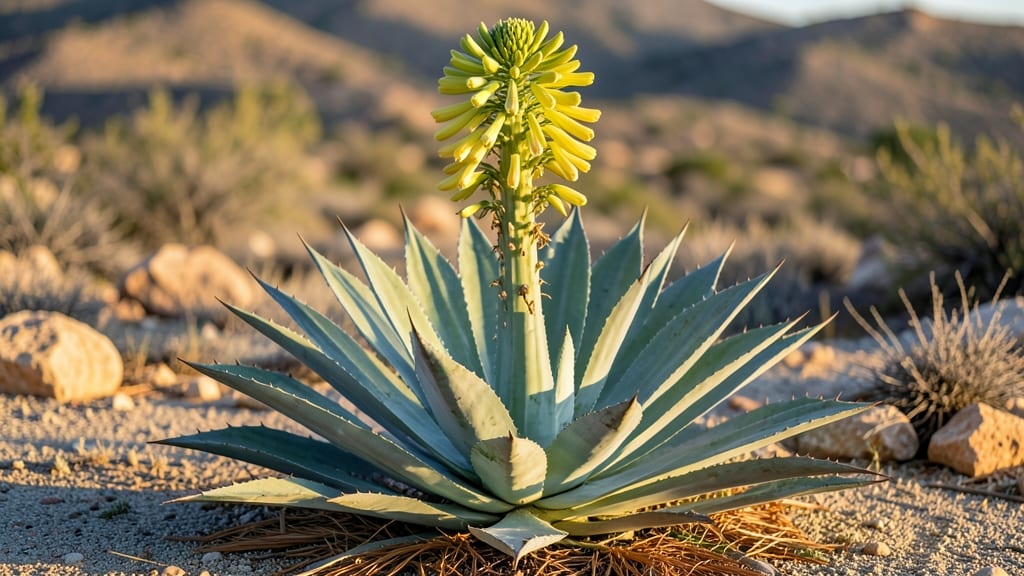
The agave bloom spike is nature's most dramatic farewell. 🌵 After years of slow growth, your agave suddenly shoots up a towering flower stalk—sometimes 10+ feet—that bursts into vibrant yellow or orange blooms.
This spectacle marks the beginning of the end for the mother plant, but it's also your chance to propagate new agaves from the pups that appear at its base.
Identifying the spike is easy: look for a thick, leafless stem emerging from the center. The plant stops producing new leaves and redirects energy into this single, showstopping bloom. Most agaves bloom only once in their 10-20 year lifespan, making it a rare event worth celebrating.
The flowers themselves are stunning but short-lived, lasting just a few weeks before fading.
Care shifts dramatically during this phase. Reduce watering—agaves hate soggy roots—and avoid fertilizer, which stresses the plant. The real prize is the pups that form around the base. These baby agaves are your insurance policy for continuing the cycle.
Once the mother plant dies (usually within months), you can carefully transplant these pups to grow new agaves.
This lifecycle teaches patience and preparation. The bloom spike isn't just a floral display—it's a reminder that agaves are temporary showstoppers with lasting legacy. Your garden becomes a generational project as each pup matures into its own dramatic centerpiece. Here's how to make the most of this fleeting, fiery moment.
📚 In This Guide
- What you need
- Instructions
- Tips and common mistakes
- Wrapping up and next steps
What you need
- ● Mature Agave Plant: A healthy, non-blooming agave (e.g., Agave americana, Agave parryi, or Agave victoriae-reginae) at least 10–15 years old (younger plants rarely bloom).
- ● Heat Source: Grow Lights: Full-spectrum LED grow lights (e.g., Samsung LM301B or Osram Fluora) with 12,000–15,000 lux intensity.
- ● Heat Lamp: Infrared heat lamp (e.g., 250W–400W ceramic heat emitter) for consistent warmth.
- ○ Space Heater: Optional (use cautiously; maintain 85–95°F (29–35°C) near the plant).
- ● Thermometer/Hygrometer: Digital probe thermometer (±1°F accuracy) to monitor temperature 24/7.
- ● Humidity Tray: Shallow tray with pebbles and water (to maintain 40–60% humidity around the plant).
- ● Pruning Shears: Sharp, sterilized bypass pruners (for post-bloom cleanup).
- ○ Support Stake: Optional (bamboo or metal stake, 3–5 ft tall) to prop up heavy spikes.
- ● Spray Bottle: For light misting (avoid soggy soil!).
- ● Reflective Foil: Aluminum foil or Mylar to double light exposure (wrap behind the plant).
- ● Timer: Smart plug or outlet timer to automate light cycles (14–16 hours/day).
- ○ Camera/Tripod: Optional (to capture the 2–6 week bloom process!).
- ● Potting Mix Additives: Perlite: 1 part perlite to 3 parts cactus/succulent mix (improves drainage).
- ○ Slow-Release Fertilizer: Optional (e.g., Osmocote Smart-Release, 5–10–10 NPK ratio).
How to induce and care for an agave bloom spike
Here's how to coax that dramatic, heat-triggered bloom from your agave—it's easier than you think.
🔥 Step 1: Identify a Mature, Healthy Agave Plant
Only agaves over 10 years old typically bloom, and you'll know it's ready when the center rosette tightens dramatically. Look for a thick, sturdy base with at least 20 leaves—this ensures the plant has stored enough energy for the spike. Avoid plants with yellowing leaves or soft spots, as these won't survive the energy drain of flowering.
I always check for a firm, upright growth habit—if the plant leans or has hollow stems, it's past its prime. The best candidates have a 3-4 inch diameter at the base and healthy, arching leaves with minimal browning. This is the moment that matters: a weak plant will put all its energy into the bloom and die afterward, while a strong one may produce pups for future plants.
☀️ Step 2: Provide Consistent Heat and Full Sun
Agaves bloom in response to prolonged heat, so move your plant to a location with full sun exposure (6+ hours daily) and temperatures consistently above 85°F for at least 2-3 weeks. A greenhouse or south-facing patio works best. If your climate doesn't naturally hit these temps, a heat lamp or grow light can help—just position it 12-18 inches above the plant for 10-12 hours daily.
Watch for leaf color shifts: healthy agave leaves should stay blue-green or gray-green under heat stress. If they turn yellow or wilt, reduce heat exposure slightly and increase watering. The goal is to stress the plant just enough to trigger flowering without causing permanent damage. I've seen blooms appear within 4-6 weeks of consistent heat exposure, but some varieties take longer.
💧 Step 3: Adjust Watering to Encourage Blooming
Reduce watering to every 2-3 weeks once you start the heat treatment—agaves store water in their leaves, and drought stress helps trigger blooming. Let the soil dry completely between waterings, and avoid wetting the leaves to prevent rot. I use a moisture meter to check 2 inches below the soil surface; if it reads dry, it's time to water.
Overwatering at this stage will send the plant into survival mode instead of flowering. You'll notice the leaves may curl slightly as they conserve moisture—this is normal. Once the bloom spike emerges, you can return to regular watering, but keep it on the lighter side. The plant will drink more as it puts energy into the spike, so monitor soil moisture closely.
✂️ Step 4: Support the Bloom Spike as It Emerges
When the spike appears (usually from the center of the plant), it can grow 10-15 feet tall in just a few weeks. Use a bamboo stake or small tree branch inserted 6 inches into the soil next to the plant, then gently tie the spike to it with soft plant ties as it grows. Avoid metal or wire ties—they can cut into the delicate stem.
Here's the thing—don't be surprised if the spike grows at a 1-2 inch per day rate. It's normal for the tip to look closed at first, but it will unfurl into a dramatic, branched cluster of flowers over 2-3 weeks. If the spike sags or bends, adjust the ties immediately to prevent breaking. The heavier the bloom gets, the more support it needs—think of it like training a vine.
🌿 Step 5: Care for the Plant Post-Bloom
After flowering, the mother plant will begin to die back as it redirects all energy to producing pups (baby agaves) at its base. Water normally until the pups are 6-8 inches tall, then gradually reduce watering again. The dying process can take 6-12 months, but during this time, the pups will grow strong enough to transplant.
Real talk: the mother plant will eventually turn brown and collapse, but don't remove it until the pups are fully established. I've had pups thrive with the old plant still standing, using its remaining roots for support. Once the pups are ready (they'll have 3-4 leaves and a 1-2 inch diameter base), carefully dig them up with a sharp knife, keeping as much root structure intact as possible.
Tips & tricks for perfect agave bloom care
Here's what nobody tells you about coaxing that stunning agave bloom—details that make all the difference.
Plant Selection is Everything: That 10-year-old requirement isn't arbitrary—it's about energy storage. I've tried forcing blooms on younger plants, and they either fail completely or produce weak spikes. Look for agaves with thick, sturdy bases (3-4 inches diameter) and at least 20 leaves—this ensures they've stored enough carbohydrates to fuel the dramatic growth. The center rosette should be tight, not loose or hollow. This isn't just about age; it's about the plant's ability to handle the energy drain of flowering.
Heat Stress Technique: The 85°F threshold is critical because it mimics the plant's natural desert environment where blooming occurs. But here's the secret: consistency matters more than exact temperature. I've seen blooms triggered at 80°F when maintained for 3+ weeks, but the 10-12 hours daily of targeted heat (from lamps or greenhouse conditions) makes all the difference. Use a thermometer to monitor—fluctuations can confuse the plant. And if you're using grow lights, position them 12-18 inches above to prevent leaf burn while maintaining even coverage.
Watering Precision: The every 2-3 weeks schedule might seem extreme, but agaves are succulents by nature. I learned this the hard way after overwatering and watching my plant go into survival mode instead of flowering. Use a moisture meter 2 inches below soil—this is the sweet spot where agaves store water. When the meter reads dry, that's your cue. The slight leaf curling you'll see is normal and actually helps trigger blooming by creating mild drought stress. Once the spike appears, you can return to regular watering, but keep it light—the plant is now diverting all its energy to the bloom.
Spike Support System: That 10-15 feet growth rate is no joke—it's like watching a plant version of a time-lapse video. The 6-inch stake should be inserted before the spike emerges, not after. I use bamboo stakes because they're lightweight but sturdy enough to handle the weight. The key is gentle tying—use soft plant ties and adjust them every 3-4 days as the spike grows. Watch for the tip to unfurl into that dramatic branched cluster over 2-3 weeks—this is when the real magic happens, and proper support ensures you don't end up with a snapped stem.
Pro Tips for Agave Bloom Spike
- Here's what nobody tells you about coaxing that stunning agave bloom—details that make all the difference.
- Plant Selection is Everything: That 10-year-old requirement isn't arbitrary—it's about energy storage. I've tried for...
- Heat Stress Technique: The 85°F threshold is critical because it mimics the plant's natural desert environment where ...
Frequently asked questions
Got questions about that stunning agave bloom spike? You’re not alone! Here are answers to the most common curiosities—from timing to troubleshooting—so you can make the most of this dramatic display.
How do I know when my agave is ready to bloom?
Most agaves take 7–10 years (or longer!) to bloom, but watch for these signs: a tall, thick stalk (the bloom spike) emerging from the center, followed by a massive flower cluster at the top. The plant may also produce pups (offsets) around its base—this is nature’s way of saying, “I’m ready!”
How long does the agave bloom spike last?
The actual flowering phase lasts about 2–4 weeks, but the bloom spike itself may linger for 2–3 months before dying back. Once blooming ends, the mother plant dies (don’t worry—those pups you saw earlier will take over!).
Can I force an agave to bloom earlier?
Unfortunately, no—agaves bloom on their own timeline, usually triggered by maturity and environmental cues (like heat or stress). However, you can optimize conditions by providing full sun, well-draining soil, and minimal water to encourage overall health. Patience is key!
What should I do with the dead bloom spike after it dies?
Once the spike turns brown and crispy, cut it back to the base with clean, sharp pruners. This prevents pests from nesting and keeps your agave looking tidy. The mother plant will withdraw nutrients into the pups, so focus on caring for those instead!
Can I save the pups from a blooming agave?
Gently dig up the pups once they’re 3–6 inches tall, separate them, and replant in well-draining soil. They’ll grow into new agaves—just like the mother plant did. Pro tip: Wait until the bloom spike fully dies back to avoid stressing the pups.
Wrapping up and next steps
Witnessing your agave bloom its dramatic, heat-triggered spike is a breathtaking moment—proof that even desert plants can create show-stopping magic! 🌵✨ Whether you’re a seasoned gardener or a curious beginner, this rare spectacle reminds us to celebrate nature’s surprises.
Ready to turn your agave’s next bloom into a stunning centerpiece?
Your next step? Mark your calendar for peak bloom season (often summer or early fall) and keep an eye on those tight rosettes. With a little patience and care, you’ll be rewarded with a one-of-a-kind floral masterpiece—and maybe even pups to share with fellow plant lovers! 🌸💚