
Blooming
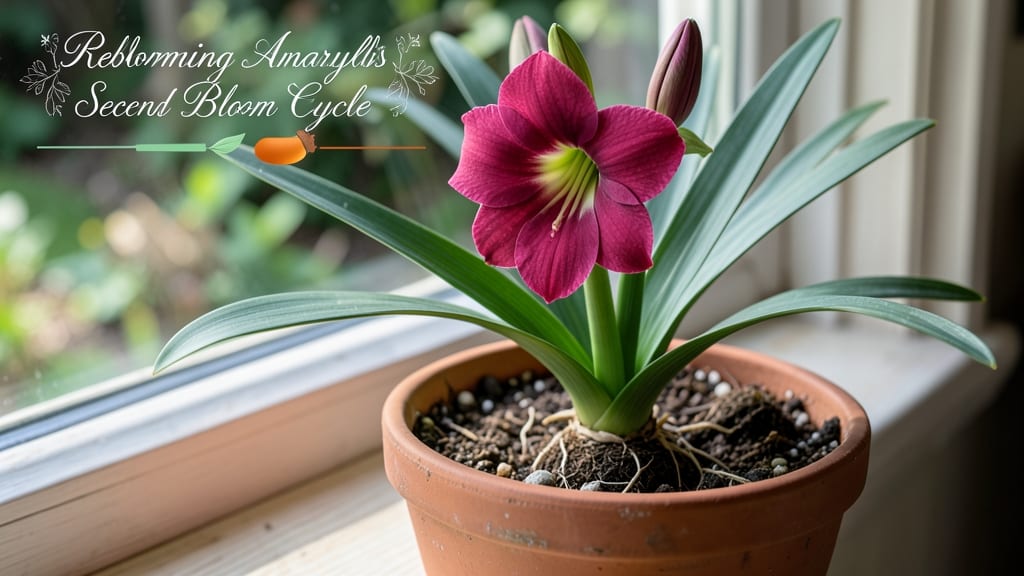
Yes, amaryllis can bloom twice a year when given the right conditions, including consistent bright indirect light for 12-14 hours daily and a 6-8 week rest period after each bloom cycle. Mimicking seasonal changes through adjusted watering and temperature helps trigger repeat flowering.
Amaryllis bulbs are surprisingly adaptable when you understand their natural growth patterns. 🌱 The key to double blooms lies in replicating their native seasonal cues—think of it like tricking the plant into thinking it's experiencing two springs in one year.
After the first bloom fades, I reduce watering and move the pot to a cooler spot (around 55-60°F) for about 6-8 weeks. This dormancy period mimics winter conditions, allowing the bulb to store energy for the next growth cycle.
Once you reintroduce warmth and regular watering, the bulb often responds with a second bloom within 6-10 weeks.
What's fascinating is how light plays a role—amaryllis need that 12-14 hours of bright indirect light daily to maintain their energy reserves. I've found that using a grow light during shorter winter days makes all the difference.
The combination of proper light exposure and seasonal care creates the perfect conditions for repeat blooming, though it's important to avoid overwatering during dormancy, as soggy bulbs can rot and prevent flowering.
💡 In This Article
- Light and Temperature Triggers for Amaryllis Re-Blooming
- Step-by-Step Seasonal Care Routine for Year-Round Amaryllis Blooms
Light and temperature triggers for amaryllis re-blooming
Amaryllis bulbs respond to light through a process called photoperiodism, where specific light durations trigger growth phases. These plants need 12-14 hours of bright indirect light daily to maintain photosynthesis and energy storage in their bulbs.
The ideal light spectrum includes blue and red wavelengths (around 400-700 nanometers), which are most effective for photosynthesis. Without sufficient light, the bulb won't build enough energy reserves to produce a second bloom. 🌿
Temperature fluctuations play an equally critical role through vernalization—the process where cool temperatures prepare the bulb for dormancy. After the first bloom cycle, reducing temperatures to 55-60°F for 6-8 weeks mimics winter conditions, signaling the bulb to rest and store energy.
This dormancy period is essential because it resets the plant's biological clock, similar to how deciduous trees prepare for spring regrowth. Without this cool rest, the bulb may produce foliage but skip flowering entirely.
The science behind this involves hormone regulation: cooler temperatures reduce gibberellin production (a growth hormone) while increasing abscisic acid, which promotes dormancy. When you reintroduce warmth (70-75°F) and water, these hormones shift again, stimulating new shoot growth.
I've seen amaryllis produce second blooms within 6-10 weeks after breaking dormancy when light and temperature conditions are just right.
One common mistake is keeping amaryllis in constant warm conditions—this prevents the necessary hormonal shifts for re-blooming. For example, placing your plant near a south-facing window during winter provides natural light, while moving it to a basement or unheated garage for dormancy creates the temperature contrast needed.
The key is consistency: maintain 12-14 hours of light during active growth phases and cooler temps during dormancy.
Light intensity matters too—amaryllis need 1,000-2,000 foot-candles of light (similar to a well-lit office). In low-light conditions, the leaves may grow tall and spindly (a condition called etiolation), but the bulb won't store enough energy for another bloom.
Using a full-spectrum grow light for 4-6 hours daily during winter can supplement natural light and make the difference between one and two blooms per year.
What's fascinating is how these triggers work together: light provides energy, while temperature regulates growth hormones. For instance, a bulb receiving 14 hours of light but kept at 75°F continuously may produce foliage but no flowers.
The same bulb in 55°F for 8 weeks followed by 12 hours of light and warmth will often rebloom. This dual trigger system is why amaryllis can be so responsive to seasonal care adjustments. ✨