
Blooming
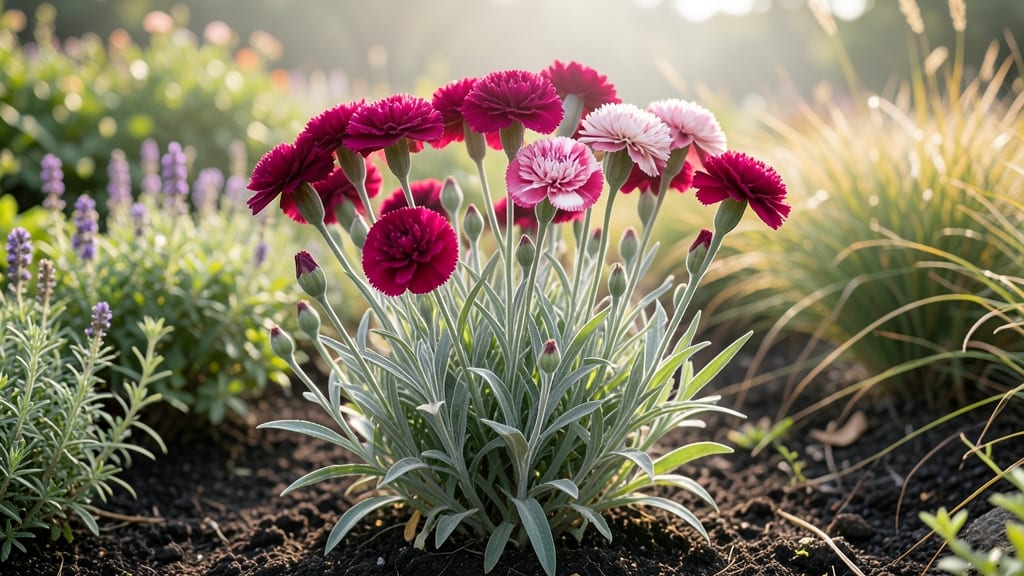
Carnations don't bloom all summer continuously—most varieties flower primarily in spring and fall, though some reblooming types may produce sporadic blooms during summer with proper deadheading. Heat-tolerant cultivars like 'Coral Reef' or 'Pink Beauty' can extend flowering periods, but consistent summer blooms depend on careful maintenance and seasonal conditions.
Carnations are famously seasonal plants, with their blooming cycles tightly linked to temperature shifts. 🌸 Spring and fall provide the ideal conditions—cooler nights and moderate days—that trigger consistent flowering.
Reblooming varieties like 'Champagne' or 'White Cascade' can produce occasional summer blooms if you remove spent flowers promptly, but they won't match the abundance of their seasonal counterparts.
The key to summer interest lies in selecting heat-tolerant varieties and providing consistent care, including regular watering (about 1 inch per week) and partial afternoon shade during heatwaves.
What many gardeners overlook is how daylight length affects blooming. Carnations need at least 6 hours of sunlight daily, but too much intense midday sun in summer can stress the plants.
I've found that mulching with 2-3 inches of organic matter helps maintain soil moisture while protecting roots from temperature extremes. The difference between a plant that produces a few summer blooms and one that completely shuts down often comes down to these small but critical care practices.
💡 In This Article
- Carnation Blooming Seasons by Variety
- Extending Carnations’ Summer Bloom with Care Tips
Carnation blooming seasons by variety
The blooming patterns of carnations are primarily dictated by their genetic programming and environmental triggers. Most carnation varieties follow a biennial cycle, meaning they produce their most abundant flowers in spring and again in fall.
This pattern occurs because cooler temperatures (50-65°F) and shorter daylight hours stimulate the plant's natural flowering hormones, while summer's intense heat (85°F+) often causes them to enter a dormant or stress state. 🌸 The exception is reblooming types like 'Champagne' or 'White Cascade,' which can produce sporadic blooms throughout summer if you consistently remove spent flowers—a process called deadheading.
Heat-tolerant carnation varieties like 'Coral Reef' or 'Pink Beauty' are specifically bred to handle summer conditions better than standard types. These cultivars can maintain blooming for 4-6 weeks during summer if given proper care, though their production will still be less consistent than spring or fall blooms.
The difference lies in their ability to withstand higher temperatures while still producing flowers, thanks to genetic modifications that enhance their heat resistance. For example, 'Coral Reef' carnations can tolerate up to 90°F with proper afternoon shade, whereas standard varieties may wilt or stop flowering entirely at 85°F.
Daylight length plays a crucial role in carnation blooming. Most varieties require 12-14 hours of daylight to trigger consistent flowering, which is why they bloom most prolifically in spring and fall when days are shorter.
During summer's long daylight hours (often 14-16 hours), many carnations actually reduce flower production as a survival mechanism. This is why even heat-tolerant varieties may produce fewer blooms in peak summer unless you provide some shade during the hottest afternoon hours (1-4 PM).
Visual differences can help you identify summer-friendly varieties. Heat-tolerant carnations often have slightly thicker, waxier petals that retain moisture better in dry conditions. Their foliage also tends to be darker green and more upright, which helps them handle summer's intense sunlight more effectively.
For instance, 'Pink Beauty' carnations have a distinctive deep pink hue that remains vibrant even in heat, whereas standard varieties may fade or develop brown edges under similar conditions.
Understanding these seasonal patterns helps you plan your garden effectively. If you want summer color, focus on planting heat-tolerant varieties in late spring after the last frost.
Combine them with other summer-blooming plants like zinnias or cosmos to create a continuous display, since no carnation variety will provide uninterrupted blooms throughout the entire season. The key is managing expectations—even the most heat-tolerant carnations will never match their spring or fall abundance during summer's peak heat. 💫
For gardeners in particularly hot climates (zones 8-10), consider planting carnations in containers where you can move them to shaded areas during summer's hottest periods. This simple adjustment can extend their blooming season by 2-4 weeks compared to plants left in fixed garden beds.
The flexibility of container growing also allows you to provide optimal afternoon shade while still giving the plants full morning sunlight, which they need for photosynthesis.