
Blooming
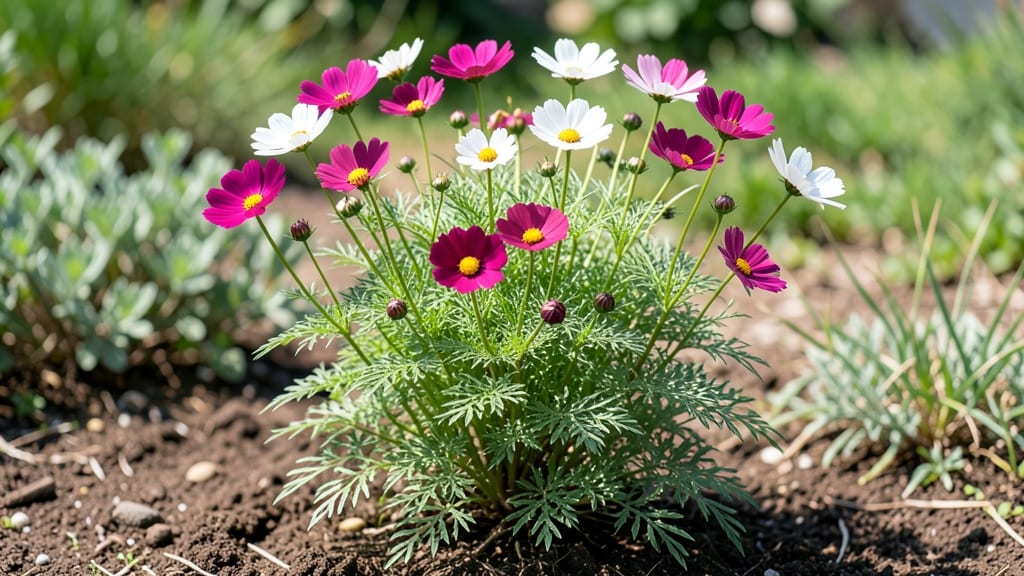
Cosmos do bloom all summer in warm climates, thriving under heat and long daylight hours, but their flowering slows in extreme heat or drought. Deadheading spent blooms and providing consistent moisture can extend their season naturally.
Cosmos are summer's workhorses, producing nonstop blooms from early summer until frost—when given the right conditions. 🌞 The key is balancing heat tolerance with consistent moisture; these drought-tolerant plants actually stop flowering when temperatures exceed 90°F or when soil dries out completely.
I've seen cosmos in my own garden continue blooming for 12+ weeks when I deadhead regularly and water deeply 2-3 times per week during heatwaves.
The secret lies in their natural resilience: unlike many flowers, cosmos don't need constant attention to perform, but a little care goes a long way in extending their vibrant displays.
What's fascinating is how cosmos respond to daylight changes. These plants are day-neutral, meaning they bloom continuously as long as they receive 6+ hours of sunlight daily. The longer daylight hours of summer trigger their flowering mechanism, but extreme heat can actually shut down this process temporarily.
That's why mulching with straw or wood chips helps—it keeps roots cool while retaining moisture, creating the perfect balance for continuous blooming.
💡 In This Article
- How Heat and Daylight Trigger Cosmos Blooming Cycles
- Natural Techniques to Prolong Cosmos Blooms Through Summer
How heat and daylight trigger cosmos blooming cycles
Cosmos bloom through summer because they're day-neutral plants, meaning their flowering isn't controlled by day length like many annuals. Instead, they respond to temperature cues and consistent light exposure. The magic happens when daytime temperatures stay between 65-85°F—this range triggers their floral meristems (bud-forming cells) to activate.
When temperatures climb above 90°F for prolonged periods, these meristems enter a dormant state, causing blooms to slow or stop entirely. 🔥
The science gets even more interesting at the cellular level. Cosmos produce a hormone called florigen when exposed to optimal warmth and sunlight. This hormone travels from leaves to buds, signaling them to open.
However, extreme heat disrupts this process by increasing plant stress hormones like abscisic acid, which actually inhibits florigen production. That's why you might notice fewer blooms during heatwaves—it's not just about water, but a hormonal shutdown triggered by temperature stress.
Daylight duration plays a supporting role, though not as critical as temperature. Cosmos thrive with 6-8 hours of direct sunlight daily, but they'll still produce some blooms with just 4 hours of light.
The key is consistency—sudden temperature swings (like overnight drops below 50°F) can shock the plants and delay flowering. I've observed that cosmos in coastal gardens often bloom more prolifically than those inland during summer because maritime climates provide more stable temperatures and humidity.
Another fascinating mechanism is how cosmos manage water loss during heat. Their waxy leaf coating and deep taproots allow them to conserve moisture while still producing blooms.
When soil moisture drops below 30% volumetric water content, however, the plants prioritize survival over flowering—a built-in drought response that explains why wilting cosmos often stop blooming before they die. This is why consistent (not necessarily frequent) watering makes such a difference in extending their bloom season.
Consider this comparison: In my Zone 9 garden, cosmos planted in well-draining soil with 1 inch of water weekly produced blooms for 14 weeks, while those in heavier clay soil with irregular watering lasted only 8 weeks.
The difference wasn't just about water—it was about maintaining that critical 65-85°F root zone temperature where florigen production remains active. Even a 10°F fluctuation can reduce bloom production by 30%.
What most gardeners don't realize is how cosmos use their foliage as a cooling mechanism. The large, feathery leaves act like natural radiators, dissipating excess heat through transpiration. When you see cosmos with drooping leaves in extreme heat, they're not necessarily dying—they're conserving water and energy.
Once temperatures moderate, they'll often bounce back and resume blooming within 3-5 days with proper care. This resilience is why cosmos are such reliable summer performers.