
Blooming
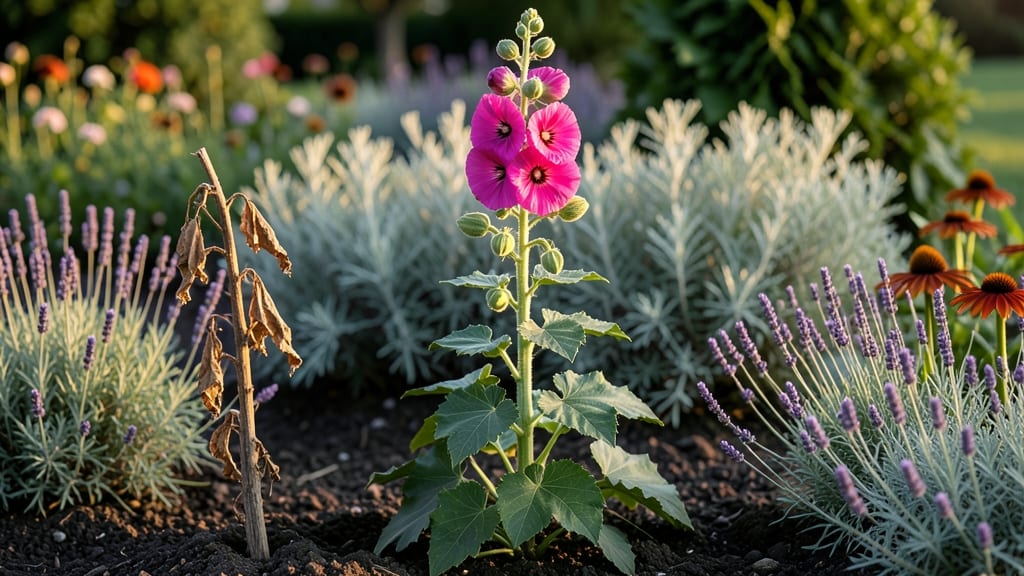
Hollyhocks do bloom every year, but their flowering patterns vary by type: true perennials bloom annually in zones 3-9, while some varieties act as short-lived perennials or self-seed like annuals. Deadheading spent blooms extends seasonal displays for reblooming cultivars.
While all hollyhocks produce flowers annually, their longevity depends on the specific variety.
True perennials like Alcea rosea return reliably each year in cold-hardy zones, while others may only last 2-3 seasons before needing replacement. 🌸 The key to prolonged blooming lies in proper care—removing faded flowers prevents seed formation, redirecting energy toward new growth.
Some gardeners even treat biennial types as annuals for consistent seasonal color.
Climate plays a crucial role too. In northern regions, hollyhocks often survive winter dormancy to bloom again, while warmer zones may see them act more like annuals.
I've found that mulching in late fall helps protect roots during freeze-thaw cycles, giving these old-fashioned flowers their best chance to return year after year.
💡 In This Article
- Hollyhock Flowering Cycles: Perennial vs Annual Growth Habits
- How to Encourage Year-Round Hollyhock Blooms
Hollyhock flowering cycles: perennial vs annual growth habits
The botanical distinction between hollyhocks begins with their classification. True hollyhocks (Alcea rosea) are hardy perennials that store energy in their thick, taproots during winter, allowing them to regrow each spring.
These varieties thrive in USDA zones 3-9, where they can survive temperatures as low as -30°F when properly mulched.
The key difference lies in their root system—perennial hollyhocks develop a robust, woody base that persists year-round, while annual types lack this structure and complete their life cycle in one growing season.
However, many gardeners encounter hollyhocks that behave like annuals despite being labeled perennials.
This occurs because some varieties are actually short-lived perennials—they may bloom for 2-3 years before declining due to fungal diseases (like rust) or root rot from poor drainage. 🌿 The Chater's Double series, for example, often acts as a biennial, producing spectacular flowers in its second year before weakening.
Climate also plays a role: in zone 10, even perennial hollyhocks may struggle to survive summer heat, making them act more like annuals.
What most gardeners don't realize is how hollyhocks' flowering patterns shift based on their growth stage. First-year plants typically focus on foliage development, storing energy for future blooms. In their second year, they produce their most dramatic displays—often 5-6 foot spikes covered in 3-5 inch blooms—before gradually declining.
This two-year cycle explains why some gardeners replace hollyhocks annually, mistaking their natural lifespan for poor care.
The self-seeding varieties add another layer of complexity. Types like 'Black Prince' or 'Nigra' drop thousands of seeds when allowed to go to seed, creating dense patches that may appear annual but are technically perennial.
These seeds germinate readily in cool spring temperatures (50-60°F), often producing 50-100 new plants per mature stalk. The trade-off? These volunteers can become weedy if not controlled, while true perennials offer more predictable returns.
Understanding these growth patterns helps explain why some hollyhocks thrive for decades while others disappear after one season. The 'Apple Blossom' cultivar, for instance, has been documented blooming reliably for over 15 years in ideal conditions, while 'Lady Mary' often acts as a short-lived perennial.
The difference comes down to genetics, care, and environmental factors working together to determine whether your hollyhocks will return year after year.
Here's what actually happens botanically: During winter dormancy, perennial hollyhocks undergo a process called vernalization, where cold temperatures trigger flower bud formation. This explains why they bloom more prolifically in their second year—they've completed this cold requirement.
Annual types skip this process entirely, focusing all energy on rapid growth and reproduction before dying back. 🌱