
Blooming
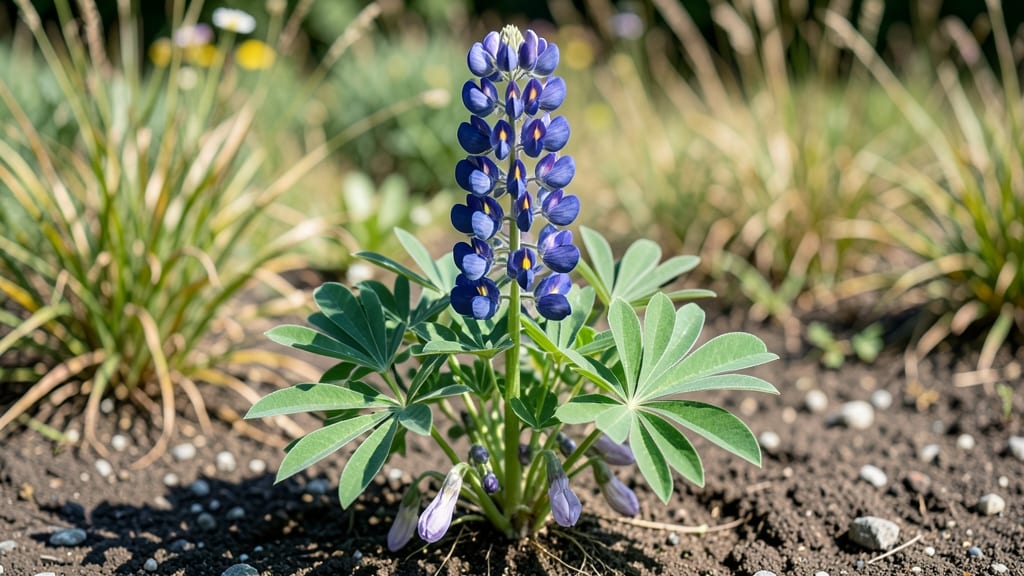
Lupines don’t bloom all summer—most varieties flower intensely from spring through early summer, with occasional reblooming only if you deadhead them regularly. Perennial lupines may produce scattered blooms later, but their peak display happens in late spring.
Lupines are seasonal showstoppers, with their vibrant blooms appearing in a concentrated window that depends on the variety and growing conditions. 🌸 Annual lupines typically produce their dramatic spikes in one burst of color during spring, while perennials like Lupinus polyphyllus may linger into early summer.
The key to prolonging their display lies in proper care—removing spent flowers (deadheading) can coax some varieties into a second, though less dramatic, round of blooms.
Climate plays a surprising role too. Lupines in cooler northern regions often bloom earlier and may produce sporadic flowers later in the season, while those in warmer southern zones might struggle past early summer.
Understanding your lupine’s specific needs—whether it’s a one-season annual or a multi-year perennial—helps set realistic expectations for their seasonal performance.
💡 In This Article
- Lupine Bloom Cycles by Variety and Season
- Deadheading Lupines to Extend Bloom Time
Lupine bloom cycles by variety and season
The blooming habits of lupines hinge on whether they're annual or perennial—and their genetic programming. Annual lupines like Lupinus nanus (dwarf lupine) produce a single, dramatic flower spike in late spring to early summer, typically lasting 4-6 weeks before setting seed.
This is their biological one-shot: once the blooms fade, the plant's energy shifts to seed production. Perennial varieties, however, have a different strategy—Lupinus polyphyllus (Russell lupine) often blooms in two waves, first in late spring and again in early summer, though the second flush is usually less abundant.
Seasonal timing also depends on your hardiness zone. Lupines in USDA zones 3-5 (northern climates) often bloom earlier (May-June) because cooler temperatures trigger their flowering cycle. In zones 7-9, they may wait until June-July when soil temperatures reach 60-65°F.
The color intensity also varies—cool-season lupines develop deeper purples and blues, while warm-season blooms tend toward softer pinks. 🌿 What's fascinating is how lupines use photoperiodism (day length) to time their blooms, with many varieties needing 14+ hours of daylight to trigger flowering.
Climate isn't the only factor—soil fertility plays a crucial role. Lupines are nitrogen-fixers, meaning they pull nitrogen from the air through root nodules. In nutrient-poor soils, they'll prioritize seed production over blooming, sometimes delaying flowers until their second year.
I've seen Lupinus arboreus (tree lupine) in California's coastal regions bloom continuously from March through September, but only when grown in well-draining, slightly alkaline soil with added phosphorus. The key takeaway? Lupines are seasonal performers with built-in timers, not year-round bloomers.
Here's how the bloom cycles compare between popular varieties:
- Annuals (one-season show): Lupinus nanus (3-4 weeks), Lupinus albus (4-5 weeks)
- Perennials (two-season potential): Lupinus polyphyllus (6-8 weeks total), Lupinus arboreus (8-10 weeks with deadheading)
- Late bloomers: Lupinus nootkatensis (July-August in cooler zones)
The most dramatic displays occur when lupines are planted in full sun (6+ hours daily) with consistent moisture during their active growth phase. Once temperatures exceed 85°F, most varieties go dormant or produce fewer blooms.
This is why desert-adapted species like Lupinus arizonicus bloom in late summer when nights cool down—a perfect example of how lupines have evolved to exploit seasonal niches. 🌵
What most gardeners don't realize is that lupine blooms follow a strict energy budget. Each flower spike represents a trade-off between reproduction (seeds) and survival (roots).
When you see those iconic purple spikes, you're witnessing nature's carefully calibrated timing system—one that's been optimized over millennia, not designed for continuous summer color. The good news? With proper deadheading and soil management, you can coax 20-30% more blooms from perennials than their natural cycle would produce.