
Blooming
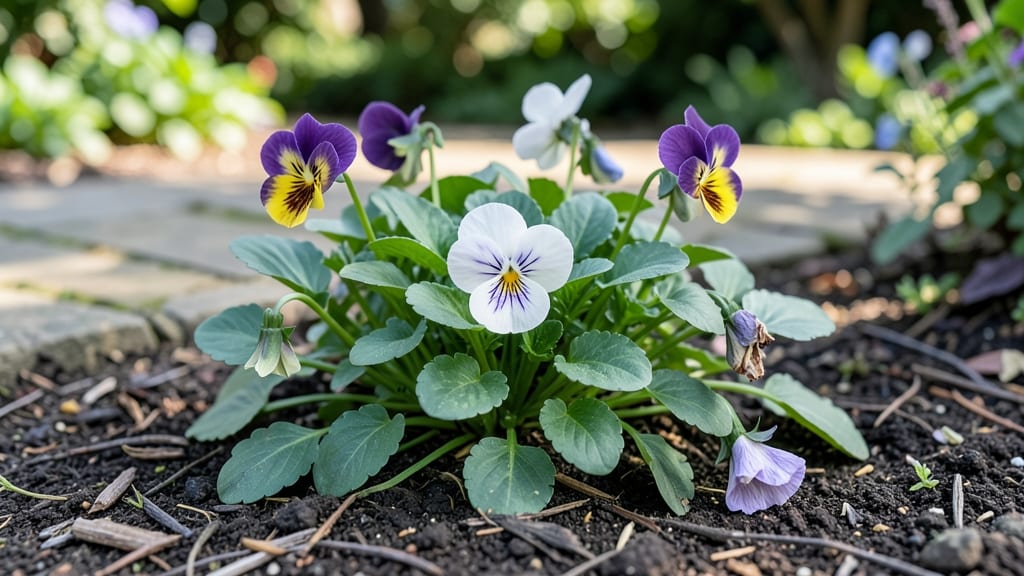
Pansies don't bloom all year naturally—they thrive in cooler weather and often go dormant during summer heat. However, certain cold-hardy varieties can rebloom in mild climates or with proper care, extending their flowering periods beyond just spring and fall.
Pansies are cool-season flowers, meaning they naturally slow down or stop blooming when temperatures rise above 75°F. 🌸 The heat triggers dormancy, but some varieties like 'Matrix' or 'Soraya' series are bred to handle warmer conditions better.
If you live in a region with mild summers, you might see sporadic blooms, but consistent care—like regular watering and shade during peak heat—helps maintain their color longer.
What really makes a difference is how you prep your garden. Planting in partial shade and using mulch to keep roots cool can trick pansies into blooming almost year-round in suitable climates.
I’ve seen gardeners in Zones 5-8 get near-continuous color by deadheading spent blooms and fertilizing lightly every few weeks.
💡 In This Article
- Understanding Pansy Seasonal Blooming Cycles
- Tips to Encourage Year-Round Pansy Blooms
Understanding pansy seasonal blooming cycles
Pansies (Viola × wittrockiana) are biologically wired to follow a strict seasonal rhythm tied to temperature and daylight. Their blooming mechanism is triggered by cooler weather—typically between 50-75°F—when days grow shorter and nights longer.
This cool-season behavior is hardwired into their genetics, as they evolved in temperate climates where summer heat would otherwise stress their delicate foliage. 🌿 The plant's growth hormones shift into "dormancy mode" when temperatures consistently exceed 75°F, causing buds to abort and leaves to wilt.
The science behind this involves a process called thermomorphogenesis, where plants physically alter their growth patterns in response to heat. At 80°F+, pansies experience what botanists call "heat shock," which disrupts their flowering genes.
Even cold-hardy varieties like 'Ice King' or 'Universal Monarch' can't escape this biological limit—they merely tolerate warmer conditions better than others. The key difference lies in their ability to maintain chlorophyll production and root hydration during heatwaves, which delays (but doesn't prevent) dormancy.
Daylight length plays an equally critical role through a process called photoperiodism. Pansies are considered short-day plants, meaning they bloom most prolifically when daylight hours drop below 12-14 hours. In summer solstice (longest days), they receive 15+ hours of light, which suppresses flowering.
This is why you'll rarely see pansies blooming in peak summer—even in mild climates—unless you're using specialized varieties bred for extended daylight tolerance.
Hardiness zones further complicate the picture. Pansies thrive in Zones 3-8, but their blooming windows vary dramatically:
- Zones 3-5: Can bloom from early spring to late fall with occasional winter blooms if protected
- Zones 6-8: Typically bloom spring-fall, with sporadic summer blooms in cooler microclimates
What most gardeners don't realize is that pansies have a secondary blooming trigger: root temperature. Even if air temps are warm, keeping soil temperatures below 70°F through mulching or shade cloth can maintain blooming.
This is why you'll sometimes see pansies flowering in summer—it's not the air temperature alone, but the root zone environment that matters most. 🌱
The variety you choose makes a 30-50% difference in blooming longevity. Hybrid varieties like 'Matrix' or 'Soraya' are bred to handle 85°F+ temperatures briefly**, while heirloom types like 'Blue Boy' may shut down completely at 78°F.
The secret lies in their parentage—modern hybrids incorporate genes from alpine violas that naturally grow in cooler mountain climates, giving them a built-in heat tolerance.