
Blooming
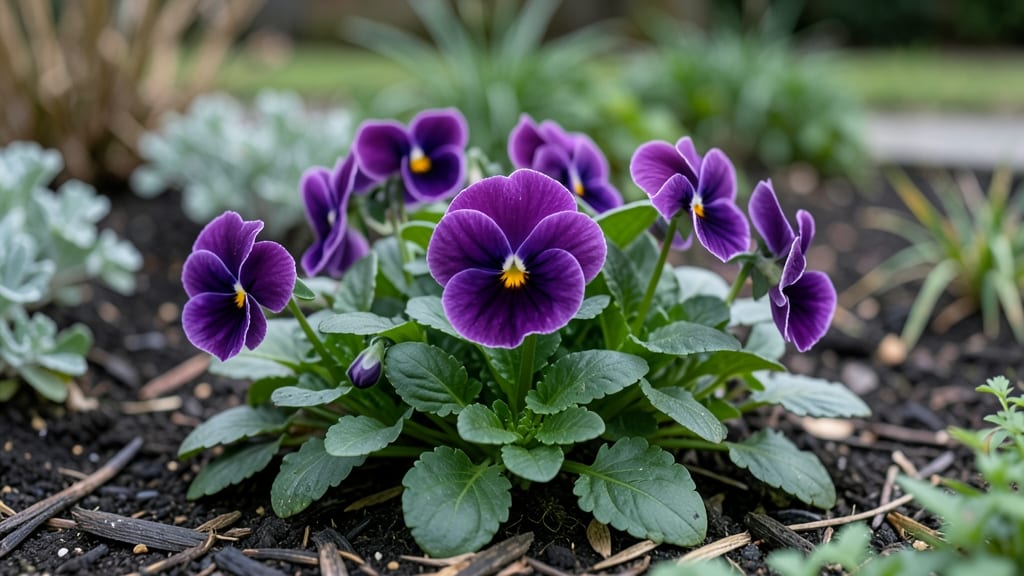
Yes, pansies bloom in winter in many regions, thriving in cool temperatures between 40°F and 60°F. Cold-hardy varieties like 'Ice Dance' or 'Matrix' continue flowering even in light frost, making them ideal for late fall and early spring gardens.
Pansies are winter's secret weapon in the garden, designed by nature to defy seasonal expectations. 🌸 Their ability to bloom in cooler months comes from a process called vernalization, where exposure to cold temperatures actually triggers flower production.
Unlike summer flowers that wilt in frost, pansies develop protective coatings on their petals and stems, allowing them to survive light freezes while still producing vibrant blooms. This makes them perfect for extending your garden's color palette when most other flowers have gone dormant.
What sets pansies apart is their adaptability across USDA hardiness zones 3 through 10, meaning they'll perform well whether you're in the Pacific Northwest or the Southeast. The key to maximizing their winter performance lies in proper variety selection and care.
For instance, the 'Matrix' series is particularly resilient, while 'Sorbet' offers a wider color range. I've found that planting them slightly deeper than summer flowers (about 1/4 inch deeper) helps protect their roots from temperature fluctuations.
💡 In This Article
- Why Pansies Thrive in Winter Conditions
- Selecting and Caring for Winter-Blooming Pansies
Why pansies thrive in winter conditions
Pansies' winter resilience stems from their unique biological adaptation called vernalization, where exposure to prolonged cool temperatures (typically 35-50°F for 4-6 weeks) actually stimulates flower production. This process differs from summer flowers that require warmth to bloom.
The plant's meristem cells—growth points—undergo biochemical changes that convert stored energy into flower buds rather than leaves. 🌱 This explains why pansies planted in late summer often bloom by late fall, while summer flowers like geraniums remain dormant until spring.
Their frost tolerance comes from specialized cell structures that prevent ice crystal formation. Pansies produce antifreeze proteins similar to those in cold-hardy trees, which lower the freezing point of their cell fluids by up to 5°F.
Their waxy leaf coatings also create a microscopic barrier that reflects sunlight while trapping heat near the plant's core. Unlike violas (their close relatives), pansies have thicker stems that store more starch reserves, giving them the energy to continue blooming when temperatures dip to 25°F for brief periods.
What makes pansies stand out compared to other winter bloomers like hellebores is their continuous bloom cycle. While hellebores produce flowers in early winter that last for weeks, pansies generate new blooms every 7-10 days throughout the season.
This happens because their growth habit is basal rosette—they grow low to the ground with all leaves and flowers emerging from the center, which protects them from wind and snow accumulation. The trade-off is their shorter lifespan (typically 1-2 years) compared to perennials like hellebores.
Pansies' adaptability across USDA zones 3-10 comes from their ability to adjust their metabolic rates. In colder zones, they grow more slowly, conserving energy, while in milder zones they bloom more prolifically.
This flexibility explains why they thrive in regions like Zone 5 Minnesota (where they bloom from October to May) just as well as in Zone 8 California (where they bloom from November to March).
The key difference is their daylength sensitivity—they respond to shorter winter days by producing more flowers, unlike summer flowers that require long daylight hours.
Here's what happens at the cellular level during frost: Pansies trigger a process called cold acclimation, where their cells increase production of proline (an amino acid) and sugars that act as natural antifreeze agents. These compounds bind to cell membranes, preventing them from rupturing when ice forms.
The result is a plant that can survive 20-25°F temperatures while still producing vibrant blooms, unlike most summer annuals that would suffer leaf burn at 32°F. 💫
For gardeners in transitional climates (like Zone 7), this means pansies can often bloom through three seasons—late fall, winter, and early spring—while most other flowers would require replanting.
Their ability to handle light frost without damage comes from their petal structure, which has a slightly fuzzy texture that traps insulating air pockets, similar to how some animals develop winter coats.