
Blooming
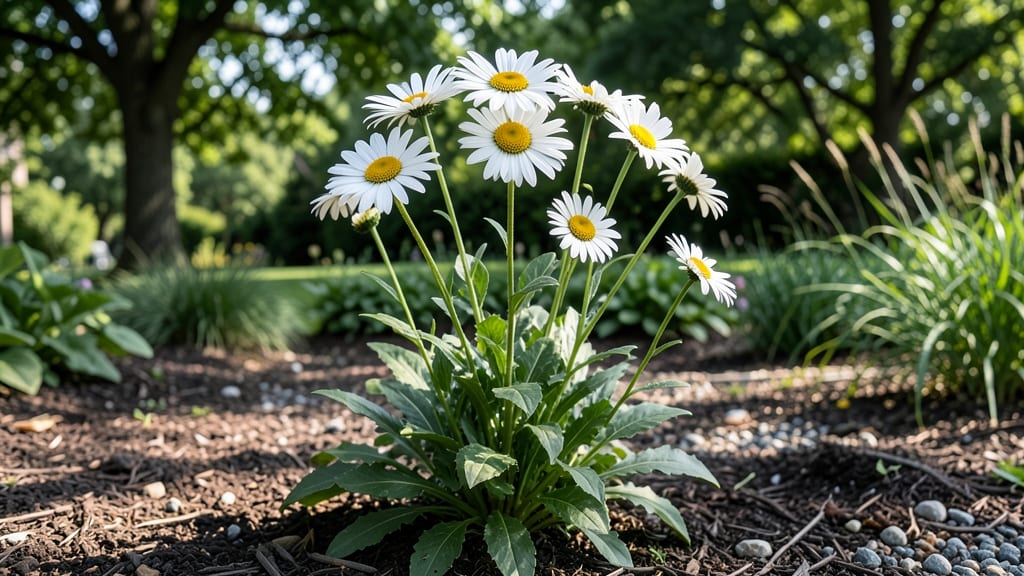
Shasta daisies bloom all summer when given consistent care, typically producing flowers from early summer through late summer or early fall, though their natural cycle lasts about 4-6 weeks.
Shasta daisies thrive on seasonal cues, and their blooming patterns are directly tied to daylight hours and temperature. 🌞 These perennials often begin flowering in late spring or early summer, then continue as long as conditions remain favorable—think 6-8 hours of sunlight daily and moderate temperatures (not extreme heat or cold).
The key to extending their bloom time lies in removing spent flowers (deadheading) and providing balanced nutrition. Many gardeners report seeing continuous blooms if they maintain these practices, though some varieties naturally slow down by mid-summer without intervention.
What sets Shasta daisies apart is their resilience. Unlike annuals, they return year after year, often with even more vigor if you tend to them properly. I’ve seen them push through partial shade or occasional drought, though they reward you best when planted in full sun with well-draining soil.
The misconception that they bloom only once per season comes from their natural 4-6 week cycle—but with the right care, that window can stretch into months.
💡 In This Article
- Why Shasta Daisies Bloom Seasonally: The Science Behind Their Flowering Cycle
- How to Prolong Shasta Daisy Blooms: Deadheading, Fertilizing, and Watering Tips
Why Shasta daisies bloom seasonally: the science behind their flowering cycle
Shasta daisies (Leucanthemum × superbum) are day-neutral perennials, meaning they don't rely solely on daylight length like some plants. Instead, their blooming is triggered by a combination of temperature thresholds and photoperiodism cues.
These flowers typically begin their cycle when daytime temperatures consistently reach 60-65°F and nighttime temps stay above 50°F. This warmth signals the plant to shift from vegetative growth to flowering, a process regulated by hormones like florigen.
What's fascinating is how daylight hours fine-tune their bloom timing. While they're not strictly short-day or long-day plants, studies show they respond best to 14-16 hours of daylight, which aligns with late spring through early summer.
The plant's internal clock (circadian rhythm) measures this light exposure, and when combined with stable temperatures, it triggers the development of flower buds. This is why you'll often see them bloom earlier in northern climates where days are longer than in southern regions during the same calendar period.
The natural 4-6 week bloom cycle occurs because once the initial flowers open, the plant shifts energy toward seed production. Without intervention, the plant's resources focus on developing seed heads rather than producing new blooms.
This is where the deadheading process becomes crucial—removing spent flowers redirects the plant's energy back toward producing new buds, effectively "tricking" it into extending its flowering season. 🌸
Temperature also plays a critical role in their seasonal behavior. Shasta daisies enter a form of summer dormancy when daytime temps exceed 85°F for prolonged periods. This heat stress causes the plant to conserve energy, slowing or stopping flower production.
This is why they often bloom more vigorously in cooler maritime climates than in hot inland areas. The plant's ability to rebloom depends heavily on whether it can recover from this summer dormancy before temperatures drop again in fall.
Another key factor is the plant's vernalization requirement—a cold period that helps reset its growth cycle. After summer dormancy, Shasta daisies often need exposure to 40-50°F nighttime temps for several weeks to break dormancy and prepare for another round of blooming in the following spring.
This explains why they sometimes produce a second flush of flowers in early fall if summer conditions were mild and they received adequate care.
Consider this botanical timeline: Shasta daisies begin flowering when spring temperatures stabilize, continue as long as conditions remain optimal (cool nights, moderate days), then naturally slow when summer heat intensifies.
With proper care—particularly deadheading and maintaining balanced moisture—they can push their bloom season well into fall, sometimes even producing a light second flush before winter. The secret lies in understanding these seasonal triggers and working with the plant's natural rhythms rather than against them. ✨