
Blooming
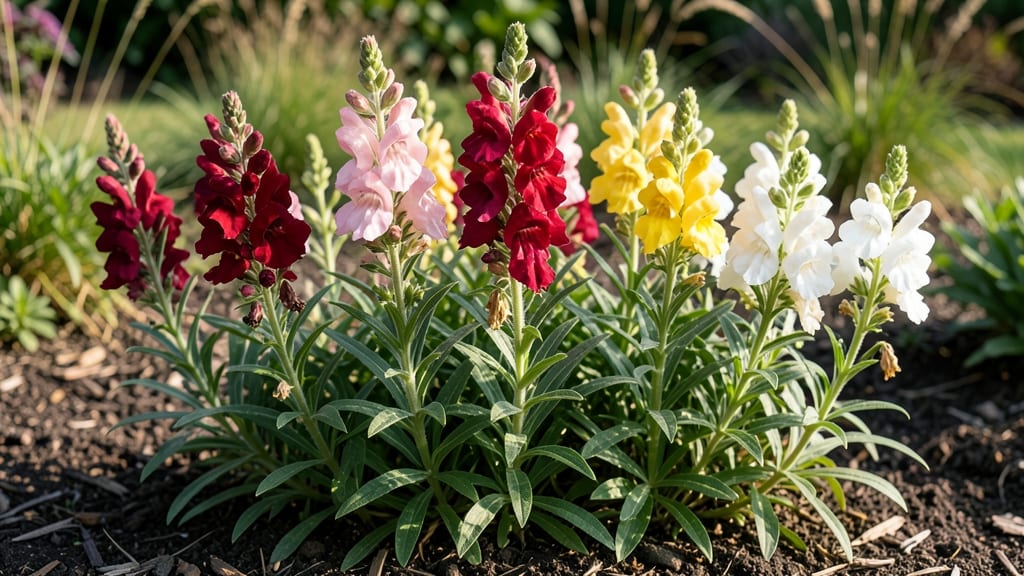
Snapdragons don't bloom continuously all summer, as most varieties focus their energy on spring and fall displays. Some types may rebloom in late summer with proper deadheading, while perennial varieties often have longer flowering seasons than annuals—but they still need consistent care to maintain blooms.
Most snapdragons follow a natural seasonal rhythm tied to their growth cycle, with peak blooming in cooler months when temperatures stay between 50-75°F. 🌸 The key to summer reblooming lies in deadheading—removing spent flowers before they set seed redirects the plant's energy into new growth.
I've found that varieties like 'Rocket' or 'Black Knight' often respond better to this technique than traditional types, though they still need protection from intense midday sun and regular watering during heatwaves.
Perennial snapdragons have a slight advantage here, as they can establish deeper root systems that store energy for extended blooming. However, even these need balanced fertilization (too much nitrogen = lush leaves, fewer flowers) and protection from pests that thrive in summer heat.
The trade-off? More care equals longer displays, but neglect will send your snapdragons into dormancy faster than you'd expect.
💡 In This Article
- Snapdragon Blooming Seasons by Variety Type
- Deadheading and Care Tips to Extend Snapdragon Blooms
Snapdragon blooming seasons by variety type
Annual snapdragons (like the classic 'Matrix' series) follow a predictable spring-to-fall blooming cycle, typically starting in late spring when soil temperatures reach 50°F and continuing through early fall until frost.
Their flowering period naturally declines in summer heat because the plants prioritize seed production over new blooms—a survival mechanism to propagate before winter. Perennial varieties, such as 'Black Knight' or 'Rocket,' have a slight edge, often extending blooms into late summer by leveraging stored energy in their deeper root systems.
The difference comes down to genetics and growth habits. Annuals complete their life cycle in one season, while perennials invest energy in root development to survive harsh winters.
For example, 'Black Knight' snapdragons can rebloom in summer if given proper care, but they still need consistent moisture (1-1.5 inches per week) and partial shade during peak heat (10 AM–2 PM) to prevent wilting.
Climate zones matter too—southern regions (zones 7-10) may see year-round blooming in mild winters, while northern areas (zones 3-5) get shorter displays.
Hybrid varieties like 'Rocket' are bred for extended blooming, but they're not immune to seasonal limits. These types often produce more flowers in cooler weather because their metabolic processes slow down in heat, reducing energy for blooming.
The trade-off? They tolerate summer conditions better than traditional varieties but still require deadheading every 3-5 days to encourage reblooming. Without this, you'll see fewer flowers as the plant shifts focus to seed production.
What most gardeners miss is how light affects blooming. Snapdragons need 6-8 hours of sunlight daily but can handle partial shade in hot climates. Too much direct summer sun (especially in zones 8+) causes flowers to bolt (prematurely produce seeds) or develop sunburned edges.
I’ve seen 'Matrix' varieties in full sun wilt by noon unless mulched heavily to retain moisture—this is why many gardeners opt for afternoon shade in summer.
Temperature thresholds also play a role. Snapdragons struggle when daytime highs exceed 85°F, as their flower buds may fail to open properly. This is why late-summer blooms often appear smaller or deformed.
Perennials handle this better due to their established roots, but even they’ll produce fewer blooms during heatwaves unless given extra care. The key is monitoring your local microclimate—urban areas often run 5-10°F hotter than rural zones, which can shorten blooming windows significantly.
For example, in zone 9, 'Black Knight' snapdragons might bloom from March to November with proper care, while in zone 5, they’d likely bloom from May to September. The difference isn’t just about heat—it’s about how quickly the plant can recover from stress.
Perennials have a built-in advantage here, but annuals can be coaxed into longer displays with the right techniques, like mulching with straw to keep roots cool and watering at soil level (not overhead) to prevent fungal issues.