
Blooming
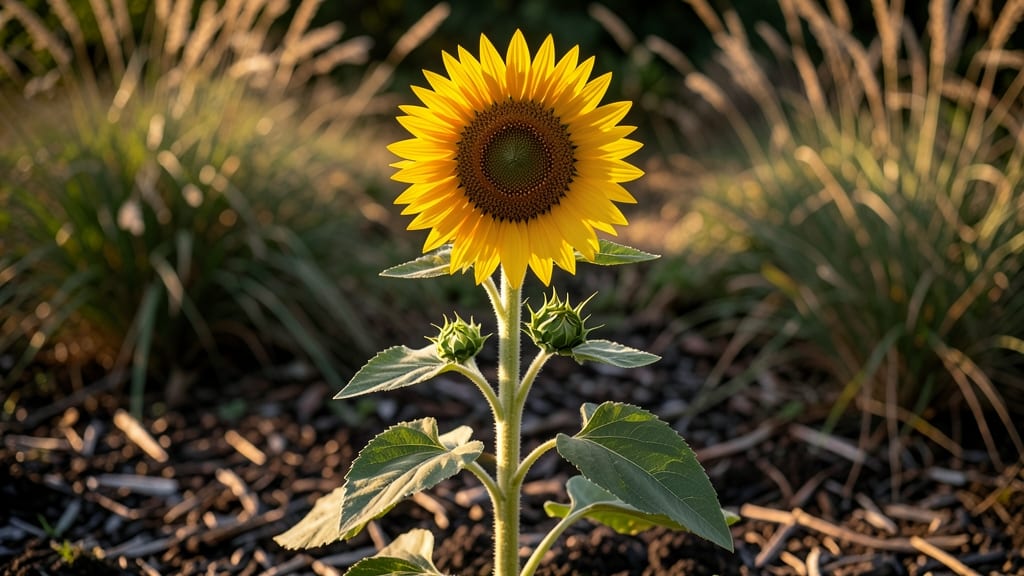
Spring sunflower blooms occur only in specific climates and varieties, with most annual sunflowers flowering between late spring and early summer when daylight hours extend and soil temperatures warm. These plants thrive with consistent sunlight and well-drained soil for peak performance.
Sunflowers don't bloom in spring across all regions—it depends on your climate zone and the variety you're growing.
Annual sunflowers, which are the most common, typically need 60-80°F soil temperatures and 14+ hours of daylight to trigger flowering, which is why they often wait until late spring or early summer. 🌻 Perennial varieties might bloom earlier in warmer climates, but they still respond to day length cues.
The key is planting at the right time: too early and the cold slows growth, too late and you miss the spring display entirely.
For gardeners eager to see sunflowers in spring, choosing fast-maturing varieties like 'Moulin Rouge' or 'Teddy Bear' (which bloom in 50-60 days) gives you the best chance. Planting in well-drained soil and providing 1-2 inches of water weekly helps them establish quickly.
Companion plants like marigolds can also deter pests, giving your sunflowers a better shot at that early spring show.
💡 In This Article
- Sunflower Bloom Timing Factors: Climate and Variety
- Encouraging Early Sunflower Blooms in Spring Gardens
Sunflower bloom timing factors: climate and variety
Sunflower blooming isn't just about season—it's a precise biological response to environmental cues. Annual sunflowers, which make up 95% of cultivated varieties, are photoperiod-sensitive, meaning their flowering triggers when daylight exceeds 14-16 hours. This typically happens in late spring when the sun arcs higher in the sky.
For example, in USDA Zone 5 (where winters dip to -20°F), sunflowers often wait until May or June to bloom because early spring days are still too short.
The magic number for soil temperature is 55-60°F—below this, germination stalls completely. In warmer climates like Zone 9 (mild winters), sunflowers can start blooming as early as March or April because the ground thaws earlier and daylight hours increase faster.
Perennial sunflowers (like Helianthus annuus varieties) have slightly more flexibility, sometimes blooming in late winter if given protection from frost, but they still need 6+ hours of direct sunlight daily to initiate flowering.
Variety selection makes all the difference. Dwarf varieties like 'Teddy Bear' (growing 2-3 feet tall) often bloom 40-50 days after planting, while giant varieties like 'Russian Giant' can take 90-120 days.
The secret lies in their genetic programming: dwarf types prioritize early reproduction, while giants invest energy in stem growth first. 🌱 This explains why you might see sunflowers in a neighbor's garden in May but not yours—it could be a difference of just 30 days in maturity timing.
Light quality matters too. Sunflowers aren't just about quantity of light—they respond to the red-to-far-red light ratio in sunlight. Cloudy spring days with diffused light can delay blooming by 1-2 weeks compared to clear skies.
That's why gardeners in rainy climates often need to start seeds indoors or choose faster varieties to compensate. The plant's internal clock (circadian rhythm) also plays a role, with most sunflowers needing 2-3 weeks of consistent 14+ hour days before they'll produce buds.
Here's what happens when conditions are perfect: Once a sunflower seedling reaches 4-6 inches tall and experiences 14+ hours of daylight, it starts producing a hormone called florigen in its leaves. This hormone travels to the shoot tip, triggering the formation of flower buds.
The buds then develop over 7-10 days before opening fully—a process that's incredibly sensitive to temperature fluctuations. Even a 5°F drop at this stage can delay blooming by 3-5 days.
For gardeners in colder climates, this means timing is everything. Planting too early risks frost damage to young plants, while planting too late might push blooming into summer. The sweet spot is usually 2-3 weeks after your last frost date, when soil temperatures consistently stay above 55°F.
In warmer zones, you can get away with earlier planting, but you'll still need to monitor daylight hours—sunflowers planted in February in Zone 10 might not bloom until April because they need that daylight trigger.