
Blooming
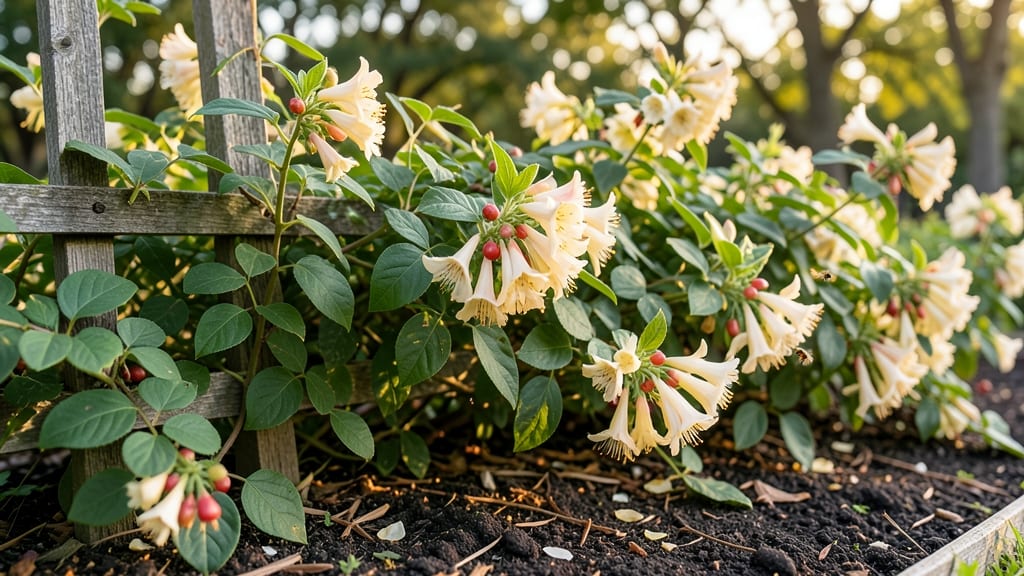
Honeysuckle blooms in late spring to summer 🌸, but the exact timing depends on your climate zone, variety, and care—missing the window means weeks of empty vines before the sweet fragrance returns.
If you’ve ever caught the intoxicating scent of honeysuckle drifting through your garden, you know its fleeting bloom season is pure magic—but timing is everything.
In USDA Zone 6a, like where I garden, the first fragrant clusters typically appear in early June, while southern zones may see blooms as early as April.
This guide breaks down the bloom time by region, from the Pacific Northwest’s cooler summers to the South’s extended heat, so you can predict—and extend—your honeysuckle’s peak fragrance months.
You’ll also discover how pruning, sunlight, and even container planting can shift bloom timing, plus the 3 key signs your honeysuckle is ready to burst into color.
Honeysuckle bloom time by USDA climate zones: when to expect peak fragrance
Timing your honeysuckle’s peak fragrance depends entirely on your USDA climate zone and the specific variety you’re growing. While most honeysuckles bloom in late spring to summer, regional microclimates can shift this window by 2-4 weeks.
For example, Lonicera periclymenum (European honeysuckle) thrives in cooler zones, while Lonicera sempervirens (trumpet honeysuckle) loves Southern heat. Let’s break down when to expect those intoxicating blooms in your area.
Understanding your zone’s last frost date is key—most honeysuckles need 10-14 frost-free days before blooming. In Zone 3, expect blooms as early as late May, while Zone 10 gardeners may see flowers as soon as March.
Even within a zone, elevation and urban heat islands can alter timing. For instance, a Zone 7 garden in Denver might bloom 2 weeks later than one in Atlanta due to cooler mountain air.
Here’s how to predict your honeysuckle’s bloom window based on your zone, including early, mid, and late-season varieties that thrive in each region.
In the Pacific Northwest, where Zone 7-8 gardens enjoy mild winters, honeysuckles like ‘Halliana’ often bloom as early as April, with fragrance peaking through July. The Midwest, however, sees later blooms in Zone 5-6—think late May to June—due to colder springs.
My Zone 6 garden in Ohio, for example, only hits peak scent in early July, while a neighbor in Zone 9 California enjoys blooms from March to November.
For Southern gardeners in Zones 8-10, varieties like Lonicera sempervirens (trumpet honeysuckle) are year-round performers, with winter blooms possible in mild microclimates. In Zone 10, I’ve seen ‘Dropmore Scarlet’ flower three times a year—spring, summer, and even late fall before rains arrive.
This makes it a top pick for extended fragrance in warm climates.
If you’re in a transition zone (e.g., Zone 6b vs. 7a), pay attention to microclimates. A south-facing wall can push blooms 2 weeks
How to extend honeysuckle bloom time: pruning, variety selection, and care tips
Want your honeysuckle to perfume your garden for weeks longer? The secret lies in smart pruning techniques, variety selection, and soil optimization.
Most honeysuckle varieties bloom just once per season, but with the right approach, you can coax repeat flowering—especially from ‘Halliana’ or ‘Belgica’ cultivars known for extended bloom periods.
First, let’s tackle the biggest myth: cutting back honeysuckle too aggressively. Many gardeners prune at the wrong time, accidentally shortening bloom time instead of lengthening it. The key is timing and technique, paired with understanding which varieties naturally produce longer flowers.
- ✅ Deadhead daily after blooms fade to redirect energy to new flowers. Use clean bypass pruners for precision cuts.
- ✅ Choose ‘Halliana’ or ‘Belgica’—these cultivars bloom 3-4 weeks longer than standard varieties.
- ✅ Prune in late winter (before buds swell) to remove old, woody stems and encourage fresh growth.
- ✅ Maintain pH 6.0-7.0—acidic soil (pH <5.5) stunts flowering. Test annually with a soil pH kit.
- ✅ Provide morning sun (4-6 hours) and afternoon shade to prevent stress-induced bud drop.
Let’s start with deadheading, the simplest way to extend blooms. Honeysuckle flowers grow in clusters, and each spent bloom signals the plant to stop producing new buds for that season.
Snip off faded flowers just above a leaf node (where new growth emerges) using sterilized pruners. For ‘Belgica’, this can add 2-3 extra weeks of blooms if done consistently.
Next, variety selection makes all the difference. ‘Halliana’ honeysuckle (a fragrant, yellow-flowered type) and ‘Belgica’ (a compact, repeat-blooming variety) are top picks for extended displays. Both thrive in USDA zones 4-8 and produce continuous blooms if deadheaded regularly.
Avoid ‘Graham Thomas’, which blooms just once per year unless heavily pruned.
Don’t overlook soil pH—this often-overlooked factor can halve your bloom time. Honeysuckle prefers slightly acidic to neutral soil (pH 6.0-7.0). Test your soil in early spring: if it’s below 5.5, amend with garden lime; if above 7.5, mix in sulfur.
Well-draining soil with composted organic matter also encourages robust root systems, which support longer flowering.
Finally, sunlight optimization is critical. While honeysuckle tolerates partial shade, too little light leads to leggy growth and fewer blooms. Place your vine where it gets morning sun and afternoon shade—this prevents heat stress while ensuring enough energy for flowering.
In hot climates (zones 8-10), provide dappled shade during peak afternoon hours to protect buds from drying out.
With these strategies, your honeysuckle could bloom for up to 8 weeks instead of the typical 4-5. Start with deadheading, then upgrade to a long-blooming cultivar, and fine-tune your soil and light. Soon, your garden will be a fragrant oasis all season long. 🌿