
Blooming
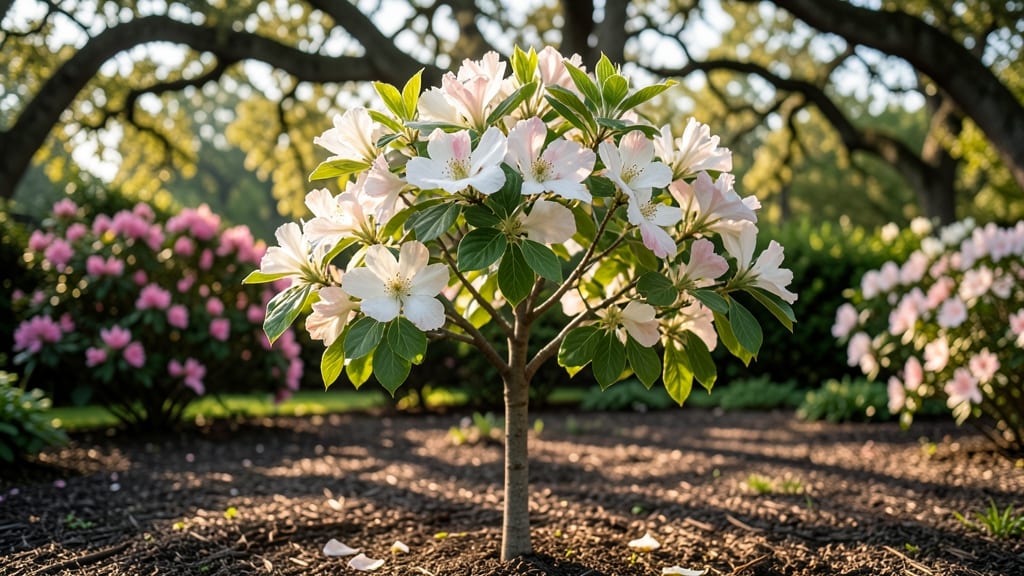
A dogwood bloom looks like four elegant, petal-like bracts—often creamy white, soft pink, or vibrant red—that frame a tiny, dense cluster of true flowers at its center. These bracts have a delicate, almost papery texture, with edges that can range from perfectly smooth to gently ruffled, depending on the specific variety. The central cluster usually appears small and greenish-yellow, creating a striking contrast against the showy outer display.
A dogwood bloom's most striking feature is how its four bracts create an illusion of larger petals, though they're technically modified leaves. 🌸 The color variations—from pure white to deep magenta—often deepen as blooms mature, especially in sunny conditions.
Unlike true petals, these bracts remain attached long after the central flowers fade, sometimes lasting for weeks. I've noticed that cultivated varieties like 'Cherokee Brave' develop more dramatic ruffling, while wild dogwoods tend to have simpler, smoother edges.
What many gardeners overlook is how the bloom's shape changes with species: Cornus florida typically has four straight bracts, while Cornus kousa features more rounded, almost shield-like structures.
The central cluster's tiny flowers are often overlooked but play a crucial role in pollination, producing bright red berries later in the season that birds adore. For photographers, early morning light brings out the bracts' true colors, while afternoon sun can make pink varieties appear almost blush-toned.
💡 In This Article
- Identifying Dogwood Bract Shapes and Color Variations
- How to Spot Dogwood Blooms in Nature vs. Cultivated Gardens
Identifying dogwood bract shapes and color variations
The four bracts in a dogwood bloom aren't true petals but modified leaves called "tepals," which serve as the showy display while protecting the central flowers.
Their shape varies dramatically between species: Cornus florida typically features smooth, slightly elongated bracts measuring about 1.5-2 inches wide, while Cornus kousa produces broader, more rounded bracts that resemble tiny shields. 🌿 The edges can range from perfectly straight to delicately scalloped, with some cultivars like 'Rubra' developing pronounced ruffling that gives them a lace-like appearance.
Color variations are equally diverse, influenced by both genetics and environmental factors. White bracts often contain subtle pink undertones that intensify in sunlight, while red varieties like 'Cherokee Chief' develop deeper hues as they mature—sometimes transitioning from pale pink to rich magenta over 3-5 days.
Bicolor blooms, such as those in 'Golden Age,' combine creamy yellow edges with deep pink centers, creating a striking contrast. What's fascinating is how temperature affects pigmentation: cooler spring nights can produce paler blooms, while warmer days enhance vibrancy.
For gardeners, understanding these variations helps with identification. The central cluster of tiny flowers—often 1/4 inch wide—is always greenish-yellow, but its density differs by species. Cornus florida's central cluster appears more compact, while Cornus kousa has a looser arrangement with individual flowers more visible.
This distinction becomes crucial when differentiating dogwoods from similar blooms like magnolias, which lack the papery texture and central cluster structure. 🌸
Seasonal light plays a surprising role in color development. Early morning sunlight enhances the natural whiteness of pale varieties, while afternoon light can make pink blooms appear more intense. In shaded gardens, dogwoods may develop slightly paler hues due to reduced photosynthesis in the bracts.
This is why professional gardeners often recommend planting dogwoods in locations with 4-6 hours of morning sun for optimal color expression.
Here's how to quickly identify key characteristics:
- Bract Shape: Straight (wild types) vs. ruffled (cultivars like 'Cherokee Brave')
- Color Intensity: Deepens with sunlight exposure (pink/red varieties)
- Central Cluster: Compact (Cornus florida) vs. loose (Cornus kousa)
- Texture: Always papery, never waxy like true petals
The most dramatic variations appear in hybrid cultivars, where breeders have combined traits from different species. For example, 'Stellar Pink' features bracts with pink margins that fade to white toward the center, creating a gradient effect that's particularly striking in photographs.
This blending of characteristics is what makes dogwood identification both a science and an art. 💫