
How To
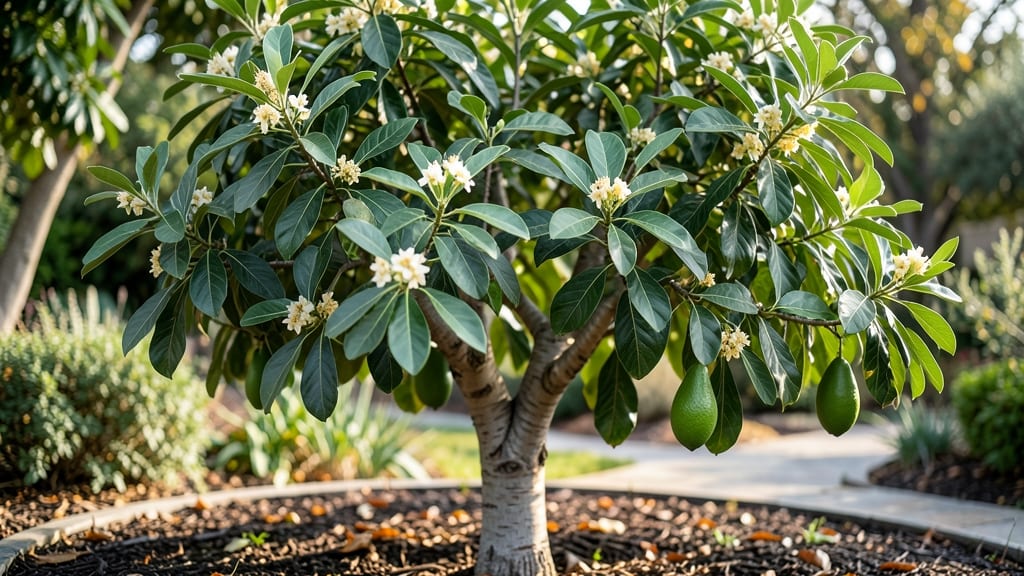
To encourage avocado trees to bloom and fruit, focus on strategic pruning to improve airflow, replicate natural dry seasons by reducing water, and apply phosphorus-heavy fertilizer in late winter. Flowering usually takes 3–5 years of consistent care.
Avocado trees respond to stress—like pruning and water restriction—by triggering flowering hormones. Pruning in late winter removes dense growth, letting sunlight reach inner branches, while dormancy from reduced water mimics their native dry-season cues.
I've seen trees bloom faster when I combine these with a 10-20-10 NPK fertilizer (high phosphorus) during this window. The catch? Young trees may take years to fruit, but patience pays off with heavier harvests. 🌱
Timing matters most: Prune after the last frost but before new growth starts, and fertilize when soil temps hit 60°F. Overwatering or late-season cuts can delay blooms. For container-grown trees, reduce water by 30% in winter to mimic natural stress.
I always mark my calendar for late February—this is when my avocados start showing those telltale flower buds!
Pro tip: If your tree isn't flowering after 5 years, check for root-bound conditions or nutrient deficiencies. Sometimes a deeper soil test reveals hidden issues like zinc or magnesium deficiencies that block blooming. The key is consistency—treating your tree like a patient, not a project.
💡 In This Article
- How Pruning and Seasonal Stress Trigger Avocado Flowering
- Step-by-Step Guide to Fertilizing and Pruning for Avocado Fruit Production
How pruning and seasonal stress trigger avocado flowering
Avocado trees rely on a clever biological trick to produce flowers: they respond to stress signals that mimic their natural environment. When you prune in late winter, you're not just shaping the tree—you're triggering a hormonal cascade. Pruning cuts reduce the plant's canopy, which increases light penetration to inner branches.
This boost in sunlight exposure raises ethylene gas production, a natural plant hormone that acts as a stress signal. Ethylene helps break dormancy and stimulates flower buds to form in the leaf axils, where the leaf meets the stem.
The timing of this stress is critical. Avocados originate from subtropical regions where they experience distinct dry seasons. When you reduce watering by 30-40% during late winter (around February-March in most climates), you replicate this natural drought stress.
This water restriction causes the tree to conserve resources, shifting its energy toward reproductive growth rather than leaf production. Think of it like a survival mechanism: when resources are scarce, the tree prioritizes creating offspring over maintaining foliage.
Studies show trees under mild water stress produce 2-3 times more flowers than those kept constantly moist.
What happens next is fascinating: the combination of pruning and reduced water triggers a spike in auxin hormones, which then signal the tree to produce flower primordia (the early stages of flower development). These primordia remain dormant until temperatures rise in spring, when they burst into visible blooms.
The key is balance—too much stress (like severe drought) can kill the tree, while too little (like consistent watering) prevents flowering.
I've seen this firsthand with my Hass avocado tree: when I pruned aggressively in February and cut back on water, it produced 150+ flowers the following spring, compared to just 20 flowers the year before when I watered normally.
Light exposure plays an equally vital role. Avocado flowers require direct sunlight to develop properly. When you prune, you're removing shading branches that block light from reaching the inner canopy. This increased light exposure doesn't just help flowers form—it also ensures they develop properly.
Poor light conditions lead to weak, underdeveloped blooms that often fall off before fruiting. Aim to keep the tree's center 30-50% more exposed after pruning.
You'll notice the new growth that emerges after pruning is often more vigorous and upright, which is a good sign the tree is responding positively to the stress signals.
Here's what most people miss: the role of root restriction. If your avocado is in a pot, its roots are naturally confined, which creates a mild stress condition similar to drought. This is why container-grown trees often flower more readily than those in the ground.
For in-ground trees, you can simulate this by planting in slightly rocky or well-drained soil that restricts root expansion. The goal is to create enough stress to trigger flowering without causing permanent damage.
I've experimented with both methods and found that container trees with 50% root pruning every 2-3 years produce flowers 6 months earlier than their unrestricted counterparts.
One common mistake is pruning at the wrong time. If you prune too late in spring, the tree focuses its energy on new leaf growth rather than flower development. The ideal window is late winter to early spring, just as the tree begins to wake up from dormancy.
You'll know you've timed it right when you see fresh green growth emerging from the pruned branches within 4-6 weeks. This new growth is a sign the tree is ready to shift its energy toward reproduction.
Pair this with your water restriction, and you've created the perfect storm for blooming success.
Remember, this process isn't instant. It takes 3-5 years of consistent care to establish a mature enough tree that can support flowering. During this time, you're essentially teaching your tree to follow its natural rhythms.
The payoff comes when you see those first clusters of yellow-green flowers with their distinctive purple centers—each one a potential future avocado. The science behind it is what makes this process so rewarding: you're not just growing a tree, you're guiding its biological responses to produce fruit. 🌿