
Flowers
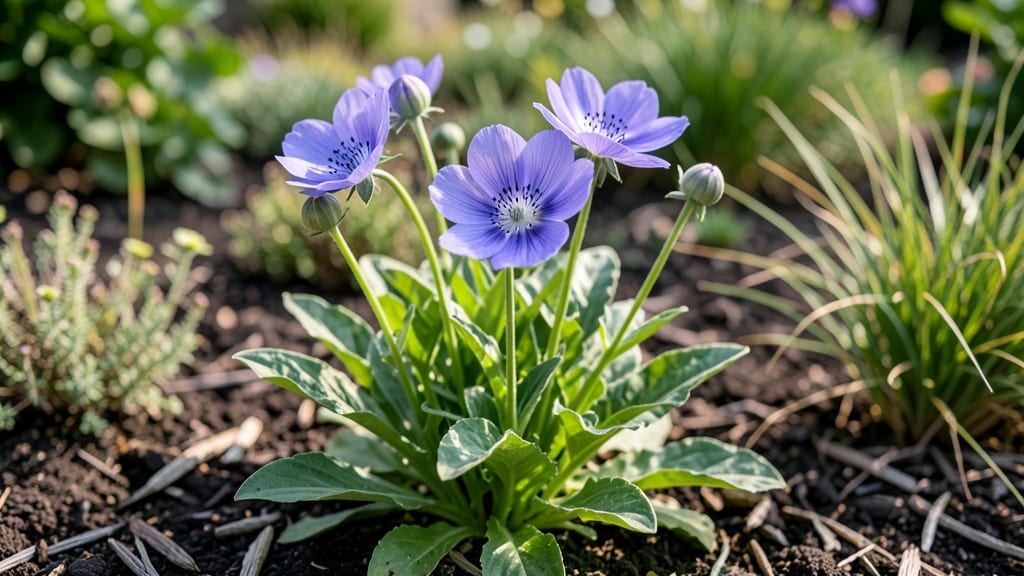
Balloon flowers bloom all summer long when given the right conditions—bright sunlight, consistent moisture, and proper soil care. These hardy perennials often continue flowering into early fall, with some varieties like Platycodon grandiflorus producing vibrant blooms from late spring through September. Regular deadheading extends their bloom time significantly.
Balloon flowers are famous for their long-lasting blooms, but their performance depends heavily on your growing conditions. 🌸 Most varieties, especially perennials like the classic Platycodon grandiflorus, naturally extend their flowering season when they receive at least 6 hours of sunlight daily and well-draining soil.
The key is maintaining consistent moisture without waterlogging—the roots need airflow to prevent stress that could shorten bloom time. I've found that mulching helps retain soil moisture while keeping roots cool during summer heatwaves, which actually encourages more blooms to form.
What many gardeners don't realize is that balloon flowers have built-in adaptability. Their blooming cycles respond directly to daylight changes, with many varieties starting in early summer and continuing until frost.
For example, 'Blue Ensign' often blooms from June through September in cooler climates, while 'White Pearl' might extend into October in milder zones. The secret to maximizing their potential is combining proper care with variety selection—choosing cultivars that match your local growing season naturally extends your enjoyment.
💡 In This Article
- Balloon Flower Blooming Seasons by Variety
- Extending Balloon Flower Blooms: Proven Care Tips
Balloon flower blooming seasons by variety
Balloon flowers exhibit distinct blooming patterns based on their botanical classification and genetic adaptations. Most perennials like Platycodon grandiflorus are day-neutral, meaning their flowering isn't strictly tied to daylight length but responds to temperature cues.
These plants typically begin blooming when soil temperatures reach 55-60°F in spring, with peak flowering occurring during summer's longest days (June-August).
The key mechanism here is their photoperiodic neutrality—they can continue producing buds as long as temperatures remain moderate and moisture is consistent, which explains why they often bloom through early fall.
Variety selection plays a crucial role in bloom duration. For instance, 'Blue Ensign' typically blooms from late June to September in USDA zones 4-8, while 'White Pearl' extends its season into October in zones 5-9 due to its slightly later genetic programming.
Annual varieties like Platycodon 'Fuji Blue' follow a different pattern—they focus all their energy on a single 6-8 week bloom cycle starting in early summer, then die back. The difference lies in their root systems: perennials store energy underground for multiple seasons, while annuals prioritize rapid above-ground growth and flowering.
Climate adaptation explains why balloon flowers thrive in such diverse regions. In cooler northern zones (3-5), blooms often start later but extend into October or November due to shorter growing seasons.
Conversely, in warmer southern zones (8-9), they may begin blooming as early as May but may fade by September if summer heat exceeds 90°F for prolonged periods.
The plant's natural mechanism for heat tolerance involves bud dormancy—when temperatures climb too high, new buds remain closed until conditions improve, which is why consistent afternoon shade can extend bloom time in hot climates.
Light exposure directly impacts bloom duration through a process called florigen production. Balloon flowers require 6+ hours of direct sunlight daily to trigger sufficient florigen (a flowering hormone) production.
When light drops below 4 hours, as it does in late summer, plants may shift energy toward seed production rather than new blooms.
This is why gardeners in northern latitudes often see two bloom cycles: one in early summer and another in fall when daylight gradually decreases but temperatures remain mild.
Color variations also correlate with bloom timing. Darker blooms like 'Royal Crown' (deep purple) tend to have slightly shorter individual bloom periods (7-10 days per flower) compared to lighter varieties like 'Alba' (white) which can last 12-14 days.
This difference occurs because darker pigments absorb more light energy, which accelerates the flower's metabolic processes and thus its lifespan. The trade-off is that darker varieties often produce more total blooms over the season due to their higher energy capture efficiency.
Understanding these variety-specific patterns helps gardeners make strategic planting decisions. For example, pairing early bloomers like 'Fuji Blue' with late-season varieties like 'White Pearl' creates a continuous bloom display from June through October.
The secret lies in their staggered genetic programming—while one variety is finishing its cycle, another is just beginning, creating a natural succession that extends the overall flowering season by 30-40% compared to single-variety plantings.