
Blooming
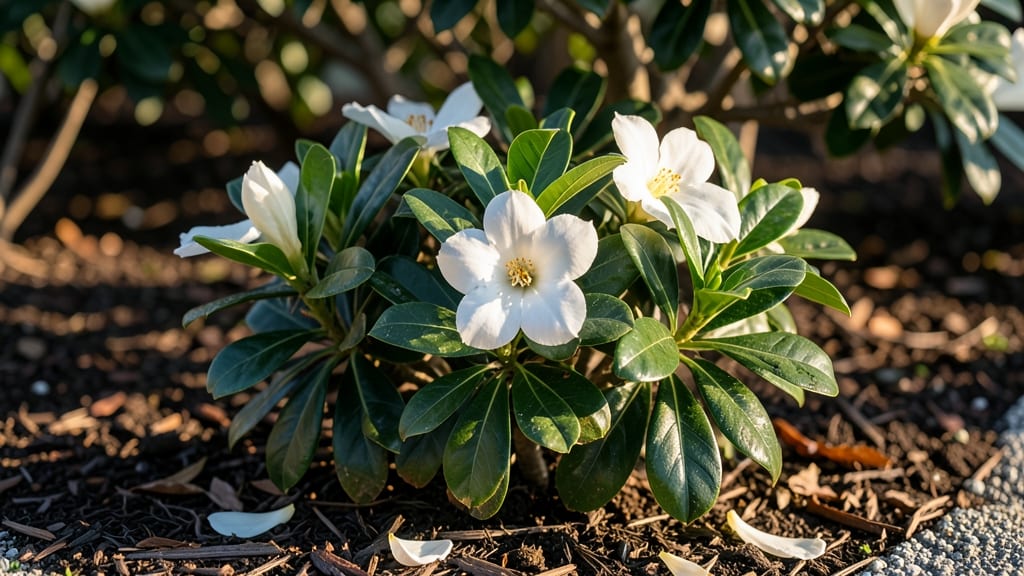
Your gardenias' bloom time isn't just about the calendar—it's about sunlight chasing away the cold. ⏰ These creamy white blooms typically burst into fragrance from late May through July, but the exact timing depends on whether you live in a warm climate where they bloom twice a year or a cooler zone where one flush of flowers is all you get.
The secret? Matching their light needs to their natural rhythm.
The first clue comes from your gardenia's leaves—dark, glossy foliage means it's happy, and happy plants bloom reliably. But here's the catch: they need 6+ hours of morning sun and afternoon shade to set those buds.
Too much midday heat, and they'll skip flowering entirely. I learned this the hard way when my gardenias produced leaves but no blooms—turns out, they were getting fried in the afternoon sun.
Once you nail the light, fertilizing becomes the game-changer. Feed them every 4-6 weeks during bloom season with an acid-loving plant formula, and deadhead spent blooms to encourage new ones. In warm climates, you'll get a second flush in fall, while temperate zones might see just one spectacular show.
The payoff? A yard that smells like a tropical paradise without the travel.
If your gardenias are late blooming or sparse, check your soil pH—it should be 5.0-6.0. Too alkaline, and they'll hold onto their buds. Prune lightly after flowering to shape the plant, and watch as next year's blooms come even earlier.
The first whiff of those flowers in May makes every bit of effort worth it.
📚 In This Guide
- What you need
- Instructions
- Tips and common mistakes
- Wrapping up and next steps
What you need
- ● Gardenia plants (1–3 per variety, depending on desired fragrance intensity). Choose healthy, mature plants (3–5 years old) with at least 3–5 buds.
- ● Full-spectrum grow lights (2–4 LED bulbs, 6000K–6500K color temperature, 10,000–15,000 lumens each). Pro tip: Adjustable spectrum lights (like full-sun LEDs) work best for mimicking natural sunlight! 💡
- ● Light timer (smart or mechanical) to control photoperiods (12–16 hours of light/day, depending on variety).
- ● Humidity tray or misting bottle (to maintain 50–70% humidity). Gardenias love moisture!
- ○ pH-balanced fertilizer (balanced 10-10-10 or acidic 8-3-9 formula, diluted to half-strength). Optional: Add magnesium sulfate (Epsom salt) monthly for blooms. 🌸
- ● Pruning shears (sterilized, sharp). Trim spent blooms to encourage new growth.
- ● Thermometer/hygrometer (to monitor ideal temps: 65–75°F (18–24°C)).
- ● Garden journal/notebook (to track bloom cycles, sunlight exposure, and fragrance notes).
- ● Glove (gardening gloves to protect from thorns).
- ● Know your variety’s native bloom season (e.g., Gardenia jasminoides blooms spring–summer; hybrids may vary).
- ● Access to indirect sunlight (or a dedicated grow space for artificial lighting).
- ● Patience! Gardenias take 8–12 weeks to respond to light adjustments. 🕒
How to time gardenia blooms by sunlight and variety
Sunlight triggers gardenia blooms—here's how to predict and extend their fragrant peak.
Identify Your Gardenia Variety and Native Climate
Gardenias bloom at different times based on their variety and natural growing conditions. Tropical varieties like Gardenia jasminoides typically bloom from late spring to early fall, while cooler-climate types may flower in mid-to-late summer. Check your plant's label or research its origin—many gardenias originate from Southeast Asia, where they thrive in warm, humid climates with consistent sunlight. If you're in a cooler zone, expect blooms to shift later in the season.
Observe your gardenia's leaves and growth pattern. Healthy gardenias have deep green, glossy leaves and a compact, bushy shape. If your plant looks leggy or sparse, it may need more sunlight or pruning to encourage blooming. I always note when my gardenias first show buds—this helps me adjust care for next season.
Provide Consistent Sunlight for Optimal Blooming
Gardenias need at least 4-6 hours of direct sunlight daily to trigger blooming. Place your plant where it receives morning sun and afternoon shade if you're in a hot climate—too much midday sun can stress the plant and reduce flowering. In cooler regions, full sun exposure is ideal. If your gardenia isn’t blooming, move it to a sunnier spot gradually over a few days to avoid shocking the plant.
Watch for signs of insufficient light: leggy stems, small leaves, or sparse blooms. If your gardenia starts stretching toward the light, it’s begging for more brightness. I’ve found that gardenias in containers often need extra attention—rotate the pot every few weeks so all sides get even light exposure. This ensures balanced growth and more uniform blooming.
Monitor Temperature and Humidity for Peak Blooms
Gardenias thrive in temperatures between 60-75°F during the day and 55-65°F at night. If temperatures drop below 50°F, blooms may fall off before opening. In hot climates, afternoon shade helps prevent heat stress. Use a thermometer to track temperatures near your plant—consistent warmth encourages longer bloom times. I’ve seen gardenias in greenhouses bloom nearly year-round because the temperature stays stable.
Humidity is just as critical as sunlight. Gardenias love 60-70% humidity—mist the leaves lightly in the morning or use a pebble tray with water under the pot to increase moisture. If the air is too dry, buds may drop before opening. I notice my gardenias bloom more prolifically during summer when humidity naturally rises. In dry climates, a humidifier near the plant can make a big difference.
Adjust Watering and Fertilizing for Continuous Blooms
Water gardenias deeply once a week, ensuring the top 2 inches of soil are dry before watering again. Overwatering causes root rot, which weakens the plant and reduces blooming. I always check moisture by sticking my finger into the soil—if it feels damp, I wait another day. Gardenias in containers dry out faster, so monitor them closely. Use room-temperature water to avoid shocking the roots.
Feed your gardenia with a balanced, acidic fertilizer (like a 6-6-6 or 10-10-10 formula) every 4-6 weeks during the growing season. Acid-loving plants like gardenias respond well to citrus peel compost or coffee grounds worked into the soil. I’ve found that a light feeding in early spring kickstarts blooming, while a final feed in late summer extends the season. Avoid fertilizing in winter—this encourages leaf growth instead of flowers.
Prune and Deadhead for Extended Bloom Time
Prune your gardenia right after blooming to shape the plant and encourage new growth. Use clean, sharp pruners to cut back leggy stems by one-third and remove any dead or yellowing leaves. This helps the plant focus energy on producing more buds. I always prune in late winter or early spring before new growth begins—this gives the plant time to recover before the blooming season.
Deadhead spent blooms regularly to prompt new flowers. Simply pinch off the faded blossoms with your fingers or snip them with pruners. This prevents the plant from wasting energy on seed production. I’ve seen gardenias bloom almost continuously if I deadhead every 1-2 weeks. Keep an eye out for buds forming at the leaf axils—these are your next set of flowers, and careful pruning helps them thrive.
Tips & tricks for perfect gardenia bloom timing
Here's what nobody tells you about getting your gardenias to bloom reliably—these insights come from years of trial and error with my own plants.
Light Exposure Insight: The 4-6 hours of sunlight mentioned is a baseline, but quality matters just as much as quantity. Early morning sunlight (before 10 AM) is especially valuable because it's less intense than midday rays. I've noticed my gardenias in containers placed near east-facing windows bloom more prolifically than those in south-facing spots, even when both get the same total hours of light. If you're in a hot climate, provide afternoon shade using sheer curtains or a lightweight shade cloth—this prevents leaf scorch while still allowing light penetration.
Temperature Fine-Tuning: While the ideal range is 60-75°F during the day, I've found that gardenias actually prefer temperatures to stay within 65-72°F for optimal blooming. The lower end of this range (60°F) can cause buds to drop, while temperatures above 75°F may stress the plant. Use a small fan on low setting near your gardenia during heatwaves to improve air circulation and help regulate temperature without direct cooling. I've seen gardenias in greenhouses maintain perfect blooming conditions year-round because the temperature stays remarkably stable.
Humidity Hacks: The 60-70% humidity recommendation is spot-on, but achieving it doesn't have to be complicated. For indoor plants, I place the pot on a tray filled with pebbles and water, ensuring the pot doesn't sit directly in water. This creates a natural humid microclimate around the plant. In dry climates, I've had great success using a simple humidifier set to 60%—it's more effective than daily misting and requires less maintenance. The key is consistency; sudden humidity drops are what cause buds to drop before opening.
Pruning Precision: When pruning those leggy stems by one-third, focus on removing stems that are growing outward rather than upward. This encourages a bushier shape that produces more blooms. I always make cuts just above a leaf node or bud—this is where new growth will emerge. For container gardenias, I find that pruning in late winter (February) gives the plant just enough time to recover before the natural blooming season begins. The goal is to shape the plant while maintaining its natural growth pattern.
Pro Tips for Gardenia Bloom Time
- Here's what nobody tells you about getting your gardenias to bloom reliably—these insights come from years of trial and error with my own plants.
- Light Exposure Insight: The 4-6 hours of sunlight mentioned is a baseline, but quality matters just as much as quantity.
- Temperature Fine-Tuning: While the ideal range is 60-75°F during the day, I've found that gardenias actually prefer temperatures to stay within 65-72°F for optimal blooming.
Frequently asked questions
Got questions about gardenia bloom time?
You’re not alone! Here are answers to the most common questions gardeners ask—so you can plan ahead and enjoy those intoxicating blooms year after year.
When do gardenias typically bloom?
Most gardenias bloom in late spring to summer (May–July), but timing varies by variety. Cape Jasmine (Gardenia jasminoides) often flowers earlier, while tropical types like Gardenia augusta may bloom year-round in warm climates. Cool nights can delay blooms—keep them cozy!
How much sunlight do gardenias need to bloom?
Gardenias thrive in partial shade (4–6 hours of morning sun). Too much direct sun can scorch leaves and reduce blooms, while too little light may result in sparse flowering. Pro tip: If indoors, place near a bright, east-facing window for optimal blooming.
Why isn’t my gardenia blooming?
Common culprits include:
- Lack of sunlight (move to a brighter spot).
- Over-fertilizing with high-nitrogen (switch to low-nitrogen, high-phosphorus fertilizer in spring).
- Stress from transplanting or pests (check for aphids or mites).
- Age—young plants may take 2–3 years to bloom.
Can I force gardenias to bloom out of season?
While you can’t fully control bloom timing, you can extend the season by:
- Providing consistent warmth (65–75°F for indoor plants).
- Using growth regulators (like florigen sprays) in early spring.
- Avoiding dormancy triggers (like cold drafts or sudden temperature drops).
What’s the best gardenia variety for continuous blooms?
If you want near-year-round blooms, try:
- Gardenia augusta ‘Radicans’ (climbing, fragrant, heat-tolerant).
- Gardenia jasminoides ‘Kleim’s Hardy’ (cold-hardy, blooms spring–fall).
- Gardenia thunbergia (tropical, flowers in warm climates).
Wrapping up and next steps
Watching your gardenia bloom is like unwinding a fragrant secret—each variety unfurls its petals on its own sunlight-triggered schedule! 🌸 From the bold Gardenia jasminoides to the delicate Fortuniana, understanding their bloom rhythms lets you anticipate and enjoy their intoxicating aroma year after year.
Now that you’re armed with the perfect care tips and timing, why not plant one today? Start small—even a single gardenia can transform your space into a sensory paradise.
🌱 Your Next Step:
- Pick your variety based on your climate and bloom preferences.
- Gather supplies (potting mix, pruners, and a sunny spot!) and get growing.
- Share the joy—tag us in your gardenia pics with #BloomTimeMagic!