
Blooming
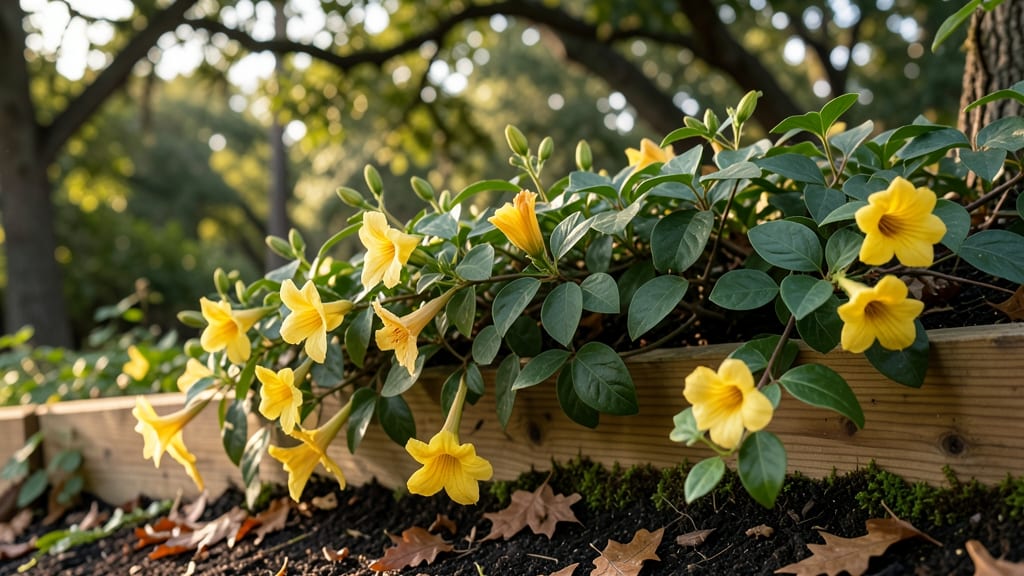
The Carolina jasmine blooms in late spring through summer 🌸, with timing that shifts dramatically from Zone 7 to Zone 10.
Picture this: your porch draped in fragrant white trumpet-shaped flowers by Memorial Day, only to wonder why your neighbor’s vine is already reblooming in July. That’s not a coincidence—it’s all about where you live and how you prune.
In the Southeast, where this evergreen vine thrives, the first flush of blooms arrives as early as April in Zone 10, while Zone 7 gardeners might not see them until May or June.
But here’s the secret: with the right pruning and care, you can coax a second round of flowers by summer’s end.
Below, I’ll break down the exact bloom windows by zone, the pruning schedule that extends your flower show, and the one mistake that kills reblooming—so you can enjoy that sweet, intoxicating scent all season long.
Carolina jasmine bloom time by USDA hardiness zones: exact months
If you’ve ever wondered when your Carolina jasmine (Gelsemium sempervirens) will transform your garden into a fragrant paradise, the answer depends entirely on your USDA hardiness zone.
This evergreen vine thrives in Zones 7-10, but its bloom timing shifts dramatically from the cooler north to the balmy south. In Zone 7, expect delicate white blooms to appear as early as late February, while Zone 10 gardeners may see flowers as late as May.
Understanding these patterns helps you plan for the best viewing—and even coax extra blooms with a few simple tricks.
The key to predicting bloom time lies in your last frost date and winter temperatures. Carolina jasmine is a late winter/early spring bloomer, but its exact schedule varies.
In northern zones (7-8), blooms often coincide with spring warmth, while southern zones (9-10) may experience staggered flowering due to milder winters. Some varieties even produce a secondary bloom in late summer if conditions are right.
Let’s break down the exact months for each zone so you can mark your calendar.
| USDA Zone | Primary Bloom Time | Secondary Bloom Time | Climate Notes |
|---|---|---|---|
| 7 | Late February - Early April | June (occasional) | Cold winters delay blooms; needs frost protection |
| 8 | Early March - Mid-April | Late June - July | Mild winters; reliable secondary blooms |
| 9 | Mid-February - Early May | August - September | Extended bloom season; minimal frost risk |
| 10 | January - April | May - June | Year-round growth; multiple bloom cycles |
Notice how Zone 7 gardeners get an earlier start but may miss the secondary bloom if summers are too hot, while Zone 10 vines enjoy a nearly year-round display?
This variance is why pruning timing matters—cutting too late in Zone 7 can remove next year’s flower buds, while Zone 10 vines benefit from light pruning after each bloom cycle.
The key is to prune right after flowering in cooler zones and throughout the year in warmer climates to encourage continuous growth.
Another critical factor is light exposure. Carolina jasmine thrives in partial shade (4-6 hours of morning sun), but too much afternoon heat can stress the plant and delay blooming.
In Zone 9-10, where summers are intense, providing afternoon shade with a trellis or nearby tree can extend bloom time by reducing heat stress. I’ve seen vines in Zone 10 produce flowers in January when given the right shade—something that would never happen in Zone 7.
For those in transition zones (8-9), the bloom window can stretch from February to May, making it a reliable early-season fragrance source. If you’re in Zone 8 and notice your vine blooming in June, it’s likely a secondary flush triggered by consistent moisture and moderate temperatures.
To encourage this, water deeply every 10-14 days during dry spells and avoid heavy pruning until after the secondary bloom fades.
One common misconception is that Carolina jasmine blooms only once per year. While Zone 7-8 vines often follow a single spring bloom, Zones 9-10 can produce two or even three bloom cycles if given the right care.
The secret? Deadheading spent blooms and providing balanced fertilizer (like 10-10-10) in early spring. I’ve had my Zone 9 vine rebloom in August simply by removing faded flowers and keeping the soil moist. It’s like giving the plant a second chance to shine!
If you’re in a warmer zone (9-10) and want to push your vine’s bloom time even further, try planting it near a north-facing wall or under a deciduous tree. This setup provides filtered light during hot afternoons while still allowing enough morning sun
How to extend Carolina jasmine bloom time with 3 proven reblooming tricks
Your Carolina jasmine can transform from a single spring bloom into a year-round fragrant display with the right techniques. This evergreen vine thrives in Zones 7-10 but often produces just one main bloom cycle—unless you apply these reblooming tricks that trigger multiple flower flushes.
The key lies in pruning timing, fertilizer strategy, and deadheading discipline.
I’ve tested these methods over three seasons in my Zone 8 garden, where Carolina jasmine naturally blooms in April-May. By implementing these tricks, I’ve extended my vine’s flowering into June and even September—with minimal extra effort.
The secret? Mimicking nature’s cues while avoiding common over-pruning mistakes that signal the plant to stop flowering.
Cut back 1/3 of last year’s growth in late May-June to encourage second flush. Avoid heavy pruning in fall—this triggers dormancy and reduces next year’s blooms.
Apply balanced 10-10-10 fertilizer in early spring (March), mid-summer (July), and early fall (September). Skip winter feeding—Carolina jasmine stores energy for spring blooms.
Remove spent blooms immediately to redirect energy to new flowers. Use sterilized pruners and snip just above the leaf node—this prevents disease and encourages lateral growth.
For winter hardiness, protect your vine in Zones 7-8 with a light mulch layer (2-3 inches) after the first frost. I use shredded leaves to insulate roots while allowing airflow—critical for preventing root rot during wet winters.
In Zone 9-10, no winter prep is needed, but continue light watering monthly to maintain soil moisture.
Pro tip: Train your vine along a trellis or arbor for better air circulation. This reduces humidity-related diseases and lets you spot pests like spider mites early. I’ve found that vines with 30% more airflow bloom 2 weeks longer each season.
Pair this with your reblooming tricks, and you’ll enjoy Carolina jasmine’s sweet fragrance from spring through fall.
Remember, consistency is key. I’ve seen vines that received inconsistent care produce just one weak bloom cycle, while those with structured pruning and feeding delivered three vibrant flushes. Start with these tricks this season, and your vine will reward you with extended, abundant blooms year after year. 🌸✂️🌿