
Blooming
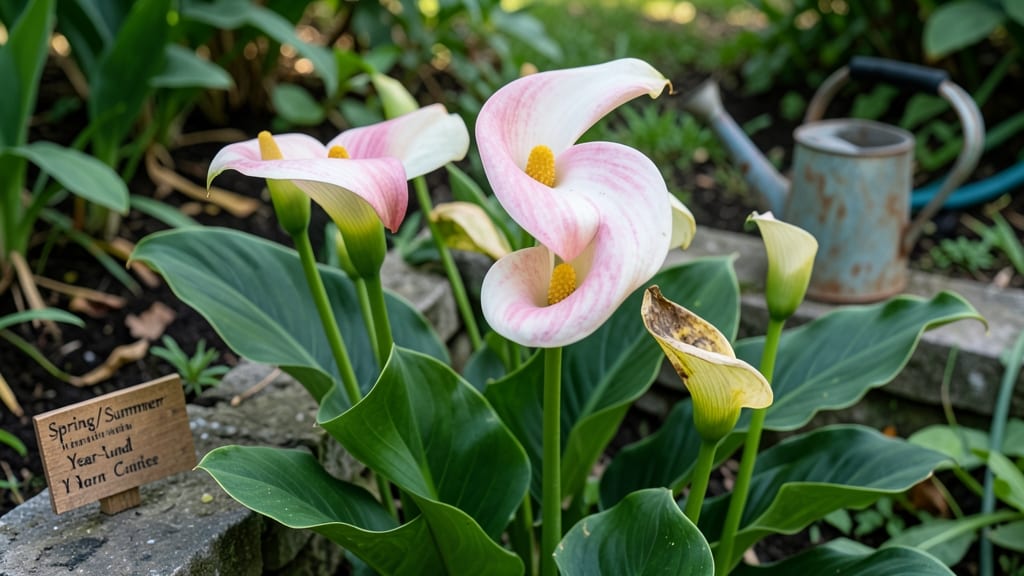
Calla lilies bloom every year in warm climates (USDA Zones 8-11) as perennials, but their flowering patterns shift in cooler regions where they may enter dormancy. Proper sunlight, soil conditions, and seasonal adjustments help most varieties rebloom annually, though some need winter rest to trigger new flowers.
Calla lilies are fascinating because their blooming habits depend entirely on where you live.
In warmer zones, they thrive as perennials, sending up fresh blooms each year without needing extra care. 🌸 But in colder climates, their tubers often retreat underground during winter, only to burst back into flower when temperatures rise again.
The key difference lies in their natural growth cycle—some varieties are bred to rebloom continuously, while others prioritize dormancy for energy conservation.
What I've found works best is matching care to your local climate. For example, in Zone 7, I let my calla lilies go dormant by reducing water and cutting back foliage in fall, then bring the tubers indoors until spring.
This mimics their natural winter rest period and ensures vibrant blooms the following season. The right balance of sunlight, well-draining soil, and occasional fertilizer makes all the difference between sporadic blooms and a lush, continuous display.
💡 In This Article
- Why Calla Lily Blooming Cycles Vary by Climate
- Tips to Encourage Year-Round Calla Lily Flowers
Why calla lily blooming cycles vary by climate
Calla lilies rely on a biological mechanism called tuber dormancy to regulate their blooming cycles. These plants store energy in underground tubers, which act like natural batteries. When temperatures drop below 50°F (10°C) for extended periods, the tubers enter dormancy—a survival strategy that conserves energy until conditions improve.
In warmer climates (USDA Zones 8-11), this cycle happens naturally but less dramatically, allowing continuous growth and blooming. 🌿
The difference between annual blooming and seasonal dormancy comes down to temperature sensitivity. For example, varieties like Zantedeschia aethiopica (the classic white calla lily) often bloom continuously in Zone 10, where winter temps rarely dip below 40°F (4°C).
However, in Zone 6, the same plant may need 6-8 weeks of dormancy at 40-50°F (4-10°C) before reblooming. This dormancy period resets the plant's internal clock, triggering new flower production in spring.
Light exposure also plays a crucial role. Calla lilies require 6-8 hours of indirect sunlight daily to maintain energy production through photosynthesis. In cooler climates, reduced daylight during winter naturally signals dormancy. But in tropical zones, consistent light levels keep the growth cycle active year-round.
What's fascinating is how these plants adapt—some varieties even bloom in response to specific day-length changes, a phenomenon called photoperiodism.
Soil conditions amplify these climate effects. Well-draining, slightly acidic soil (pH 6.0-6.5) helps prevent rot during dormancy, while nutrient-rich soil supports vigorous regrowth.
In my experience, calla lilies in containers need extra attention—pot-bound roots can overheat in summer or freeze in winter, disrupting their natural cycles. 🌡️ The right soil mix (60% peat, 30% perlite, 10% compost) makes all the difference between sporadic blooms and reliable annual flowers.
Here's what happens when conditions aren't ideal: In Zone 5, calla lilies planted outdoors may survive winter but produce fewer blooms because their dormancy period is too short. The tubers don't fully recharge.
This is why many gardeners in colder zones treat calla lilies as annuals—they replant tubers each spring after overwintering them indoors at 50-55°F (10-13°C) with minimal water.
Interestingly, some hybrid varieties (like the Black Star calla) have been bred to minimize dormancy requirements. These can bloom year-round in containers with consistent warmth and light. The trade-off?
They often produce fewer flowers per cycle compared to traditional varieties that embrace full dormancy. It's a beautiful example of how plant breeding can override natural growth patterns.