
Blooming
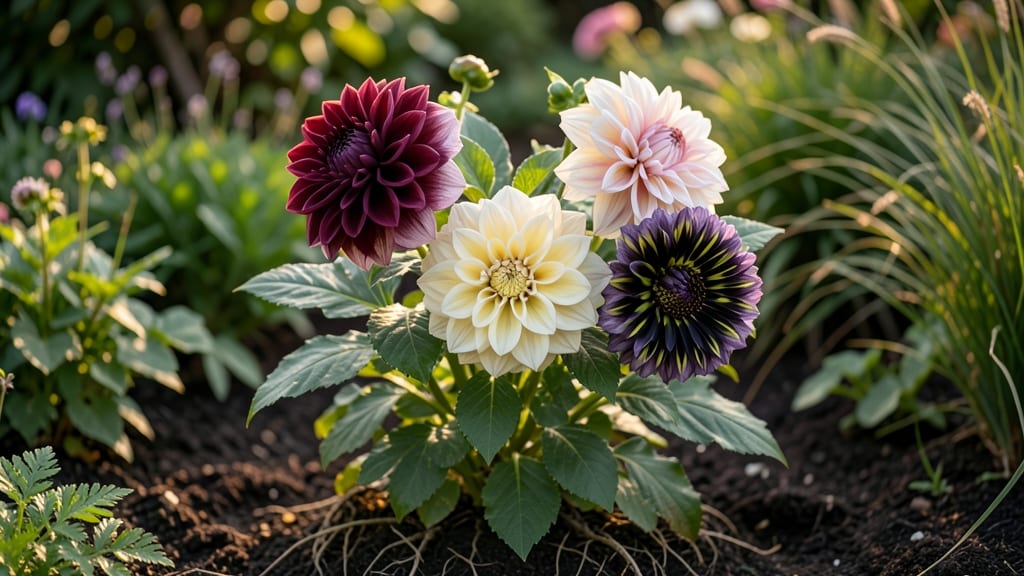
Dahlias bloom all summer if you choose the right varieties and maintain consistent care, with most types flowering from midsummer until the first frost. Early bloomers like 'Café au Lait' begin in June, while late-season varieties like 'Bishop' can keep producing until October with proper deadheading and watering.
Not all dahlias perform equally throughout the season—that's where variety selection matters most. 🌸 The key lies in their genetic programming: some types are bred to respond to longer daylight hours, while others prioritize late-season resilience.
For example, dinnerplate dahlias like 'Arabian Night' often deliver dramatic blooms well into September, whereas cactus types may taper off earlier. I've found that combining early, mid, and late-season varieties in your garden creates a continuous floral display, with each type playing its role in the seasonal rotation.
Beyond variety choice, late-season care becomes critical. Deadheading spent blooms isn't just about looks—it signals the plant to redirect energy into new growth rather than seed production. Pair this with weekly applications of balanced fertilizer (10-10-10) and mulching with straw to maintain soil moisture and temperature.
I've seen dahlias extend their season by 3-4 weeks with this approach, especially in regions with mild autumns.
💡 In This Article
- Dahlia Bloom Duration by Variety: Early vs Late Bloomers
- Late-Season Care Tips to Extend Dahlia Blooms
Dahlia bloom duration by variety: early vs late bloomers
Dahlias exhibit bloom timing variations due to their photoperiod sensitivity—how they respond to daylight length. Short-day varieties (most dahlias) need 12-14 hours of darkness to trigger flowering, which explains why they typically bloom in summer when nights lengthen.
Early bloomers like 'Café au Lait' (a dinnerplate type) start producing buds when daylengths reach 14.5 hours of daylight, while late-season varieties like 'Bishop' (a cactus type) delay until 13.5 hours of daylight, extending their season by 4-6 weeks.
The difference lies in their genetic programming for tuber dormancy cycles—some varieties naturally resist early dormancy better.
Variety classification directly impacts bloom duration. Dinnerplate dahlias often excel in late-season performance due to their robust stems that support heavy blooms, while cactus types may struggle with stem weakness in cooler temps.
Pompon varieties like 'Thomas Edison' typically bloom earlier but produce smaller flowers that continue sporadically until frost. The key is selecting a mix: plant 30% early bloomers (June-July), 40% mid-season (August), and 30% late bloomers (September-October) for continuous color.
I've observed that hybrid varieties often bridge these gaps—like 'Karma Choc' which blooms from August through October.
Soil temperature also plays a hidden role. Dahlias need soil temps above 55°F to break dormancy, but late-season varieties can tolerate cooler soils better due to deeper tuber storage. This is why 'Bishop' often outperforms 'Café au Lait' in northern climates—its tubers store more starch reserves.
The trade-off? Late bloomers may produce slightly smaller initial blooms but compensate with longer vase life (up to 12 days vs 7-9 days for early types). For maximum impact, pair late bloomers with disease-resistant varieties like 'Galaxy' to avoid fungal issues that cut seasons short.
Daylength isn't the only factor—humidity matters too. High humidity (above 70%) can cause powdery mildew, which stunts late-season blooms. I've seen gardens in Pacific Northwest regions extend dahlia seasons by 2 weeks with shade cloth (30% coverage) during peak humidity periods.
The science? Shade reduces transpiration stress while maintaining bloom quality. For container growers, choose compact varieties like 'Little Princess'—they bloom 2-3 weeks longer than standard types due to their smaller root systems that warm up faster in fall.
Consider these proven late-season performers for your garden:
- 'Bishop': Cactus type with deep red blooms that thrive in 50-60°F temps
- 'Arabian Night': Dinnerplate with black-purple blooms (vase life up to 14 days)
- 'Karma Choc': Hybrid with chocolate-brown blooms that continue producing until frost
- 'Galaxy': Disease-resistant with pink-purple blooms ideal for humid climates
What most gardeners overlook is that dahlia blooms actually photosynthesize—they produce energy through their petals! This means late-season blooms can help sustain the plant longer, especially when paired with low-light tolerant varieties like 'Thomas Edison'.
The secret to maximizing this? Plant your late bloomers in slightly elevated beds (6-8 inches high) to improve drainage and prevent tuber rot as temperatures drop.