
Blooming
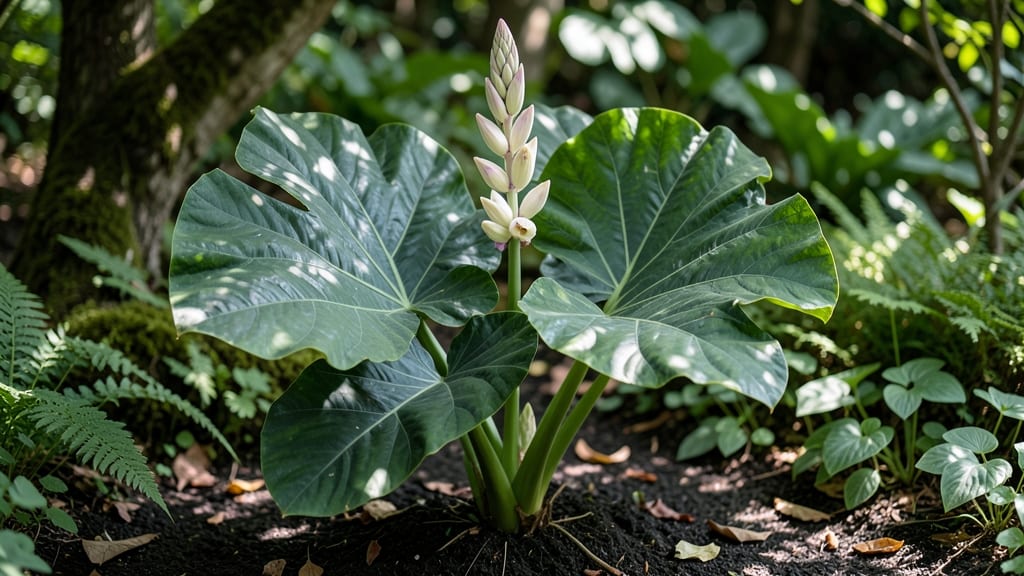
Elephant ears do bloom flowers, though their dramatic foliage steals the show with modest, arrowhead-shaped spathes that emerge in summer. These plants reward mature specimens with occasional blooms when given ideal light, consistent moisture, and balanced nutrients.
While the bold, heart-shaped leaves are the star of elephant ears, their blooms are equally fascinating—though subtle. 🌿 These plants produce spathes (modified leaves that protect the actual flowers) that resemble small, pointed hoods, often in shades of white, pink, or purple.
The blooming process kicks into gear when plants reach maturity (usually after 2-3 years) and receive bright indirect light for at least 6 hours daily. Some varieties, like Alocasia zebrina, are more consistent bloomers than others, but all benefit from a nutrient boost in spring to encourage new growth.
What's interesting is how these plants "save" their energy—elephant ears often prioritize foliage growth over flowering when conditions aren't perfect.
That's why gardeners focus on creating the right environment: well-draining soil rich in organic matter, regular watering (but never soggy roots), and a light fertilizer high in phosphorus to support blooming. Pruning spent spathes in early fall can also signal the plant to prepare for next year's display.
The key is patience—these tropical beauties reward careful care with their own quiet, elegant blooms.
💡 In This Article
- Understanding Elephant Ear Flowering Mechanics
- Tips to Encourage Elephant Ear Reblooming
Understanding elephant ear flowering mechanics
The flowering process in elephant ears begins with a fascinating botanical quirk: these plants produce spathes, which are modified leaves that wrap around the actual inflorescence (the cluster of tiny flowers).
Unlike showy blooms, these spathes resemble small, pointed hoods—often white, pink, or purple—that emerge from the center of the plant. The actual flowers inside are tiny and short-lived, but the spathes provide the visual spectacle.
This structure is similar to peace lilies, where the spathe acts as a protective sheath for the flowers.
Light triggers this process through a mechanism called photoperiodism, where plants respond to day length. Elephant ears typically bloom in late spring to early summer when daylight hours stretch to 12-14 hours. The plant's internal clock detects this increase and signals the production of flowering hormones.
However, these tropical plants also need bright, indirect light—direct sun can scorch their delicate leaves, while too little light delays or prevents blooming entirely. 🌿 For example, Alocasia polly may produce spathes only when exposed to morning sun and afternoon shade.
Maturity is another critical factor—most elephant ears won’t bloom until they’ve established a robust root system, usually after 2-3 years of growth. Younger plants divert all their energy into leaf production to build reserves. Once mature, they can produce 1-3 spathes per season, depending on care.
Some varieties, like Colocasia esculenta (taro), are more prolific bloomers, while others, such as Alocasia odora, may only flower sporadically. This variability explains why some gardeners see blooms while others don’t—it’s not just about the plant but also its age and growing conditions.
The role of nutrients can’t be overstated. Phosphorus, in particular, is the key nutrient for flowering, as it supports root and bloom development. A balanced fertilizer with a higher middle number (e.g., 10-20-10) encourages spathes to form.
Without enough phosphorus, the plant may produce lush leaves but skip the blooming phase entirely. Think of it like giving your plant a bloom boost—similar to how tomatoes need phosphorus to produce fruit.
The timing matters too: applying a phosphorus-rich fertilizer in early spring helps set the stage for summer blooms.
What’s often overlooked is how temperature plays a role. Elephant ears thrive in USDA zones 8-11, where warm, humid summers create ideal conditions. In cooler climates, these plants may go dormant in winter, and their energy focus shifts to surviving rather than blooming.
Even in warm zones, sudden temperature drops below 50°F can stress the plant and delay flowering. This is why gardeners in temperate regions often grow elephant ears as annuals or bring them indoors during winter—preserving the plant’s energy for next season’s blooms.
Finally, the plant’s natural survival instincts come into play. Elephant ears prioritize leaf growth over flowering when conditions aren’t perfect—this ensures they can photosynthesize and store energy for future growth. It’s a built-in safety mechanism that explains why some plants bloom heavily one year and barely at all the next.
Understanding this helps gardeners create the right balance: providing enough light, water, and nutrients without overfeeding, which can lead to excessive foliage at the expense of blooms. 💫