
Blooming
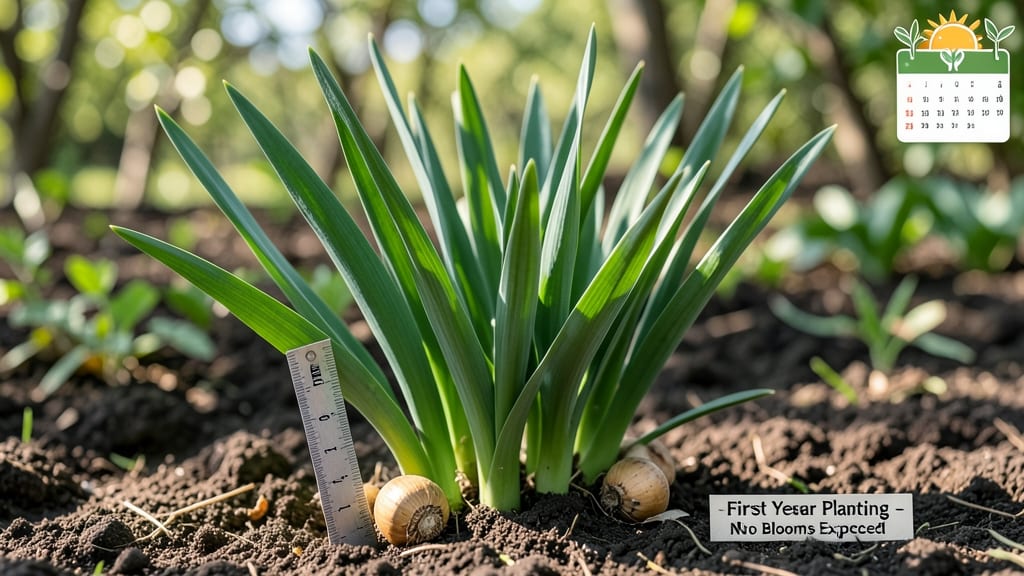
Gladiolus do not bloom the first year because they require 60-90 days of cool-season growth to develop strong corms and foliage before producing flowers. Planting in spring or summer typically delays blooming until the second year, though fall-planted bulbs may flower sooner under ideal conditions.
Gladiolus bulbs, or corms, need a cooling period to trigger flowering—a process called vernalization.
When planted in warm spring or summer months, they focus energy on root and foliage growth rather than blooming. 🌱 Fall planting gives them that critical 60-90 day cool window to mature, which is why you might see flowers the following spring.
Even then, strong corms take priority over blooms in their first year, ensuring they survive through potential winter stress.
Think of it like a marathon runner: they don't sprint in their first race. Gladiolus corms build endurance through leaf production and root development before they'll even consider flowering. This biological strategy ensures they'll have the energy reserves needed for vibrant blooms in subsequent seasons.
💡 In This Article
- Gladiolus Growth Cycle: Why First-Year Blooms Rarely Happen
- Tips to Encourage Gladiolus Flowers in Their First Year
Gladiolus growth cycle: why first-year blooms rarely happen
Gladiolus corms follow a strict biological timeline where flowering is a secondary priority after establishing robust root systems and foliage. The process begins with vernalization—a cooling period of 60-90 days at temperatures between 35-50°F that triggers the plant's internal clock to produce flowers.
Without this cool exposure, the corm remains in a vegetative state, focusing energy on leaf production instead. 🌱 This is why spring-planted gladiolus rarely bloom that same year—they missed their vernalization window.
The science gets even more precise when you consider photoperiodism. Gladiolus are long-day plants, meaning they need 14+ hours of daylight to initiate flowering. Summer planting in regions with shorter daylight hours (like northern climates) further delays blooms.
The corm's energy budget is a zero-sum game: every calorie spent on leaves or roots is one less available for flower buds. Even under ideal conditions, a first-year corm typically produces 4-6 leaves before diverting any resources to blooms.
Temperature plays a critical role in this cycle. When soil temperatures exceed 70°F, corm growth slows dramatically, and the plant enters a state of dormancy-like stasis. This is why fall planting—when soil temps naturally drop—gives gladiolus the best chance at early blooming.
The corm senses cooling and begins storing starches, setting the stage for spring flowering. Without this seasonal temperature shift, the plant essentially stays in "growth mode" indefinitely, prioritizing survival over reproduction. 🌡️
There's also a size factor at play. Mature gladiolus corms (those 2-3 inches in diameter) have the energy reserves to produce flowers in their first year, while smaller corms (1 inch or less) focus entirely on bulking up.
This is why garden centers often sell "baby corms" that won't bloom until their second or third year—they're still in their developmental phase. Even with perfect growing conditions, nature has programmed these plants to play the long game.
Light exposure matters too. Gladiolus need full sun (6-8 hours daily) to maximize photosynthesis, which fuels both leaf and flower production. In shaded conditions, the plant diverts all energy to leaves to maintain photosynthesis efficiency.
This is why you'll often see gladiolus with lush foliage but no blooms—they're simply not getting enough light to support both growth priorities simultaneously. 🌞
What most gardeners don't realize is that even when gladiolus do bloom in their first year, the flowers are typically smaller and less vibrant than subsequent years. This is because the plant is still allocating resources to corm enlargement.
The true showstopper blooms come in years two and three, when the corm has reached its full potential size and energy reserves are optimized for floral display.