
Blooming
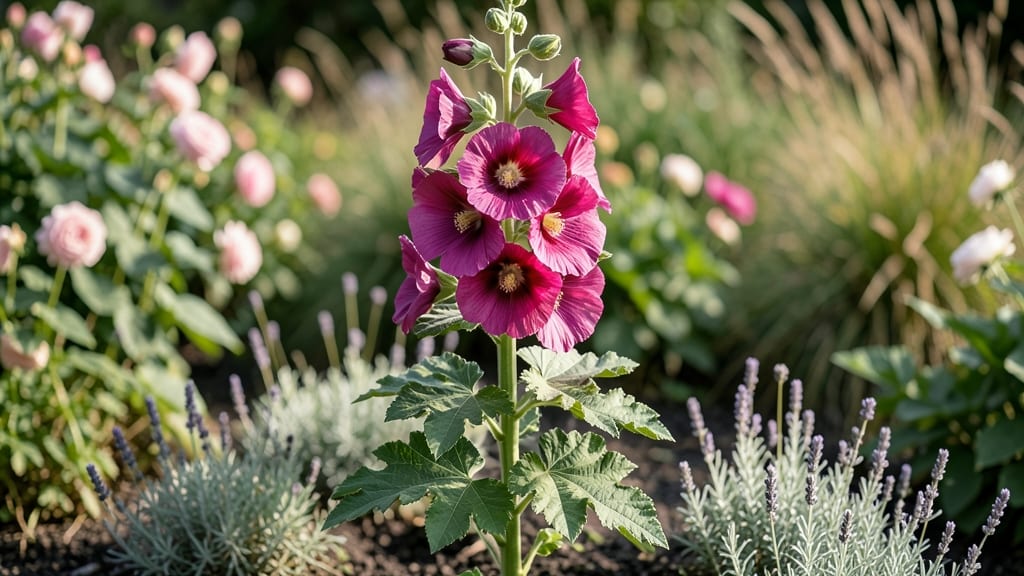
Hollyhocks do not bloom all summer, as most varieties produce a single flush of flowers in early to mid-summer before fading, though reblooming cultivars like 'Black Night' or 'Peach Blossom' may offer sporadic blooms with deadheading and proper care.
Most hollyhock varieties are perennial plants that prioritize energy storage for winter survival over continuous flowering. 🌸 The single bloom cycle in early summer helps them build root systems and foliage for the next season.
Reblooming types like 'Black Night' break this pattern by redirecting energy toward multiple bloom cycles when given consistent care, including regular deadheading and balanced fertilization.
Understanding your hollyhock's growth habit is key—annual varieties (like 'Chater's Double') will bloom prolifically but only for one season, while perennials like 'Lady Alice' may reward you with a second bloom if you remove spent flowers promptly.
The secret lies in mimicking nature's cues: keeping the soil consistently moist and providing afternoon shade during peak summer heat can extend the blooming window for rebloomers.
💡 In This Article
- Hollyhock Bloom Cycles: Single vs Reblooming Varieties
- Maximizing Hollyhock Blooms: Pruning and Care Tips
Hollyhock bloom cycles: single vs reblooming varieties
The hollyhock's bloom cycle is fundamentally tied to its survival strategy. Most varieties, including the classic Alcea rosea, allocate their energy to a single, dramatic flowering period in early to mid-summer. This burst of blooms helps them store nutrients in their extensive taproots for winter dormancy.
The process begins when daylight hours reach 14-16 hours—a threshold that triggers their natural flowering mechanism. 🌿 This single flush typically lasts 4-6 weeks, after which the plant shifts focus to seed production and root development.
Reblooming cultivars like 'Black Night' or 'Peach Blossom' operate differently—they've been selectively bred to redirect energy toward multiple bloom cycles. These varieties can produce 2-3 bloom periods per season when given proper care, though each subsequent flush tends to be smaller than the first.
The key difference lies in their genetic ability to maintain a balance between flowering and vegetative growth throughout the summer. Temperature plays a critical role here: most hollyhocks enter dormancy when nighttime temperatures drop below 50°F, which is why late-summer blooms often fade as autumn approaches.
Daylight length also influences reblooming potential. Hollyhocks are long-day plants, meaning they flower in response to increasing daylight. However, as summer progresses and daylight begins to shorten, their natural inclination is to conserve energy.
This is why reblooming varieties require consistent care—including regular deadheading and balanced fertilization—to override their natural dormancy instincts. Without intervention, even rebloomers will typically produce just one main flush of flowers.
Another critical factor is the plant's age. Young hollyhocks (under 2 years old) often produce fewer blooms as they focus on establishing their root systems. Mature plants, particularly those 3-5 years old, have the energy reserves to support more extensive flowering.
This age-related difference explains why many gardeners notice their hollyhocks bloom more prolifically in their third season. The plant's ability to store and utilize nutrients improves with each growing cycle, allowing for better recovery between bloom periods.
Soil conditions also play a surprising role in bloom cycles. Hollyhocks thrive in well-draining, slightly alkaline soil (pH 6.5-7.5), which helps prevent fungal diseases that can stress the plant. Poor soil quality forces the plant to divert energy toward survival rather than flowering.
For example, plants in heavy clay soil may produce fewer blooms because their roots struggle to access oxygen and nutrients. This is why amending the soil with compost before planting can make a noticeable difference in both bloom quantity and duration.
Consider this comparison: A standard hollyhock variety might produce 50-100 blooms in its single summer flush, while a well-cared-for rebloomer like 'Black Night' could yield 30-50 blooms per flush across 2-3 cycles**.
The trade-off is that each subsequent flush requires more energy, which is why proper care becomes essential for extending the blooming season. 🌸