
Blooming
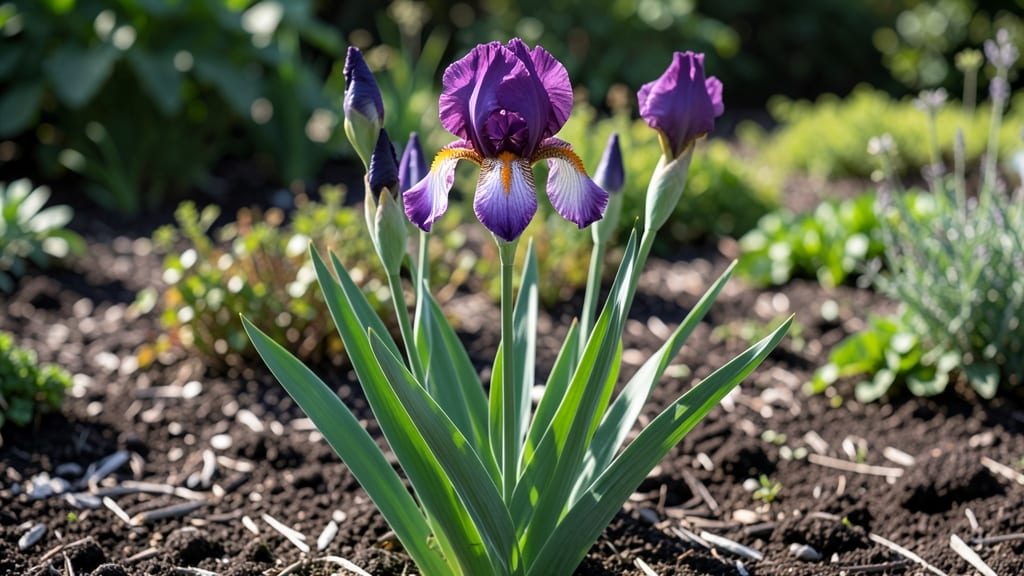
Iris blooms don't naturally last all summer; most varieties produce flowers for just 2-4 weeks in spring, though reblooming types may occasionally produce additional blooms later. Light conditions and proper pruning can help extend their flowering period but won't create continuous summer blooms.
Irises are spring's star performers, but their blooming cycles are tied directly to daylight changes and seasonal shifts. 💫 Most varieties follow a strict spring-only schedule because they're sensitive to photoperiod—longer daylight hours trigger blooming, but once summer heat sets in, many irises enter dormancy.
Even reblooming types, which may produce sporadic flowers in late summer, can't maintain a full-season display without careful care. The key to maximizing their blooming period lies in understanding their natural rhythms and providing the right growing conditions.
What's interesting is how different iris varieties respond to these seasonal cues. For example, bearded irises typically bloom once in spring, while reblooming hybrids might produce a second flush in late summer—but this second bloom is usually smaller and less abundant.
This biological limitation means that while you can't force continuous summer blooms, you can absolutely create a garden that looks stunning from spring through early fall by combining different iris varieties with complementary seasonal flowers.
💡 In This Article
- Why Iris Blooms Fade in Summer: Light and Temperature Factors
- Pruning and Care Tips to Prolong Iris Blooms
Why iris blooms fade in summer: light and temperature factors
Irises are masterful at reading seasonal cues, and their bloom cycles are primarily governed by photoperiodism—the plant's response to daylight length. Most iris varieties bloom in spring when days are lengthening, but as summer arrives, the longer daylight hours trigger a shift.
The plant's internal clock, regulated by a protein called phytochrome, detects these changes and signals the iris to conserve energy for root and rhizome development rather than producing flowers. This is why you'll see peak blooming in April-May for most varieties, followed by a sharp decline by early summer.
The temperature plays a critical role too. Irises thrive in cool to moderate climates, with ideal blooming temperatures between 50-75°F. When summer heat exceeds 85°F, many iris varieties experience heat stress, causing buds to drop or flowers to wilt prematurely.
The rhizomes also become dormant in extreme heat, redirecting energy toward survival rather than blooming. Even reblooming iris types—like the popular 'Florence' or 'Imagination' hybrids—struggle to maintain consistent blooms when summer temperatures climb, often producing only 50-70% of their spring bloom volume in late summer.
Light intensity is another key factor. Irises need full sun (6-8 hours daily) to bloom prolifically, but too much intense summer sunlight can actually overheat the rhizomes, leading to flower drop.
This is why irises planted in USDA Zones 7-9 often bloom better in spring than in summer—the summer sun is simply too aggressive.
In contrast, irises in cooler coastal regions (like Zone 6) may experience a second bloom in late summer because the temperatures stay moderate, allowing the plant to maintain its energy balance.
There's also a fascinating biological trade-off: irises prioritize rhizome expansion over flowering in summer. The energy that would go into producing flowers is instead channeled into growing thicker, more robust rhizomes for next year's blooms.
This is why even well-cared-for irises rarely produce continuous summer blooms—their survival strategy is hardwired to focus on long-term growth rather than short-term display. 🌸
For reblooming iris varieties, the second bloom is often a compromise.
These hybrids have been bred to produce a second flush, but it comes at a cost: the flowers are typically smaller (3-4 inches vs. 5-7 inches in spring) and the plant may require additional nutrients and water to sustain them.
Without proper care, the second bloom can be so minimal that it's hardly noticeable, which is why many gardeners focus on maximizing the spring display instead.
One exception to this rule is the Japanese iris (Iris ensata), which naturally blooms in late spring to early summer and can sometimes produce sporadic flowers into July or August in cooler climates.
However, even these varieties struggle in hot, dry summers, proving that while some irises can extend their bloom season slightly, they're still fundamentally spring bloomers at heart.