
Blooming
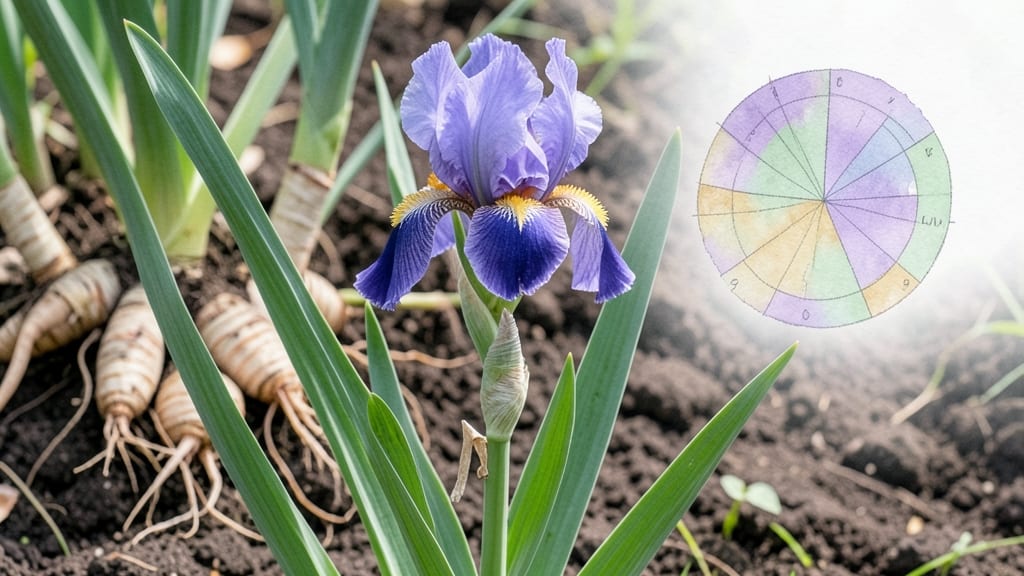
Irises don't bloom every year—most varieties produce flowers once in spring or early summer, then enter a dormant phase where they may skip blooming for 1-2 seasons to restore energy. Bearded irises usually flower annually but can rest after heavy blooming, while Siberian and Louisiana irises tend to bloom yearly when given optimal growing conditions.
This biennial or triennial blooming pattern isn't a sign of poor health but rather a natural energy conservation strategy. 🌸 Irises store nutrients in their rhizomes during their dormant phase, which helps them produce stronger blooms when they do flower.
The key factors that influence blooming frequency include sunlight exposure, soil quality, and proper watering practices. For example, bearded irises often need full sun to bloom reliably, while Siberian irises can tolerate partial shade but still require well-draining soil to perform their best.
What's interesting is how different varieties handle this cycle. Bearded irises, the most common type, typically bloom annually but may take a year off after particularly heavy flowering seasons. Louisiana irises, on the other hand, often bloom reliably each year if they receive consistent moisture, especially during their growing season.
This variability means gardeners need to understand their specific iris varieties to provide the right care for consistent blooms.
💡 In This Article
- Why Some Iris Varieties Skip Blooming Cycles
- How to Encourage Consistent Iris Blooms
Why some iris varieties skip blooming cycles
Irises follow a natural energy conservation cycle where their underground rhizomes act like biological batteries. During the blooming season, irises allocate significant energy to produce flowers, leaves, and seeds.
After flowering, they shift into a dormant phase where they prioritize storing carbohydrates in their rhizomes—these starch reserves can take 1-2 years to fully replenish.
This is why many varieties skip blooming cycles: their bodies are literally recharging for the next big display. 🌱 For instance, bearded irises may store up to 30% more starch in their rhizomes after a heavy bloom year, which translates to thicker, more robust growth in subsequent seasons.
The timing of this cycle is heavily influenced by environmental triggers. Irises are photoperiod-sensitive, meaning they respond to daylight length.
Most varieties need at least 6-8 hours of direct sunlight daily to initiate flowering, but if they receive too much shade or inconsistent light, they may delay or skip blooming entirely.
Temperature also plays a role: Siberian irises, for example, often bloom later in the season because they require cooler spring temperatures (50-60°F) to break dormancy, while Louisiana irises thrive in warmer climates (70-80°F) and may bloom earlier.
Over-fertilizing with nitrogen can also disrupt this cycle by encouraging excessive leaf growth at the expense of flower production.
What most gardeners don't realize is that stress—whether from drought, poor soil drainage, or overcrowding—can force irises into an extended dormant state. When rhizomes become waterlogged or roots are constrained, the plant diverts energy toward survival rather than blooming.
This is why well-draining soil with a pH between 6.0-7.0 is critical: it prevents root stress and allows the plant to focus on storing energy for future flowers.
Even minor disruptions, like moving an established iris to a new location, can trigger a 1-year delay in blooming as the plant readjusts.
Different iris species have evolved unique strategies for energy management. Bearded irises, for example, often bloom annually but may take a year off after producing 50+ blooms in a single season—a clear sign they've exhausted their reserves.
In contrast, Siberian irises typically bloom every year but with fewer flowers (10-20 per rhizome) because they allocate more energy to cold hardiness. Louisiana irises, which grow in swampy conditions, bloom prolifically (20-50 blooms) when given consistent moisture, demonstrating how environmental adaptation shapes blooming patterns. 🌿
Here's a key insight: the first year after planting, irises rarely bloom—they're too busy establishing their root systems. It can take 2-3 years for a newly planted rhizome to build enough reserves to produce flowers.
This is why gardeners often see their first blooms in the second or third spring, not the first. The plant's priority is survival and storage, not immediate aesthetic rewards.
Understanding this biological reality helps explain why even healthy irises might skip a season—it's not failure, but a carefully timed conservation strategy.
One common misconception is that skipping a bloom year means the iris is dying. In reality, it's often the opposite: a strong, healthy iris that's simply following its natural rhythm. The challenge for gardeners is creating conditions that minimize unnecessary stress while allowing the plant to bloom reliably.
This balance is what transforms a biennial bloomer into a nearly annual performer. 💫