
Blooming
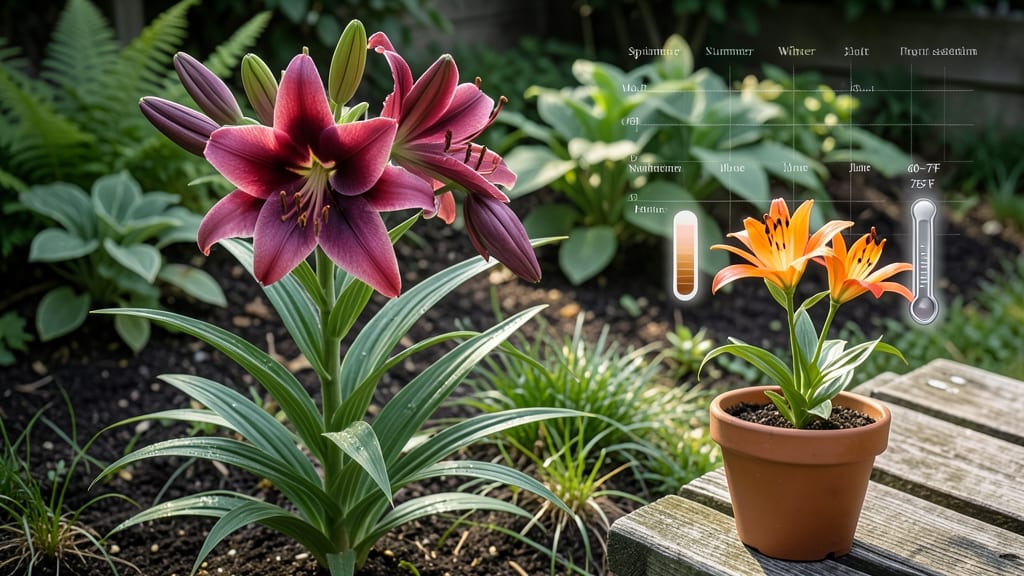
Lilies don't bloom all year—their flowering cycles are tied to specific seasonal cues like daylight length and temperature shifts. Most varieties follow predictable spring or summer blooms, while tropical types may flower sporadically in warm conditions.
Lily blooming patterns are actually quite fascinating once you understand the science behind them. 🌸 Most temperate lilies enter dormancy in winter, requiring 6-8 hours of daylight and consistent warmth to trigger their spring/summer blooms. Even tropical varieties have rhythms—some need dry seasons to reset their growth cycles.
I've found that Oriental lilies often bloom later in summer than Asiatics, while Martagon lilies may surprise you with fall blooms in cooler climates.
What many gardeners don't realize is that you can actually influence these cycles through proper care. For instance, providing well-draining soil rich in organic matter helps lilies establish strong root systems that store energy for next season's blooms.
Regular deadheading (removing spent flowers) can also encourage secondary blooms in some varieties, though this varies significantly between types.
💡 In This Article
- Lily Flowering Seasons by Variety and Climate
- Tips to Extend Lily Blooms in Your Garden
Lily flowering seasons by variety and climate
The blooming cycles of lilies are primarily governed by photoperiodism—the plant's response to daylight duration. Most temperate varieties require 12-16 hours of daylight to trigger flowering, which explains why they typically bloom in late spring through summer when days grow longer.
Asiatic lilies, for example, often begin blooming in early summer (June-July) and continue for about 4-6 weeks, while Oriental lilies tend to bloom later (July-August) due to their need for slightly cooler temperatures during bud formation.
Climate plays a crucial role in determining bloom timing. In USDA Zones 3-7, lilies enter dormancy when temperatures drop below 50°F, requiring a period of cold to break dormancy before spring blooms.
Tropical lilies, however, like the Peace Lily or Rain Lily, operate on different cues—they often bloom in response to temperature fluctuations between day and night rather than seasonal changes.
In warm climates (Zones 8-11), these varieties may produce flowers sporadically throughout the year, though they typically peak during spring and fall when humidity is higher.
Daylight requirements vary dramatically between species. Martagon lilies, also known as Turk's Cap lilies, often bloom in late summer to early fall (August-September) because they prefer shorter day lengths and cooler temperatures. This adaptation helps them avoid the peak heat of summer.
Meanwhile, Stargazer lilies (a hybrid Oriental type) may produce multiple bloom cycles if given consistent care, though their primary flowering still occurs in summer. The key difference lies in their genetic memory of ancestral growing conditions—wild lilies evolved to bloom when resources were abundant and pollinators were active.
What's fascinating about lilies is how their blooming patterns reflect their natural habitats. For instance, Asiatic lilies, native to East Asia, have adapted to monsoon climates with distinct wet and dry seasons—they bloom during the wet season when pollinators are most active.
In contrast, Martagon lilies, found in European woodlands, time their blooms for late summer when forest floors are moist but temperatures are cooling. These adaptations explain why you might see different lilies flowering at different times even in the same garden.
Even within the same variety, bloom timing can shift by 1-2 weeks depending on local microclimates. Coastal areas with milder winters may see lilies bloom 2-3 weeks earlier than inland regions at the same latitude. This variation occurs because coastal zones experience less temperature fluctuation and more consistent moisture.
Understanding these patterns helps gardeners select varieties that will thrive in their specific climate zone and provide the longest possible blooming window.
One common misconception is that all lilies bloom simultaneously. In reality, proper planting depth and spacing can create a staggered bloom effect—planting bulbs at different depths (3-6 inches) can extend the flowering period by 3-4 weeks as deeper-planted bulbs take longer to reach the surface.
This technique works particularly well with Asiatic hybrids, which naturally have a 2-3 week bloom window per individual stem.