
Blooming
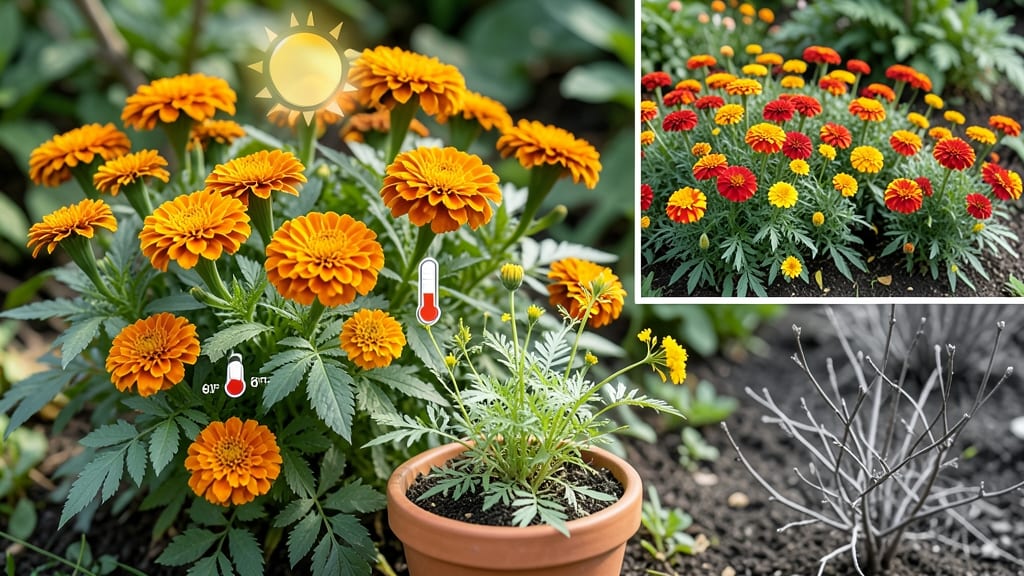
Marigolds do not bloom all year naturally, but their flowering season can extend through warm months with proper care, heat-loving varieties, and seasonal pruning. Most bloom from early summer to frost, though tropical types may linger in mild climates.
Marigolds thrive when temperatures stay consistently warm, which is why their blooms naturally peak during summer and early fall. 🌸 Different varieties have unique heat tolerances—French marigolds, for example, handle cooler weather better than African types, which demand steady warmth to keep flowering.
I’ve found that deadheading spent blooms regularly encourages new flowers to form, while mulching helps maintain soil warmth for longer blooming periods.
In regions with mild winters, tropical marigolds like the Mexican marigold can sometimes continue blooming into late fall or even winter, especially if protected from frost.
The key is selecting the right variety for your climate and providing consistent care—think of it like giving your plants a cozy blanket to keep them blooming longer.
💡 In This Article
- Climate and Variety Factors That Prolong Marigold Blooms
- Gardening Tips to Maximize Marigold Flowering Season
Climate and variety factors that prolong marigold blooms
Marigolds are heat-loving annuals that thrive in temperatures between 65°F and 85°F, which explains why their blooming season naturally aligns with summer and early fall. 🌞 The African marigold variety, for example, demands consistent warmth to keep flowering—it often stops producing blooms if nighttime temperatures drop below 55°F.
In contrast, French marigolds are more cold-tolerant and can handle brief dips to 40°F, making them better suited for cooler spring or fall transitions.
The Mexican marigold, a tropical type, is the exception to this rule. These varieties can continue blooming into late fall or even winter in frost-free zones like USDA hardiness zones 9-11, where temperatures rarely drop below 30°F.
Their deep orange and yellow flowers thrive in full sun and warm soil, which is why they’re often used in commercial flower beds in mild climates. The secret lies in their genetic adaptation—Mexican marigolds have evolved to handle higher humidity and prolonged warmth, unlike their temperate cousins.
Light exposure also plays a critical role. Marigolds need at least 6-8 hours of direct sunlight daily to produce abundant blooms.
In regions with shorter daylight hours (like northern latitudes), their flowering season naturally shortens. 🌿 For example, in Zone 5, marigolds typically bloom from June to October, while in Zone 10, they can flower year-round with minimal care.
This is why gardeners in cooler climates often treat marigolds as seasonal plants, while those in warmer zones can enjoy near-continuous blooms.
Soil temperature matters just as much as air temperature. Marigolds prefer soil that stays above 60°F—cold soil slows root activity and delays blooming. This is why mulching with straw or black plastic helps retain heat and extend the growing season by 2-4 weeks in spring and fall.
The roots of marigolds absorb nutrients more efficiently in warm soil, which directly translates to more vibrant and frequent blooms.
Another key factor is day length. Marigolds are day-neutral plants, meaning they don’t rely on specific day lengths to bloom—they’ll flower as long as temperatures and sunlight are favorable. However, in regions with long winter nights, even tropical varieties may slow down or stop blooming entirely.
This is why gardeners in Zone 7-8 often see a 30-50% reduction in blooms during winter months, even with protection.
For those in transitional climates, selecting heat-tolerant hybrids can make a noticeable difference. For example, the 'Jingle Bells' series of African marigolds is bred to handle up to 95°F without wilting, while still producing blooms. These varieties often continue flowering 10-15 days longer than standard types in hot summers. 🌼