
Blooming
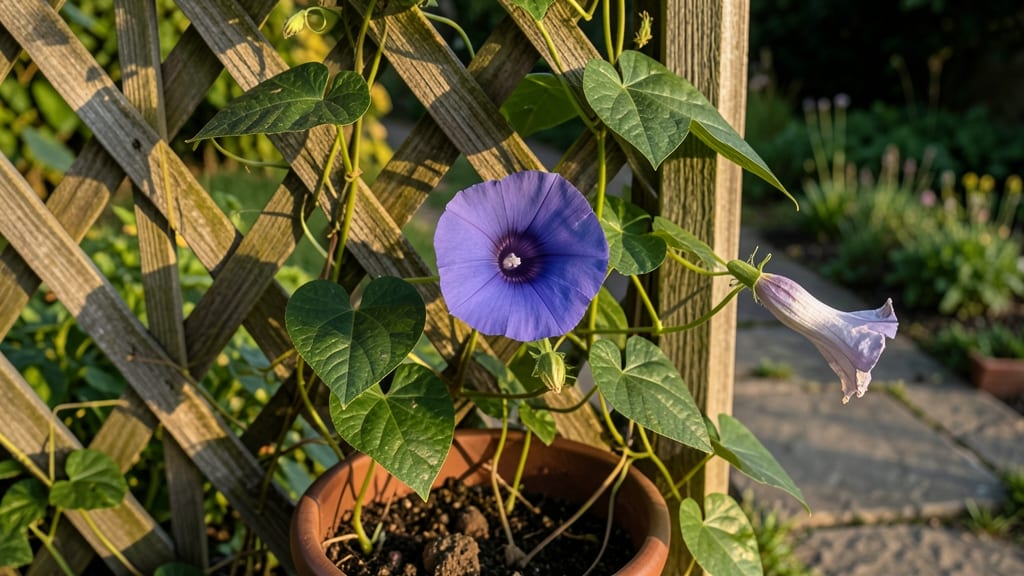
Morning glories don't always bloom only in the morning—some varieties open at dawn and close by midday, while others stay open longer or even reopen in bright light after fading. Nighttime blooms are rare but possible in certain species like Ipomoea alba (moonflower).
Morning glories actually follow light cues more than time, which is why their blooming patterns vary so widely. 🌅 Many common varieties like Ipomoea purpurea close by midday to conserve moisture, but tropical species often defy expectations.
For example, moonflowers (Ipomoea alba) thrive in warm climates and open their fragrant white blooms at dusk—a behavior triggered by decreasing light rather than a strict morning schedule.
If you're growing them in containers, you can even influence their blooming time by adjusting light exposure, though extreme conditions may stress the plants.
What's fascinating is how temperature plays a role too. Cooler mornings often delay opening, while warm afternoons might keep flowers open longer than usual. This adaptability is why some gardeners swear by specific varieties for evening displays or prolonged color.
For instance, the 'Heavenly Blue' morning glory stays open well into the afternoon, making it a favorite for extended garden enjoyment.
💡 In This Article
- Light and Temperature Triggers for Morning Glory Blooms
- Best Morning Glory Varieties for Extended or Nighttime Blooms
Light and temperature triggers for morning glory blooms
Morning glories regulate their blooming cycles primarily through a process called photoperiodism—how they respond to light duration. Most varieties, like the common Ipomoea purpurea, follow a circadian rhythm tied to dawn light exposure.
When exposed to 12-14 hours of daylight, these plants typically open their blooms within 2-4 hours after sunrise and close by midday to conserve moisture.
The key trigger is actually the shift from darkness to light, not the clock time itself. 🌞 This explains why morning glories in northern latitudes (with shorter summer days) may bloom later than those in tropical regions.
Temperature acts as a secondary regulator, influencing how quickly flowers open and close. Research shows that blooms open 30-50% faster in temperatures between 70-80°F compared to cooler mornings (55°F).
For example, 'Scarlet O'Hara' morning glories may take 1.5 hours to fully unfurl on a warm day but linger closed past noon in cooler weather. Extreme heat above 90°F can cause premature wilting, while sudden temperature drops force buds to remain closed.
This sensitivity is why gardeners in desert climates often see delayed blooming until evening when temperatures moderate.
Artificial light can dramatically alter bloom timing, especially in indoor settings. Grow lights set to 16-hour photoperiods trick plants into thinking it's perpetual summer, causing some varieties to open continuously or even at night. However, this disrupts their natural energy balance—plants may produce fewer blooms or develop weak stems.
For outdoor growers, positioning vines near reflective surfaces (like white walls) can extend morning light exposure by 30-60 minutes, delaying closure time. The trade-off? Extended bloom periods often mean shorter individual flower lifespans (typically 6-8 hours vs. 10+ hours in optimal conditions).
Short-day vs. long-day varieties behave differently: tropical species like Ipomoea alba (moonflower) are short-day plants that bloom in response to 10-12 hours of darkness, explaining their evening displays. In contrast, temperate varieties like 'Heavenly Blue' are long-day plants that need 14+ hours of light to trigger blooming.
This is why moonflowers in Florida may open at 7:30 PM while the same species in Maine might bloom at 9:00 PM due to later summer sunsets. The difference comes down to how each variety interprets light cues through specialized pigments called phytochromes.
What most gardeners overlook is how humidity affects bloom duration. Morning glories in dry climates (like Arizona) close their flowers 2-3 hours earlier than those in humid regions (like Louisiana) to prevent water loss.
The stomata (pores) on the petals actively regulate moisture—when relative humidity drops below 50%, flowers close tighter and faster. This is why desert varieties often have thicker, waxier petals that reflect sunlight and retain moisture longer.
For example, 'Flying Saucer' morning glories in Phoenix may stay open just 4 hours versus 8 hours in New Orleans' muggy air.
To maximize bloom visibility, consider these light-temperature interactions: plant short-day varieties in areas with natural evening shade (like near trees) to extend their nighttime displays, while long-day types thrive in full sun with afternoon watering to keep soil temperatures consistent.
The sweet spot for most morning glories is 65-75°F with 60-70% humidity—conditions that balance energy use and moisture retention. This explains why coastal gardens often see longer bloom periods than inland ones, despite similar sunlight exposure. 🌿