
Blooming
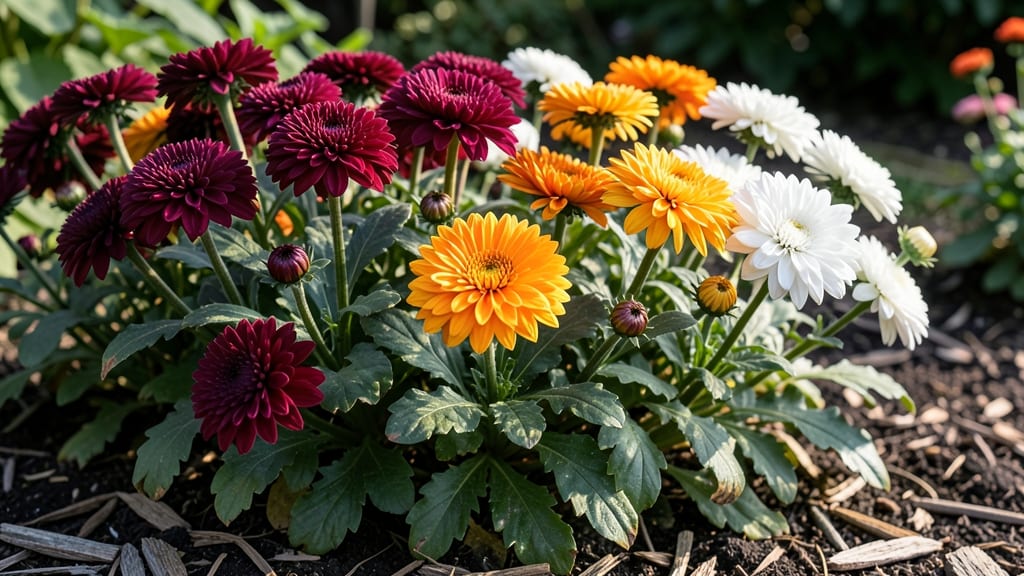
Mums bloom in fall rather than summer because their natural cycle responds to shorter daylight hours and cooling temperatures, with most varieties flowering between September and October.
This seasonal timing isn't random—it's tied to photoperiodism, where mums detect decreasing daylight as summer wanes. 🌿 The cooler fall air also signals their dormant buds to open, creating those iconic clusters.
Some gardeners try to coax summer blooms by pruning aggressively in early spring, but even then, most mums resist until autumn's arrival. The few summer-blooming varieties (like 'Summer Snow') are specifically bred exceptions.
What's fascinating is how temperature thresholds play a role: mums need a period of cooler nights (around 50-60°F) to trigger blooming. This is why northern climates often see earlier mum displays than southern regions.
If you're impatient for summer color, consider planting annual mums instead—they'll bloom all season long but won't survive winter like perennials.
💡 In This Article
- Why Mums Bloom in Fall Instead of Summer
- How to Encourage Summer-Blooming Mums
Why mums bloom in fall instead of summer
Mums (chrysanthemums) follow a strict botanical schedule because they're short-day plants, meaning they bloom only when daylight drops below 12-14 hours. During summer, when days stretch past 14.5 hours in most regions, mums detect these long photoperiods and suppress flowering through a process called photoperiodism.
Their leaves contain special pigments that measure light exposure, triggering hormonal changes that delay bloom formation until autumn arrives. 🌅 This is why even well-cared-for mums rarely produce flowers before late August.
The temperature connection is equally critical. Mums need a period of cooler nights (50-60°F) to break dormancy and initiate bud formation. In summer, soil and air temperatures often exceed 75°F, which keeps mums in a vegetative state.
The cooling trend of September and October—combined with shorter days—finally satisfies their blooming requirements. For example, in Zone 5 climates, mums typically begin flowering in early September, while in Zone 9, they may wait until October due to warmer fall temperatures.
This delayed blooming isn't just about aesthetics—it's an evolutionary survival strategy. Fall's cooler temperatures and shorter days create ideal conditions for pollinators like bees and butterflies, while the plant's deep root systems store energy during summer to fuel autumn's vibrant display.
The result? Those iconic clusters of blooms that signal the changing seasons. 🍂 What's fascinating is how this cycle varies by latitude: Northern gardeners often see earlier mum displays than Southern ones because the temperature drop comes sooner.
There's also a genetic component. Most garden mum varieties are bred for late-season flowering, with some hybrids taking up to 120 days from planting to bloom. Even with perfect summer care—rich soil, consistent watering, and balanced fertilizer—these varieties resist early flowering.
The exceptions are summer-blooming mums like 'Summer Snow' or 'Bonanza,' which have been selectively bred to tolerate longer daylight periods, but they still require specific growing conditions to perform reliably.
Understanding this cycle helps explain why summer mums often look leggy or sparse—they're not flowering because their biological clock hasn't been set. The plant's energy is focused on leaf and stem growth until the right environmental cues arrive.
This is why gardeners in warmer climates sometimes struggle with mum blooms: the gradual temperature decline that triggers flowering may be too subtle or occur too late in the season. 🌡️
Here's what happens under the surface: When daylight shortens, mums produce more florigen hormones, which travel from leaves to buds. These hormones interact with temperature-sensitive proteins that activate genes responsible for flower development.
The process is so precise that even a few extra hours of artificial light (like from street lamps) can delay blooming in sensitive varieties. This is why gardeners in urban areas sometimes see later mum displays than their rural neighbors.