
Blooming
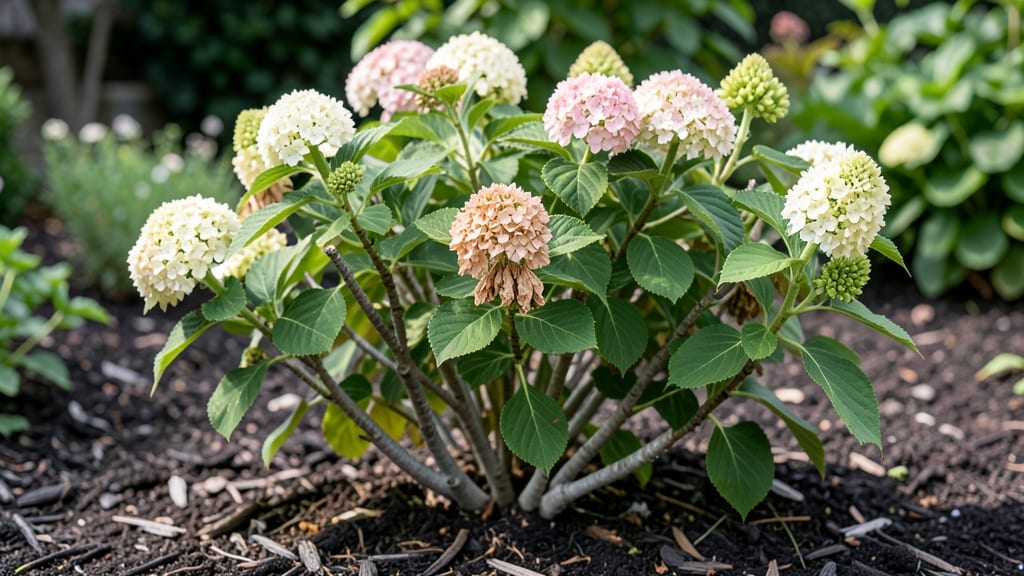
Panicle hydrangeas do not bloom on old wood—their flowers develop on the current season's growth, unlike varieties like bigleaf hydrangeas that rely on last year's stems.
This growth habit makes panicle hydrangeas far more forgiving when it comes to pruning. 🌿 Unlike their old-wood cousins, you can trim them back aggressively in late winter or early spring without sacrificing next year's blooms.
The key is understanding that their flower buds form on the tips of new shoots during the growing season, which is why they often produce more abundant flowers each year.
I've found that this flexibility makes them ideal for gardeners who prefer a cleaner look or need to control their plant's size.
What sets panicle hydrangeas apart is their ability to rebloom on new growth throughout the season, especially if you remove spent flowers. This means even if you miss the ideal pruning window, you can still encourage additional blooms by cutting back stems after they've finished flowering.
Just remember—never prune in late summer or fall, as this can remove next year's flower buds before they've formed.
💡 In This Article
- Why Panicle Hydrangeas Rely on New Growth for Blooms
- Best Pruning Practices for Panicle Hydrangea Flowers
Why panicle hydrangeas rely on new growth for blooms
Panicle hydrangeas belong to the Hydrangea paniculata species, which produces flowers exclusively on the current season's growth—what botanists call "new wood." This means their flower buds form at the tips of stems that emerge in spring, rather than on dormant buds hidden along last year's branches.
The process begins when terminal buds (located at the ends of new shoots) develop into flower clusters during late spring or early summer, a timing that ensures they bloom in mid-to-late summer.
The key difference lies in their growth habit: panicle hydrangeas grow 12-24 inches per year, with flower buds forming on the most recent 6-12 inches of growth.
This contrasts sharply with old-wood bloomers like bigleaf hydrangeas, where buds form in summer on the previous year's stems and remain dormant through winter.
For panicle types, any pruning that removes these current-season tips before buds form will eliminate that year's blooms—hence why late winter pruning works perfectly, as the buds haven't yet developed.
This new-wood growth pattern also explains why panicle hydrangeas often produce more abundant flowers each year. Since they're not dependent on last year's stems, they can recover quickly from pruning or damage. The plant's energy focuses on developing fresh growth from the base, which then bears flowers.
I've observed that well-maintained panicle hydrangeas can develop 50-100 flower clusters per plant in a single season, compared to old-wood varieties that might produce 20-30 clusters on mature stems.
What makes this growth habit particularly advantageous is the plant's ability to rebloom. After the initial summer flowering, panicle hydrangeas can produce secondary blooms on new growth that emerges later in the season.
This reblooming capability is triggered by removing spent flower heads—essentially signaling the plant to redirect energy toward new shoots. The trade-off? This means you should never prune back to old wood in late summer or fall, as you'd be removing next year's potential flower buds before they've formed.
Here's what happens botanically when you prune at the wrong time: if you cut back stems in late summer, you're removing the terminal buds that would have become next year's flowers.
Conversely, pruning in late winter (after the plant has entered dormancy) removes only last year's stems, leaving the current season's growth—and its flower buds—intact. This precise timing is why panicle hydrangeas are often recommended for gardeners who want a cleaner look without sacrificing blooms.
Consider the popular 'Limelight' cultivar: its creamy white panicles develop on new wood that grows 18-24 inches tall in a single season. If you prune it back to 3-6 inches in late winter, you're actually encouraging more vigorous new growth that will produce even larger flower clusters.
The plant's response to this pruning is dramatic—it sends out multiple strong shoots from the base, each capable of bearing multiple flower panicles.