
Blooming
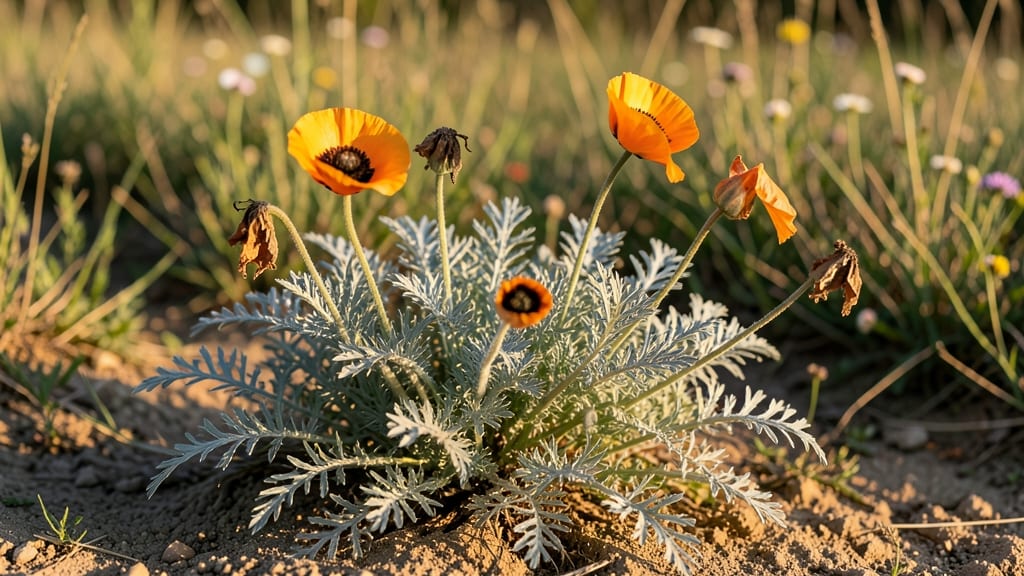
Do poppies bloom more than once? Most bloom only once per season because they're annuals or short-lived perennials that prioritize seed production after flowering. However, certain perennial varieties like Iceland poppies can rebloom with the right care, including deadheading and ideal growing conditions.
This behavior comes down to poppies' life cycles.
Annual poppies complete their entire growth cycle in one season, while some perennials like Oriental poppies store energy to potentially rebloom under perfect conditions. 🌸 The key is understanding your specific variety—annuals like California poppies won't return, but perennials may surprise you with second chances if you provide consistent care and remove spent blooms promptly.
For gardeners hoping to extend the blooming season, the solution lies in proper maintenance. Regular deadheading (removing faded flowers) redirects the plant's energy toward new growth rather than seed production. I've found that consistent moisture levels and well-draining soil also play crucial roles in encouraging repeat blooming in perennial varieties.
💡 In This Article
- Why Most Poppies Bloom Just Once
- How to Encourage Reblooming in Perennial Poppies
Why most poppies bloom just once
The single-bloom cycle in poppies stems from their evolutionary strategy. Most poppies, especially annual varieties like California poppies (Eschscholzia californica), allocate nearly all their energy to rapid reproduction within one growing season.
This is because their entire life cycle—from seed germination to seed production—must complete in just 3-4 months. The plant's priority shifts from flower production to seed development once pollination occurs, as seeds ensure the next generation's survival.
Biologically, this is tied to their genetic programming. Annual poppies trigger a hormonal cascade after flowering that accelerates seed maturation, often at the expense of new flower buds. The plant's meristem (growth tissue) redirects resources toward the developing seed pods rather than producing more blooms.
This is why you'll see annual poppies produce hundreds of seeds in just weeks after their initial flowering phase—it's their survival mechanism in short-lived ecosystems.
Environmental factors also play a role. Poppies native to arid regions, like the Prickly Poppy (Argemone spp.), have adapted to bloom quickly when moisture is available, then focus on seed production before drought sets in.
Even in perennial varieties, this instinctual behavior persists unless carefully managed. The plant's internal clock (photoperiodism) often cues it to complete its reproductive cycle before winter, making second blooms unlikely without intervention.
For comparison, consider how perennial poppies differ. While annuals like Corn Poppies (Papaver rhoeas) bloom once and die, perennials like Oriental Poppies (Papaver orientale) store energy in their roots for potential reblooming. However, even these perennials typically need 6-8 weeks of recovery between blooming cycles to rebuild energy reserves.
This explains why many gardeners see only one flush of flowers unless they take specific steps to encourage reblooming.
One fascinating exception is the Iceland Poppy (Papaver nudicaule), which can produce multiple blooms over several months. This variety thrives in cooler climates and has a more flexible energy allocation system.
The key difference lies in its growth habit—it doesn't invest as heavily in seed production immediately after flowering, allowing for extended blooming periods under ideal conditions.
Understanding this biological behavior helps explain why gardeners often see poppies bloom spectacularly for a few weeks, then disappear until the following season. The plant's entire focus shifts from visual appeal to reproductive success—a trade-off that's hardwired into its DNA. 🌿