
Blooming
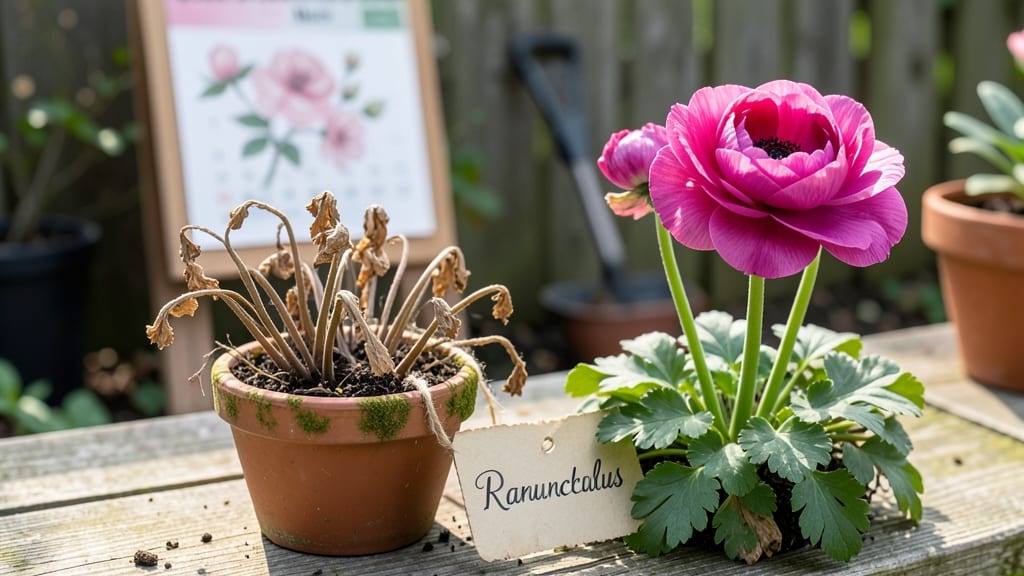
Ranunculus don't bloom every year in most climates because they die back to tubers annually, requiring winter dormancy. In colder regions, they often grow as annuals, but surviving tubers may rebloom when replanted in spring.
Ranunculus follow a natural life cycle where their foliage withers after blooming, leaving behind tubers that store energy for next year. 🌱 Unlike true perennials that regrow from the same root system, these tubers act like seed potatoes—waiting for the right conditions to sprout.
In zones with freezing winters, many gardeners treat them as annuals, replanting fresh tubers each spring. However, if you protect tubers in containers with mulch or store them in a cool, dry place, you might coax a second round of blooms when replanting.
What sets ranunculus apart is their adaptability—some varieties handle winter chill better than others. For example, Persian ranunculus often survive milder freezes, while French ranunculus may need extra protection. The key is timing: planting tubers too early in cold climates can expose them to frost damage before they establish roots.
💡 In This Article
- Why Ranunculus Die Back and How Cold Affects Their Growth
- Tips for Extending Ranunculus Blooms Through Proper Tuber Care
Why ranunculus die back and how cold affects their growth
Ranunculus follow a unique survival strategy rooted in their tuber-based life cycle. Unlike traditional perennials that regrow from the same root system, these flowers store energy in specialized underground tubers—similar to potatoes or dahlias.
When temperatures drop below 50°F in fall, the foliage yellows and dies back, leaving these tubers dormant until spring. This process is triggered by shorter daylight hours and cooler soil temperatures, signaling the plant to conserve energy for next year's growth.
The cold hardiness of ranunculus varies by variety, with most surviving only 15-25°F for short periods. In regions where winters dip below -10°F, tubers often perish in the ground, forcing gardeners to treat them as annuals. However, some Persian varieties can tolerate 10-15°F if protected by mulch or containers.
The chilling period (typically 4-6 weeks below 50°F) actually benefits tuber development, breaking dormancy and promoting stronger spring regrowth—much like how some bulbs need winter cold to bloom.
What's fascinating is how light exposure during dormancy affects reblooming potential. Tubers stored in complete darkness (like a cool basement) may produce fewer blooms than those kept in partial light, which helps them gauge seasonal changes.
This is why gardeners often store tubers in paper bags rather than airtight containers—allowing just enough light for better synchronization with spring planting. The tuber's ability to "remember" its chilling period is what determines whether it'll produce lush foliage or just a few weak stems.
Soil moisture during dormancy plays a critical role too. Tubers left too wet in winter can rot, while those kept too dry may shrivel. The ideal storage condition mimics natural winter conditions: 35-45°F temperature with 50-60% humidity.
This balance prevents both rot and desiccation, ensuring tubers remain viable for replanting. In warmer climates where winters never drop below freezing, ranunculus may attempt to bloom year-round, but this often leads to weaker plants with shorter vase life.
Consider this: In USDA Zone 7 (where winters average 10-20°F), ranunculus tubers planted in fall often survive if mulched with 6-8 inches of straw. But in Zone 4 (-30°F winters), even protected tubers may fail to regrow unless stored indoors.
The key difference lies in how long the soil stays frozen—tubers can handle brief cold snaps but perish during prolonged sub-zero conditions. This explains why some gardeners in colder zones replant tubers every spring rather than risk winter loss.
For those hoping to extend blooms, timing is everything. Planting tubers too early in cold climates (before soil reaches 50°F) exposes them to frost damage, while waiting too long (after 60°F) may result in bolting (premature flowering).
The sweet spot is usually 4-6 weeks before last frost, when soil temperatures hover around 55-60°F. This window gives roots time to establish before summer heat arrives, maximizing both tuber survival and bloom production.