
Blooming
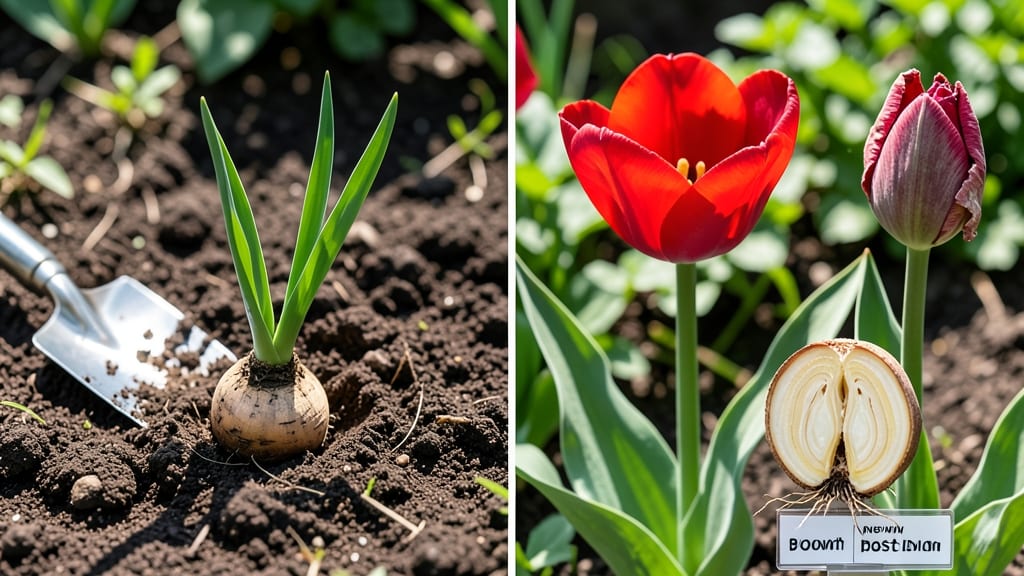
Tulip bulbs do not bloom only once—most varieties rebloom annually with proper care, though some hybrid types may decline after 3-5 years. Cutting spent blooms and fertilizing supports future flowering seasons.
Most gardeners are surprised to learn that tulips are actually perennial plants, meaning they return year after year under the right conditions. 🌱 The key difference lies in their botanical classification: species tulips (like fosteriana or greigii) naturally rebloom reliably, while many hybrid varieties—especially those bred for showy single-season blooms—require extra care to encourage repeat flowering.
The secret to longevity lies in mimicking their natural growing cycle: letting foliage die back completely after blooming and providing balanced nutrients during dormancy.
What's interesting is how climate and soil health play into this cycle. In colder regions, tulips often need a chilling period to trigger new growth, while warmer zones may require shade during summer dormancy.
I've found that adding bone meal in early spring gives bulbs the phosphorus boost they need for strong root development, which directly impacts next year's blooms.
The misconception that tulips are one-and-done stems from how many people treat them as annuals—cutting back foliage too soon or planting them in poor soil.
💡 In This Article
- Why Some Tulips Bloom Repeatedly vs. Others
- Tips to Encourage Annual Tulip Reblooming
Why some tulips bloom repeatedly vs. others
The distinction between tulips that rebloom and those that don't comes down to their botanical lineage. Species tulips—like Tulipa greigii or Tulipa fosteriana—evolved in natural ecosystems where they developed mechanisms to store energy for multiple blooming cycles.
These varieties typically produce 1-3 flowers per stem and have a more robust root system that regenerates each season. In contrast, many hybrid tulips (especially Darwin hybrids or Parrot tulips) were bred for dramatic single-season displays, often at the expense of long-term energy reserves.
What happens inside the bulb is fascinating: after flowering, the bulb continues photosynthesizing through its leaves for 6-8 weeks to replenish stored carbohydrates. This process is critical—if you cut foliage too soon, the bulb starves and won't produce flowers the next year.
The difference between a 5-year lifespan for hybrids versus decades for species tulips comes from how efficiently they convert sunlight into stored energy. Darwin hybrids, for example, store about 20% more starch than standard hybrids, which is why they often rebloom more reliably when given proper care.
Climate plays a surprising role in reblooming success. Tulips native to continental climates (like those in Central Asia) need a 12-16 week chilling period at temperatures below 40°F to trigger flowering hormones. In warmer regions, gardeners often report tulips blooming less frequently because the bulbs don't get enough dormancy time.
I've seen Darwin hybrids in Southern California gardens bloom every 2-3 years when given partial shade during summer, while the same variety in New England may bloom annually with full sun.
Another key factor is the bulb's genetic memory of its first flowering. When a tulip blooms for the first time, it allocates significant energy to flower production. Subsequent blooms require less energy per stem because the bulb has already established its flowering pathway.
This is why species tulips often produce smaller but more numerous blooms in later years, while hybrids may decline in flower size after 3-5 years without careful maintenance.
Consider these botanical differences when selecting tulips for your garden:
- Species tulips: Naturally perennial, often rebloom annually with minimal care
- Darwin hybrids: Store more energy, rebloom reliably when given proper post-bloom care
- Standard hybrids: Often one-time bloomers unless given extra nutrients and foliage protection
The takeaway is that while no tulip is truly "one-and-done," some varieties make the process significantly easier. For gardeners in warmer climates, choosing species tulips or Darwin hybrids gives you the best chance of annual blooms with less effort.
The secret lies in understanding each variety's natural tendencies and adapting your care routine accordingly. 🌸