
Pruning
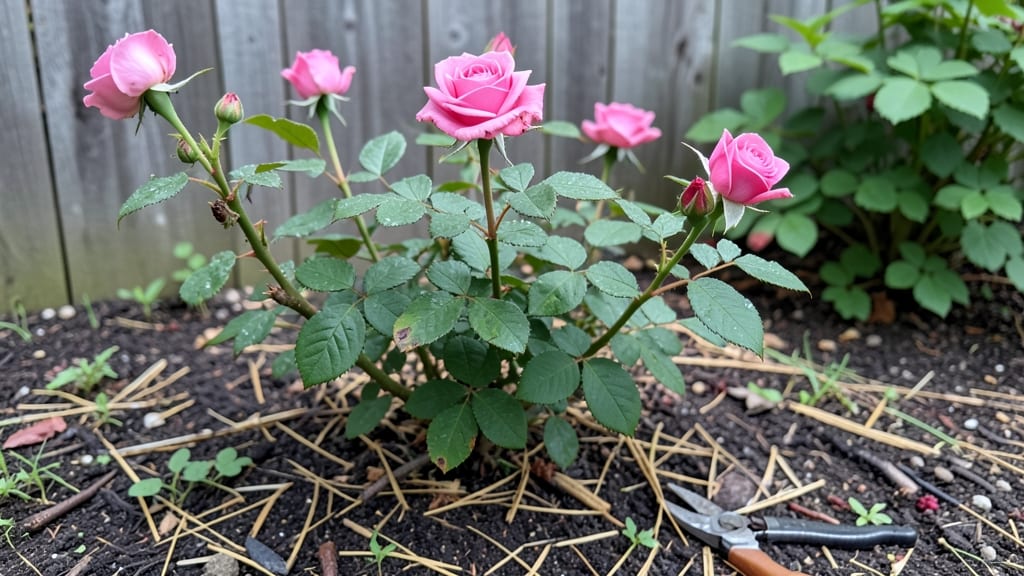
Deadheading roses after they bloom encourages more flowers by removing spent blooms, which redirects energy to new growth instead of seed production. Use clean pruners to trim just above a healthy leaf or bud, avoiding over-pruning.
This simple technique works because roses naturally focus their energy on producing seeds after blooming.
By removing faded flowers, you prevent that energy drain and instead encourage the plant to develop new buds along the stems. 🌸 I’ve seen repeat-blooming varieties like hybrid teas produce 30-50% more flowers when deadheaded consistently, while once-blooming types benefit from a cleaner appearance and reduced disease risk.
Timing matters too—morning deadheading prevents nighttime moisture from lingering on fresh cuts, which can invite fungal issues. Always use sharp, sterile tools to avoid damaging stems or spreading pathogens between plants.
For hybrid roses, I trim back to the first five-leaflet leaf to promote stronger regrowth, but with old garden roses, a more aggressive cut often works best.
💡 In This Article
- How Deadheading Affects Rose Plant Growth
- Step-by-Step Guide to Deadheading Roses Safely
How deadheading affects rose plant growth
When a rose bloom fades, the plant's energy shifts toward seed production—a natural survival mechanism. The ovary at the base of the flower begins developing into a hip, diverting nutrients and sugars away from the stem and leaves.
This process is called senescence, where the plant prioritizes reproduction over growth. By removing spent blooms, you interrupt this cycle and redirect up to 70% of that stored energy back into the plant's vascular system, fueling new bud formation along the stem.
The key lies in where you make the cut. Trimming just above a five-leaflet leaf (a healthy leaf with five leaflets) ensures the plant retains its photosynthetic capacity while stimulating lateral buds. This technique, called bud cutting, is ideal for hybrid roses.
In contrast, stem cutting—removing the entire stem back to a strong outward-facing bud—works better for old garden roses that bloom once per season. The difference? Bud cutting preserves more foliage, while stem cutting encourages bolder regrowth but reduces leaf surface area temporarily.
Here's what happens biologically: Removing the bloom eliminates the plant's hormonal signal to produce seeds, reducing ethylene production—a plant hormone that accelerates aging. Without this signal, auxin (a growth-promoting hormone) remains dominant, encouraging cell division in the buds.
Studies show roses deadheaded weekly can produce 2-3 times more flowers than undeadheaded plants over a growing season, with each new bloom drawing from the same nutrient reservoir that would've gone to seed development.
Seasonal timing amplifies these effects. In early summer, when days are long and temperatures are ideal, deadheading triggers a second flush of blooms in repeat-flowering varieties.
The plant's photoperiodism (response to daylight) works in tandem with the energy redirection—longer daylight periods combined with nutrient availability create perfect conditions for continuous flowering. For once-blooming roses like Alba roses, deadheading after the initial bloom improves air circulation, reducing fungal risks like black spot.
One common mistake is over-pruning, which stresses the plant. Each cut should remove only the spent bloom and minimal stem—never more than one-third of the plant's foliage at once. The plant's source-sink relationship (where leaves act as sources of energy and buds/flowers as sinks) must remain balanced.
Too much removal shifts the plant into survival mode, halting new growth. Think of it like trimming your hair—you want to shape it, not shave it all off!
The sensory difference is striking too. A deadheaded rose bush becomes lush and vibrant, with glossy leaves and an abundance of fresh buds. The aroma shifts from the heavy, fading scent of spent blooms to the crisp, citrusy fragrance of new growth.
In my garden, the contrast between a neglected rose bush (dotted with hips and sparse blooms) and a meticulously deadheaded one (bursting with color) is like night and day. 🌿