
Blooming
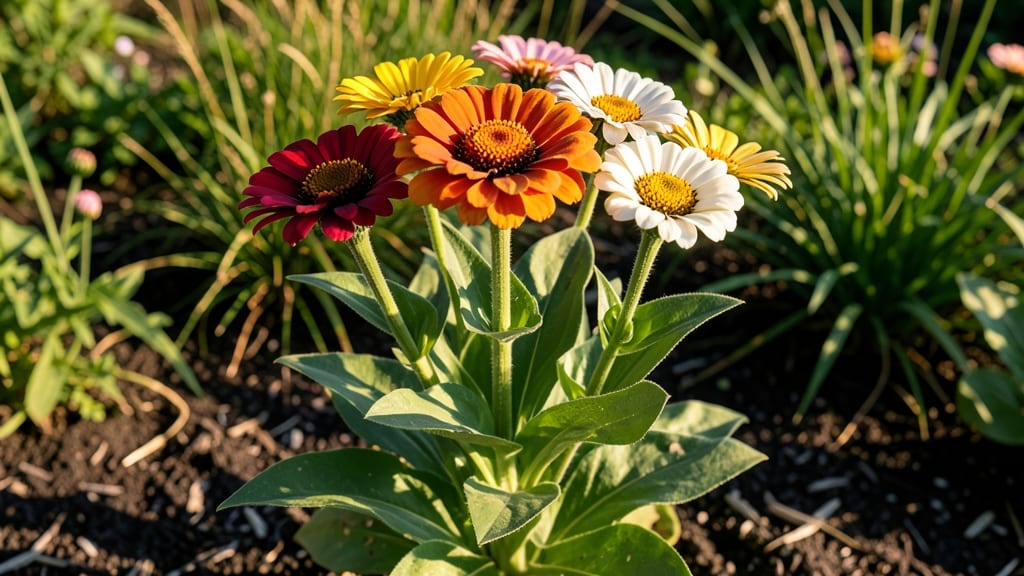
Zinnias bloom all summer in warm climates with proper care, producing continuous flowers from early summer until frost if deadheaded regularly and given full sun and well-drained soil. Northern regions may see shorter bloom seasons due to cooler temperatures.
Zinnias love summer heat because their drought-resistant roots and waxy leaves help them conserve water while soaking up sunlight. 🔥 In zones 8-11, they'll reward you with vibrant blooms from June through October, while cooler climates (zones 3-7) may only see peak flowering from July to September.
The key is mimicking their native habitat—full sun (6+ hours daily) and soil that drains quickly prevents root rot, which can cut blooms short. I've found that mulching around the base helps maintain even moisture without smothering the plants.
For gardeners in short-season areas, succession planting every 2-3 weeks keeps your color show going. 🌸 The trick is to start seeds indoors 4-6 weeks before your last frost date, then transplant seedlings once soil warms to 60°F.
In hotter regions, you can even push them into early fall by providing consistent water and removing spent blooms weekly—this encourages new growth right up until the first hard frost.
💡 In This Article
- Why Zinnias Thrive in Summer Heat
- Extending Zinnia Bloom Season with Pro Tips
Why zinnias thrive in summer heat
Zinnias evolved in open, sunny environments where temperatures often exceed 85°F during the day. Their deep taproots—capable of reaching 3-4 feet deep—allow them to access moisture stored in lower soil layers, making them naturally drought-tolerant. This adaptation explains why they continue blooming when many other annuals wilt under summer's intensity.
The waxy coating on their leaves further reduces water loss through evaporation, a survival mechanism that translates directly to longer flowering periods in your garden.
The flowering cycle itself is triggered by daylight length rather than temperature, but heat actually accelerates bloom production. In zones 9-11, zinnias can produce 50-70 blooms per plant during peak season (June-August) when daytime temperatures consistently stay above 75°F.
The flowers also have a unique heat tolerance in their petals—some varieties like 'Benary's Giant' maintain vibrant color even when exposed to 100°F+ temperatures, unlike heat-sensitive flowers that bleach or droop. 🔥 This is why you'll often see zinnias thriving in desert landscapes where other plants struggle.
What's less obvious is how temperature affects nighttime recovery. Zinnias need temperatures above 55°F at night to properly metabolize sugars produced during the day—below this threshold, they'll produce fewer blooms or even stop flowering entirely.
This explains why northern gardeners in zones 3-5 typically see reduced performance in late summer when nights cool below 60°F. The good news? In warmer climates, zinnias can continue blooming into October or November, provided they receive consistent water and protection from late-season pests.
Comparing performance across zones reveals clear patterns. In zone 7 (like much of the southeastern U.S.), zinnias typically bloom from early June through October, while in zone 4 (northern Midwest), the window narrows to July through early September.
The difference comes down to cumulative heat exposure—zinnias in warmer zones accumulate enough degree-days (a measure of heat accumulation) to sustain longer flowering. For example, a zone 9 garden might accumulate 3,000+ degree-days between June and October, while a zone 5 garden might only reach 1,800-2,200 in the same period.
There's also a fascinating interaction between heat and soil temperature. Zinnia seeds germinate best when soil temperatures reach 60-70°F, which explains why direct sowing in cool springs often fails. Once established, however, their roots can tolerate soil temperatures up to 95°F—a range that would stress many vegetables.
This heat tolerance extends to their ability to uptake nutrients even when topsoil dries out, making them ideal for low-maintenance summer gardens. 🌞 The combination of deep roots, heat-resistant foliage, and efficient nutrient uptake creates the perfect storm for continuous summer blooms.