
Blooming
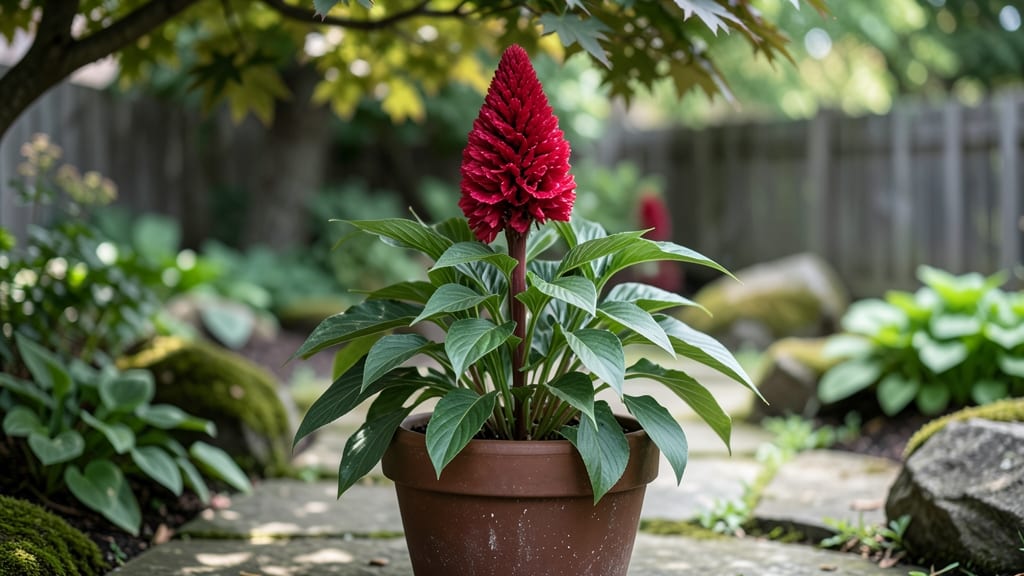
Celosia blooms all summer in warm climates but may slow or stop flowering in extreme heat or drought, requiring consistent moisture and occasional deadheading to encourage prolonged blooms. Late-season care extends its season in cooler regions.
Celosia thrives in summer's warmth, but its blooming cycle can be disrupted by intense heat or dry spells—think of it like a delicate balance between growth and stress. 🌡️ The plant’s vibrant flowers respond best to steady temperatures between 70°F and 85°F, with afternoon shade becoming crucial when thermometers climb higher.
Deadheading spent blooms isn’t just about looks; it redirects the plant’s energy toward new growth, keeping those showy plumes coming all season long.
In cooler regions, the key to late-summer success lies in strategic care: watering deeply at the base (not overhead) to avoid fungal issues, and using a balanced fertilizer every 4-6 weeks to support flowering.
I’ve found that wrapping plants in lightweight frost cloth on chilly nights can buy you an extra month of color—just don’t let it touch the leaves, or you’ll risk trapping moisture.
💡 In This Article
- Celosia Heat Tolerance and Flowering Mechanisms
- Extending Celosia Blooms Through Late Summer
Celosia heat tolerance and flowering mechanisms
The secret to celosia's summer-long blooms lies in its physiological response to temperature. This tropical plant thrives in warmth but has a built-in stress response when temperatures exceed 90°F. At these levels, the plant's stomata (tiny leaf pores) begin to close to conserve moisture, which triggers a metabolic slowdown.
This is why you'll often see celosia flowering slow dramatically during heatwaves—it's essentially conserving energy to survive rather than produce new blooms. 🌡️
Humidity plays an equally critical role. Celosia prefers relative humidity levels between 40-60%, as lower levels dehydrate the plant faster. In dry climates, this means the plant must work harder to maintain turgor pressure in its cells, which diverts energy away from flower production.
The plant's vibrant plumes actually contain high concentrations of anthocyanins—pigments that help protect against UV radiation but also increase water loss through transpiration. This is why celosia grown in arid conditions often produces fewer, smaller blooms compared to those in more moderate climates.
What most gardeners don't realize is that celosia's flowering mechanism is triggered by day length rather than just temperature. As days shorten in late summer, the plant naturally prepares for dormancy.
However, in warm climates where nights remain above 70°F, this transition can be delayed by 2-4 weeks through proper care. The plant's meristem cells (growth centers) remain active longer when they receive consistent moisture and nutrients, allowing for extended blooming periods. 🌸
Interestingly, celosia's heat tolerance varies by cultivar. The upright varieties like 'New Look' tend to handle heat better than the lower-growing types like 'Cockscomb', which often wilt more quickly in temperatures above 95°F. This is because the upright varieties have more efficient water transport systems in their stems.
The plant's root structure also plays a role—deeper roots can access moisture during drought, but this requires well-draining soil with organic matter to prevent compaction.
Here's what happens at the cellular level: When temperatures rise above 85°F, the plant's chlorophyll begins to degrade slightly, which is why heat-stressed celosia often develops a slightly yellowish tint. This isn't permanent damage but rather a protective response.
The plant also produces more abscisic acid—a hormone that helps regulate drought responses—while reducing gibberellin production, which is crucial for stem elongation and flower development. This hormonal shift explains why heat-stressed celosia often produces shorter, thicker stems with fewer blooms. 🌿
The good news is that celosia's flowering mechanism is remarkably resilient. Even after a heat-induced slowdown, the plant can bounce back quickly when temperatures moderate and care improves.
This is why consistent afternoon watering (especially in 1-2 inch deep soil) and light mulching can make such a dramatic difference in late summer blooming.
The key is maintaining that delicate balance between hydration and stress—too much water can cause root rot, while too little triggers the plant's survival mode. ✨