
Flowers
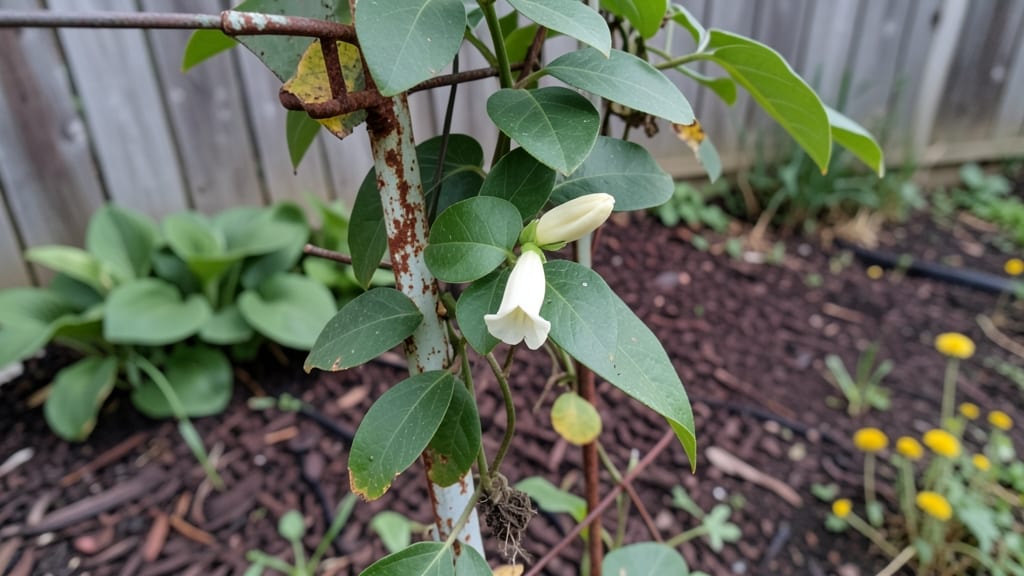
Night blooming jasmine does climb, using its twining stems to latch onto trellises, fences, or nearby structures for vertical growth. Without support, it sprawls horizontally, reaching up to 15 feet in ideal conditions. Prune regularly to encourage upward growth and manage spread.
Night blooming jasmine’s climbing habit comes from its natural ability to twine—those flexible stems coil around any vertical support, almost like a vine searching for stability. 💫 Unlike some aggressive climbers, it’s gentle but persistent, making it perfect for arbors or pergolas where you want fragrance at eye level.
The key to encouraging upward growth is giving it something sturdy to latch onto early, or it’ll happily stretch out across the ground instead.
This plant’s sprawling nature isn’t just about space—it’s also about sunlight. When left unsupported, it can stretch up to 15 feet horizontally, but with proper training, those same vines will reach 10-12 feet upward, creating a lush, fragrant canopy.
Pruning isn’t just about shaping; it’s about redirecting energy where you want it to grow.
💡 In This Article
- How Night Blooming Jasmine Uses Twining for Vertical Growth
- Best Trellis and Support Systems for Night Blooming Jasmine
How night blooming jasmine uses twining for vertical growth
Night blooming jasmine (Cestrum nocturnum) employs a specialized climbing mechanism called twining, where its flexible stems coil counterclockwise around any vertical support. This natural behavior begins when the vine's tip encounters a surface—it immediately starts wrapping, creating tension that helps the plant ascend.
Unlike vines that use tendrils (like clematis) or adhesive pads (like ivy), jasmine relies purely on stem flexibility and gravity to maintain its grip. The twining process is driven by the plant's phototropic response, where it seeks light from above, but it's the physical contact that triggers the coiling motion.
The attachment strength comes from the stem's ability to exert gentle pressure against the support, creating friction that holds it in place. In ideal conditions, night blooming jasmine can grow 12-18 inches per season, with stems reaching 10-12 feet vertically when properly supported.
This growth rate is slower than aggressive climbers like wisteria (which can grow 3-5 feet per year), but jasmine's delicate fragrance and night-blooming flowers make the slower growth a trade-off worth making.
The key difference lies in their attachment methods: wisteria uses strong, woody tendrils that can damage surfaces, while jasmine's twining is non-invasive and ideal for decorative structures.
Light exposure plays a critical role in this climbing behavior. When planted in full sun, the vines grow more vigorously upward, seeking maximum light penetration for photosynthesis. In shaded areas, the plant may still twine but grows more horizontally, stretching toward any available light source.
This adaptability explains why jasmine thrives in both sunny patios and partially shaded garden corners—though vertical growth will always be more pronounced with adequate sunlight. The plant's natural climbing instinct is also influenced by its tropical origins, where vertical surfaces provide both support and protection from ground predators.
What most gardeners don't realize is how the twining process affects the plant's overall health. When jasmine can't find support, it develops long, weak stems that struggle to support the weight of its fragrant flowers.
This is why providing a trellis within the first 6-8 weeks of planting makes a dramatic difference in the plant's structure and flowering capacity. The twining stems actually become stronger with each successful ascent, creating a more robust framework for future growth.
This biological reinforcement explains why pruning unsupported vines back to encourage upward growth yields such impressive results over time.
Comparing night blooming jasmine to other popular climbers reveals some interesting contrasts. While clematis uses leaf tendrils to grasp surfaces and honeysuckle employs twining stems similar to jasmine, the key difference lies in their attachment strength.
Jasmine's twining is gentle enough to wrap around delicate latticework without causing damage, whereas clematis' tendrils can become quite aggressive. This makes jasmine particularly well-suited for decorative purposes where aesthetics matter more than structural support.
The plant's ability to adapt its growth pattern based on available support systems makes it one of the most versatile climbing plants for gardeners seeking both beauty and fragrance.
Here's what's actually happening at the cellular level: The twining stems contain specialized cells that elongate rapidly when in contact with a surface. These cells grow faster on one side of the stem than the other, creating the characteristic spiral pattern.
The process is so precise that the vine can actually "remember" its preferred climbing direction, continuing to coil in the same pattern even when temporarily removed from support. This biological memory explains why jasmine vines often resume their climbing pattern immediately when reintroduced to a vertical surface after being pruned.