
Blooming
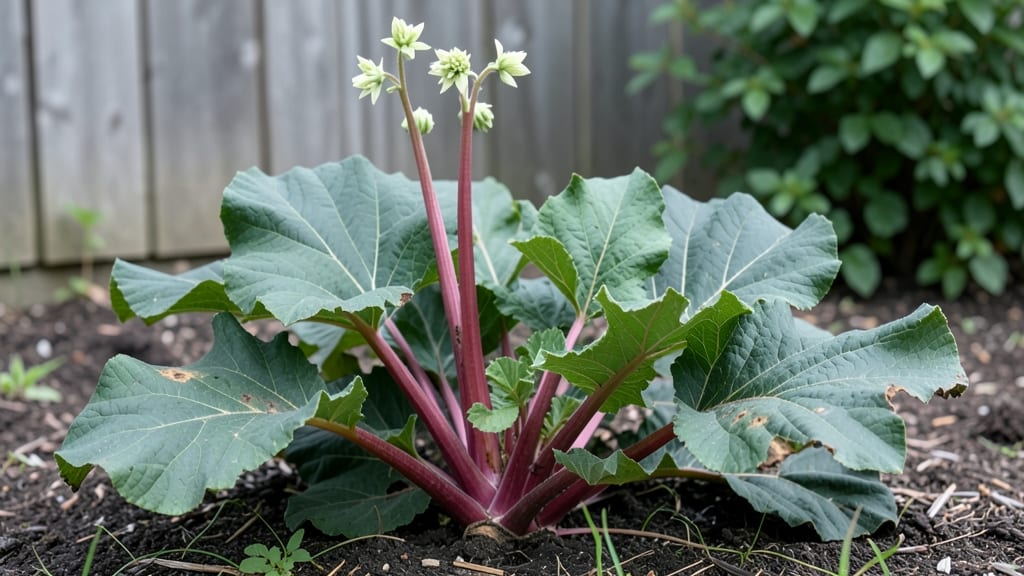
Rhubarb does bloom, producing small greenish-red flowers on tall stalks in spring, but these blooms are edible only in rare culinary traditions and signal the plant’s energy shift away from leaf production toward seed development, potentially reducing harvest yields.
When rhubarb plants send up those tall flower stalks, they’re essentially telling you, "I’m redirecting my energy." 🌱 These blooms aren’t just decorative—they’re a sign your plant is prioritizing reproduction over leaf growth, which means fewer and thinner stalks for your pies.
The flowers themselves are technically edible (some cultures use them in salads or teas), but they’re usually bitter and fibrous, making them more of a curiosity than a culinary staple.
Here’s the catch: if you let those flowers mature, your plant will divert nutrients away from the stalks you actually want to harvest. That’s why gardeners often pinch off the flower buds early in the season—it’s like telling your rhubarb, "Focus on the leaves, not the seeds."
The key is acting fast before the plant commits too much energy to reproduction.
💡 In This Article
- Rhubarb Flower Biology and Its Impact on Leaf Growth
- Managing Rhubarb Blooms for Optimal Harvests
Rhubarb flower biology and its impact on leaf growth
When rhubarb (Rheum rhabarbarum) enters its reproductive phase, it undergoes a dramatic metabolic shift that directly impacts your harvest. The plant allocates up to 60-70% of its photosynthetic energy toward developing flower stalks and seed production during spring.
This happens because the flower buds contain auxin inhibitors, which disrupt the plant's natural growth hormones and redirect nutrients from the leaves and stalks you want to eat.
The flowers themselves are small (1-2 inches wide) with five petals in shades of greenish-red, but their presence is a clear signal that your rhubarb is prioritizing survival over productivity.
The flower stalks emerge from the center of the plant's crown and can grow 3-5 feet tall in just a few weeks. Each stalk contains multiple flower buds that, if left unchecked, will develop into seed pods.
Here's the science: once these flowers open, the plant's roots begin transporting sugars and minerals from the leaves through the phloem to the developing seeds. This process is called source-sink competition, where the flowers act as a "sink" pulling resources away from the "source" leaves.
Studies show that mature rhubarb plants with unchecked blooms can experience a 30-50% reduction in stalk thickness and overall yield by harvest time.
What makes this particularly interesting is how rhubarb's flowering cycle works. Unlike many plants that bloom annually, rhubarb typically flowers every 2-3 years in its mature stage, though some varieties may bloom more frequently. The first year after planting, the plant focuses entirely on root and leaf development.
In year two, you might see the first flower stalks appear, and this is when gardeners need to be most vigilant.
The flowers themselves are technically edible in some traditions (like Scandinavian cuisine where they're candied), but their bitter, slightly astringent taste makes them more of a novelty than a staple.
The real damage happens at the cellular level. When rhubarb commits to flowering, it increases ethylene production—a plant hormone that accelerates aging in tissues. This causes the leaf cells to break down faster, reducing chlorophyll production and photosynthesis efficiency by up to 40%.
The stalks you harvest become thinner and more fibrous because the plant is diverting carbohydrates that would normally thicken them. You'll notice the stalks develop a hollow core more easily and may have a slightly woody texture compared to non-flowering plants.
Here's what most gardeners don't realize about the flower structure: each flower contains 5-10 seeds that, if allowed to mature, will produce new plants. While this might seem beneficial for propagation, it's actually a major energy drain.
The plant expends significant resources creating these seeds when it could be growing more harvestable stalks. This is why professional growers often remove flower stalks as soon as they reach 6-12 inches tall—before the plant has invested too much energy in reproduction.
The key is acting quickly, as the plant's decision to flower becomes irreversible once the buds open.
Interestingly, rhubarb's flowering pattern can be influenced by environmental factors. Plants grown in cooler climates with shorter growing seasons tend to flower less frequently than those in mild winters.
The plant uses vernalization (a cold period) as a cue to initiate flowering, but if winters are too warm, the plant may delay or skip flowering entirely. This is why some gardeners in warm regions report their rhubarb never flowers at all—it's staying in perpetual vegetative growth mode.
Understanding this biological cycle helps explain why some rhubarb patches produce abundantly while others seem to "give up" on harvests during certain years.