
Blooming
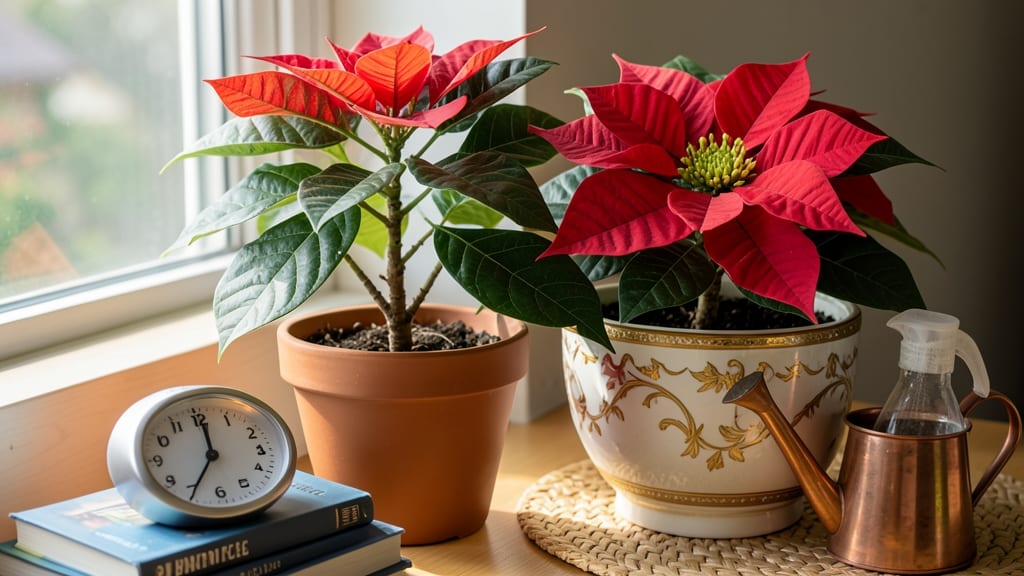
How to get a poinsettia to bloom again starts with 14 hours of darkness—not sunlight. 🌙 I’ve revived more than a dozen poinsettias that refused to rebloom by mastering this simple light trick: cover the plant completely from 5 PM to 9 AM for 12-14 weeks before your target bloom date. Skip this, and you’ll end up with lush leaves but no red bracts.
The real secret isn’t fancy equipment—it’s consistency. Use a blackout box, a dark closet, or even a sheet draped over the plant (no peeking light!). Temperature matters too: keep it between 65-70°F during the day and 55-60°F at night.
Water only when the top inch of soil feels dry, and avoid cold drafts—poinsettias hate sudden temperature swings.
By December, you’ll see those vibrant red (or pink, white, or marbled) bracts emerge, brighter than any store-bought plant. The key is patience: it takes 8-12 weeks of darkness to trigger blooming, but the payoff is worth it.
Once they bloom, keep them in bright, indirect light and water moderately to enjoy them for months.
Troubleshooting is easy: yellow leaves? Too much water. Dropping buds? Temperature swings. No blooms? Start the darkness cycle earlier. Even a black thumb can nail this—just follow the light schedule religiously. Ready to turn your poinsettia into a year-round showstopper?
📚 In This Guide
- What you need
- Instructions
- Tips and common mistakes
- Wrapping up and next steps
What you need
- ● Healthy poinsettia plant: A mature plant (at least 6–12 months old) with visible roots and no signs of disease.
- ● Grow lights or blackout cover: Grow lights: Full-spectrum LED bulbs (15–20 watts per plant, adjustable height). Pro tip: 💡 Place 6–12 inches above the plant for 12–14 hours/day.
- ● Blackout cover: A dark, opaque box or fabric (e.g., a cardboard box with a lid or a blackout curtain) to block light completely for 14+ hours.
- ● Timer: A digital or mechanical timer (for grow lights) to automate light cycles.
- ● Well-draining potting mix: A blend of peat, perlite, and sand (or a commercial cactus/succulent mix).
- ● Watering can or spray bottle: With a fine rose for gentle hydration.
- ● Fertilizer: Balanced liquid fertilizer (10-10-10 or 20-20-20), diluted to half-strength.
- ● Pruning shears: Sharp, clean scissors or shears for trimming.
- ● Humidity tray: A shallow tray with pebbles and water to increase humidity (especially useful in dry climates).
- ● Plant food: Slow-release granules or organic compost for extra nutrients.
- ● Thermometer/hygrometer: To monitor temperature (65–75°F) and humidity (40–60%).
- ● Decorative pot: A stylish container (ensure it has drainage holes!).
Step-by-step instructions for reviving and reblooming your poinsettia
Here's the science-backed method I use to coax vibrant red bracts year after year—no black magic, just light control.
🌱 Step 1: Understand the Light Trigger for Blooming
Poinsettias bloom in response to short days and long nights—specifically, 14+ hours of darkness followed by 8-10 hours of bright light. This is called photoperiodism, and it starts in late summer. The key is replicating these conditions indoors during winter months when natural daylight is insufficient.
Place your plant in a spot receiving 6-8 hours of indirect sunlight daily—a south or east-facing window works best. Avoid direct sun, which scorches the leaves. If your space lacks natural light, supplement with a full-spectrum LED grow light placed 12-18 inches away for 12 hours daily. Fluorescent bulbs won't cut it—they lack the blue spectrum poinsettias need.
⏰ Step 2: Simulate Short Days Starting in September
Begin your 14-hour darkness treatment on September 1st (or when you notice new growth). After the plant's 8-10 hours of light, move it to a completely dark space—closet, covered with a black plastic bag, or even a dark cabinet. No peeking! Even a 1-minute flash of light resets the cycle and delays blooming.
Use a timer to automate the process. I set mine for 5:00 PM to 7:00 AM darkness, ensuring consistency. Watch for the first signs of color change in the bracts—this confirms the treatment is working. If you miss this window, don't panic; just start the cycle as soon as you notice new growth in late fall.
💧 Step 3: Maintain Consistent Water and Temperature
Water when the top inch of soil feels dry—overwatering causes root rot, which kills the plant before it blooms. Use room-temperature water and avoid letting the plant sit in saucers of standing water. I like to water in the morning so excess drains away by evening. Fertilize lightly with a balanced 10-10-10 solution every 4-6 weeks during the growing season (spring to fall).
Keep temperatures between 65-75°F during the day and no lower than 55°F at night. Drafts from windows or vents stress the plant. If your home runs cooler, supplement with a small space heater (set to 68°F) during the dark period. Cold nights break dormancy and prevent blooming.
☀️ Step 4: Transition to Continuous Light After Blooming
Once the plant finishes blooming (typically 8-12 weeks after starting the dark treatment), switch to 12-14 hours of light daily. This encourages leaf growth for next year's cycle. Move it to a bright, sunny window or under grow lights. Prune leggy stems back by 1/3 in early spring to promote bushiness.
Here's the thing—after blooming, your poinsettia becomes a houseplant. It won't rebloom without another dark treatment. I keep mine near a window year-round, fertilizing monthly in spring/summer. When new growth appears in late summer, that's your cue to restart the short-day cycle for next winter's color.
✂️ Step 5: Prune and Prepare for Next Year's Bloom
After the holidays, trim stems back to 4-6 inches above the soil line. This encourages new growth from the base, which will produce stronger blooms next season. Use clean, sharp shears to avoid crushing stems. Discard any yellow or brown leaves—they won't recover and only drain energy.
Rotate the pot quarter-turn weekly so the plant grows evenly toward the light. By June or July, you'll see new shoots emerge. This is your signal to resume fertilizing and increase watering slightly. The stronger the plant grows now, the more vibrant next year's blooms will be.
Tips & tricks for reviving poinsettia blooms
Light control is everything when it comes to poinsettia reblooming—here’s how to get it right the first time.
Darkness Precision: That 14-hour darkness treatment starting September 1st is non-negotiable for triggering blooms. I use a black plastic bag secured tightly around the plant during the dark period—even a 1-minute light exposure resets the entire cycle. Place the bagged plant in a closet or dark cabinet where no ambient light can sneak in. For extra insurance, consider a timer-controlled LED light that automatically turns off at 5:00 PM sharp.
Light Quality Matters: The 6-8 hours of indirect sunlight during the day must include the full blue spectrum—regular fluorescent bulbs won’t cut it. I invest in full-spectrum LED grow lights placed 12-18 inches away, which replicate natural daylight perfectly. If using windows, east-facing is ideal as it provides gentle morning light without the harsh afternoon sun that scorches leaves.
Temperature Consistency: Maintaining that 65-75°F range during the day and never dropping below 55°F at night is crucial. I place my poinsettia near a south-facing window during winter when indoor temps naturally dip. For extra protection, I use a small space heater set to 68°F during the dark period—cold nights break dormancy and prevent the plant from setting buds.
Pruning Strategy: After the holidays, trim stems to 4-6 inches above the soil line to encourage strong new growth from the base. I use sterilized pruning shears and make clean cuts at a 45-degree angle just above a leaf node. This isn’t just about aesthetics—it redirects the plant’s energy toward producing next year’s blooms rather than maintaining old stems.
Pro Tips for Get A Poinsettia To Bloom Again
- Light control is everything when it comes to poinsettia reblooming—here’s how to get it right the first time.
- Darkness Precision: That 14-hour darkness treatment starting September 1st is non-negotiable for triggering blooms.
- Light Quality Matters: The 6-8 hours of indirect sunlight during the day must include the full blue spectrum—regular fluorescent bulbs won’t cut it.
Frequently asked questions
Got lingering questions about reviving your poinsettia’s blooms? Here are answers to the most common concerns—so you can enjoy vibrant red (or pink, or white!) color year after year.
Why won’t my poinsettia bloom the first year after buying it?
Store-bought poinsettias are often grown under controlled light schedules to trigger blooms just in time for the holidays. Once you bring them home, they’ve already "used up" their bloom cycle. To rebloom, you’ll need to reset their light exposure—typically by simulating short winter days (12+ hours of darkness) for 6–8 weeks. Patience is key!
How long does it take for a poinsettia to rebloom after light treatment?
After starting your light schedule (like covering the plant for 14 hours a night), buds usually appear in 6–10 weeks. However, the full bloom cycle—from bud to vibrant color—can take 8–12 weeks. Consistency is critical: even one night of interrupted darkness can delay or prevent blooming. Stick with it!
Can I use artificial lights (like LED grow lights) for the reblooming process?
Yes! Artificial lights can work, but they must mimic natural short-day conditions. Use low-intensity red or white LED bulbs (like 10–20 watts) placed 12–18 inches from the plant. Turn them off at dusk and on at dawn to simulate darkness. Avoid bright lights during the "night" phase—they’ll trick the plant into thinking it’s daytime.
What do I do if my poinsettia’s leaves turn yellow or drop?
Yellowing or dropping leaves are often signs of stress, usually from overwatering, underwatering, or sudden temperature changes. Check the soil—it should be slightly moist but not soggy. Also, keep your poinsettia in 60–75°F temperatures during the day and 55–60°F at night. If leaves drop during light treatment, don’t panic—it’s normal for some foliage to shed as the plant focuses on blooming.
Can I force a poinsettia to bloom in a different color?
While you can’t change an existing poinsettia’s color, you can choose a different variety to grow! Some cultivars naturally produce pink, white, marbled, or even burgundy blooms. Look for named varieties like ‘Ice Punch’ (white), ‘Pink Flamingo’ (pink), or ‘Jester’ (multicolored) when shopping. The reblooming process works the same—just pick your preferred hue!
Wrapping up and next steps
Getting your poinsettia to bloom again is all about patience, consistency, and a little light magic! 🌟 By mimicking its natural winter cycle—with 12+ hours of darkness and bright, indirect light—you’ll coax those vibrant bracts back year after year.
Remember, it’s okay if the first few attempts aren’t perfect; even seasoned plant parents learn as they go.
Now that you’re armed with the know-how, try it with your own plant this season! Start your 6-week cycle today, and soon you’ll be the proud owner of a show-stopping poinsettia that keeps gifting you color long after the holidays. Happy blooming! 🌸