
Blooming
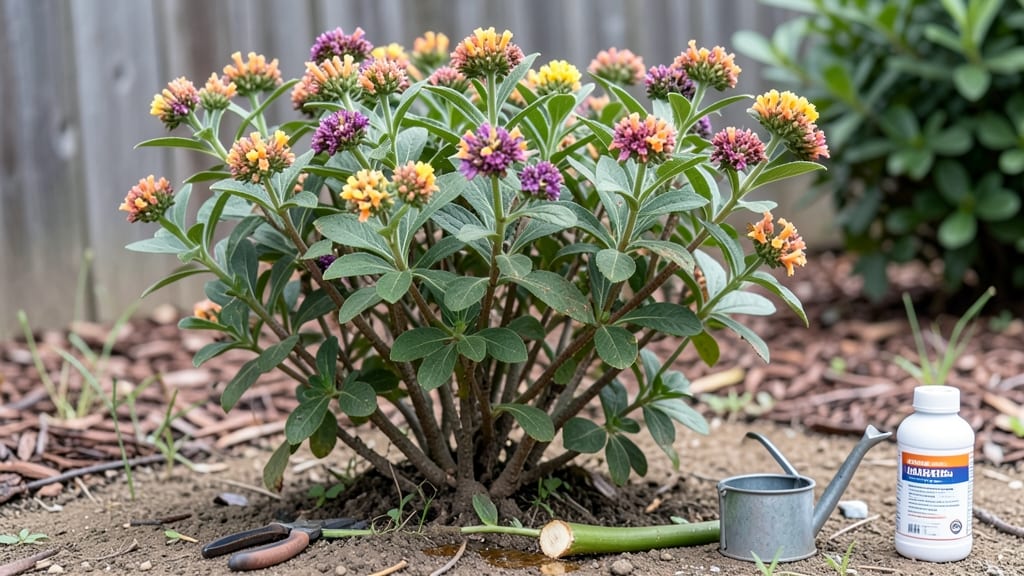
Lantana blooming starts with sunlight—these plants need at least six to eight hours of direct sun daily to trigger those vibrant clusters. 🌻 I’ve watched my lantana go from sparse leaves to nonstop blooms just by moving it to a sunnier spot, and the difference is shocking.
The key isn’t just sunlight, though—it’s also avoiding common mistakes like overwatering or fertilizing too heavily, which can send energy to leaves instead of flowers.
Pruning is where most gardeners trip up, but it’s actually the secret to more blooms. Cut back leggy growth in early spring and again after flowering to encourage bushier, more productive plants.
A light feeding with a balanced, low-nitrogen fertilizer (like 10-10-10) every 4-6 weeks during growing season keeps them flowering without overstimulating foliage. Too much nitrogen? You’ll get leaves, not flowers.
By summer, your lantana should be covered in clusters of yellow, orange, or pink blooms that last until frost. The flowers attract butterflies and hummingbirds, making your garden feel alive with movement.
The best part? With the right care, lantana keeps blooming even in heat waves—no deadheading required. Just keep an eye on watering and you’re set.
Works in containers, borders, or as a hedge—lantana thrives almost anywhere with sun. Here’s how to keep those blooms coming all season long, no matter your climate or space.
📚 In This Guide
- What you need
- Instructions
- Tips and common mistakes
- Wrapping up and next steps
What you need
- ● Lantana plant: A healthy, mature plant (potted or in-ground). Choose a variety like Lantana camara or Lantana montevidensis for vibrant blooms.
- ● Well-draining potting mix: 10-15 lbs (for potted plants). Mix 50% cactus/succulent soil, 30% perlite, and 20% compost for optimal drainage.
- ● Fertilizer: Balanced liquid fertilizer (10-10-10 or 20-20-20): 1 bottle (8-12 oz). Dilute to half-strength for feeding.
- ○ Slow-release granular fertilizer (optional): 1 lb. Look for a low-nitrogen, high-phosphorus formula (e.g., 5-10-10) for blooms.
- ● Pruning shears: Sharp, clean pair (sterilize with rubbing alcohol before use). Choose bypass pruners for precision cuts.
- ● Watering can or hose with a gentle spray nozzle: 1 unit. Avoid soaking the soil—lantanas hate soggy roots!
- ● Sunlight: Full sun (6+ hours daily). Partial shade (3-4 hours) may reduce blooming.
- ● Temperature: Ideal range: 65–95°F (18–35°C). Protect from frost (<32°F/0°C).
- ● Water: Drought-tolerant once established. Water deeply but infrequently (every 7–10 days, or when top 1–2 inches of soil are dry).
- ● Epsom salt: 1 small box. Sprinkle 1 tbsp per gallon of water monthly for magnesium boosts (promotes blooms).
- ● Plant supports (for leggy plants): 1–2 stakes or a small trellis (if growing tall varieties).
- ● Mulch (organic): 2–3 inches of shredded bark or straw. Helps retain moisture and regulate soil temp.
- ○ Growth regulator (e.g., daminozide): 1 bottle (optional). Use sparingly to delay flowering if you want bushier growth first.
Step-by-Step instructions for encouraging lantana blooms
Here's how I transform my lantana from leafy green to a vibrant, nonstop blooming powerhouse.
🌱 Step 1: Prune for Airflow and Light Penetration
Start by giving your lantana a strategic haircut in early spring before new growth begins. I always use sharp, sterilized pruners to cut back about one-third of the plant's height, focusing on removing any dead, diseased, or crossing branches that block airflow. This isn't just about shaping—it's about creating an open structure that lets sunlight reach all the buds.
The reason we prune so aggressively is that lantana blooms best when it has access to light all the way to its center. You'll see new growth emerge within 2-3 weeks—watch for fresh, bright green shoots that indicate the plant is responding well. If you notice any leggy stems (long, thin branches with few leaves), cut those back too—they're a sign the plant wasn't getting enough light previously.
☀️ Step 2: Ensure Full Sun Exposure and Heat
Lantana thrives in full sun, meaning at least 6-8 hours of direct sunlight daily. If your plant is currently in partial shade, gradually move it to a sunnier spot over 1-2 weeks to avoid shocking the foliage. I've found that morning sun combined with afternoon shade works well in hot climates, but pure full sun produces the most blooms.
Here's the thing—lantana needs heat to trigger flowering. If your plant isn't blooming, it might be too cool. Ideal daytime temperatures should be between 70-95°F. You'll see buds form most actively when nights stay above 60°F. If you're in a cooler climate, consider growing lantana in containers so you can move it to a sheltered spot when temperatures drop below 50°F at night.
💧 Step 3: Master Watering for Blooming Success
Overwatering is the #1 reason lantana stops blooming. I water mine deeply once a week during the growing season, allowing the top 2-3 inches of soil to dry out completely between waterings. You'll know it's time when the soil feels dry to the touch about an inch below the surface. During heatwaves, I might water twice a week, but always check first—wilting leaves mean you've waited too long.
Here's what I do differently: I always water at the base of the plant in the morning. This encourages strong root growth and prevents fungal issues from evening moisture. You'll notice the leaves stay crisp and green when watering is just right, while yellowing or drooping indicates either overwatering or underwatering. A quick soil check with your finger is all it takes to get this right.
✂️ Step 4: Deadhead and Fertilize Strategically
Deadheading spent blooms isn't just about looks—it's a key trigger for continuous flowering. I pinch off faded flowers with my fingers or use clean pruners to cut back to the nearest leaf node. This encourages the plant to produce new buds instead of setting seed. You'll see fresh blooms emerge within 2-3 weeks of consistent deadheading, especially if combined with proper sunlight.
Feed your lantana with a balanced, water-soluble fertilizer (10-10-10 ratio) every 4-6 weeks during the growing season. I always dilute it to half-strength to avoid burning the roots. The key is to fertilize right after a deep watering so the nutrients get absorbed immediately. You'll notice vibrant new growth and more abundant blooms within 2-3 weeks of proper feeding.
🌿 Step 5: Protect From Pests and Diseases
Healthy lantana rarely gets pests, but spider mites and aphids can sometimes appear on stressed plants. I treat these immediately with a strong spray of water or insecticidal soap. The secret is prevention—keep your lantana well-watered, in full sun, and free of dead growth. You'll spot pests early as tiny webs on undersides of leaves or sticky residue on new growth.
Fungal issues like powdery mildew can appear if the plant sits in damp conditions. I always ensure proper airflow by pruning for open growth and avoiding overhead watering. If you notice white powdery spots on leaves, treat immediately with neem oil or a fungicide. Removing affected leaves and improving airflow usually resolves the problem within 1-2 weeks.
Tips & tricks for perfect lantana blooms
These game-changing strategies will transform your leafy lantana into a nonstop blooming machine—without the guesswork.
Pruning Precision: When you cut back that one-third of the plant's height in Step 1, make your cuts just above a leaf node where new growth emerges. I've found that using sharp, sterilized pruners isn't just about clean cuts—it prevents disease entry points. After pruning, take a moment to examine the plant's center. If you can't see sunlight reaching the middle, you haven't pruned aggressively enough. That 2-3 week window for new growth is your reward for this crucial step—don't rush it!
Sunlight Strategy: The 6-8 hours of direct sunlight in Step 2 isn't just about quantity—it's about quality. Position your lantana where it gets morning sun (which is less intense) and afternoon sun (when temperatures peak between 70-95°F). If you're in a cooler climate where nights drop below 60°F, consider using a small space heater near potted plants overnight during critical blooming periods. This heat trigger is what makes the difference between occasional blooms and continuous color.
Watering Wisdom: That once-a-week deep watering in Step 3 needs to be consistent, but timing matters just as much. Always water at the base in the morning—this gives the plant time to absorb moisture before evening humidity sets in. I've seen fungal issues develop when people water in the evening, even when following the same frequency. Pro tip: Use your finger to check soil moisture at the 1-inch mark—this is where the roots are actively seeking water, not just the surface.
Fertilizer Timing: The 4-6 week feeding schedule in Step 4 works best when you fertilize right after a deep watering. This ensures the nutrients get absorbed immediately rather than sitting on the soil surface. I've noticed that plants fertilized at other times often show leaf burn or uneven growth. Always dilute that 10-10-10 to half-strength—full strength can actually stress the plant and reduce blooming. The 2-3 week window for new growth after feeding is your confirmation that everything's working!
Pro Tips for Make Lantana Bloom
- These game-changing strategies will transform your leafy lantana into a nonstop blooming machine—without the guesswork.
- Pruning Precision: When you cut back that one-third of the plant's height in Step 1, make your cuts just above a leaf node where new growth emerges.
- Sunlight Strategy: The 6-8 hours of direct sunlight in Step 2 isn't just about quantity—it's about quality.
Frequently asked questions
Got questions about getting your lantana to bloom like a rainbow explosion? Here are answers to the most common queries—straight from gardeners who’ve been there!
Why isn’t my lantana blooming?
If your lantana’s been sitting pretty but hasn’t bloomed yet, it’s often due to light, nutrients, or stress. Lantana loves full sun (6+ hours daily) and well-draining soil. Check for pests, overwatering, or lack of fertilizer—sometimes a prune-and-feed reset does the trick!
How often should I fertilize lantana for blooming?
Feed lantana every 4–6 weeks during its growing season (spring through fall) with a balanced, low-nitrogen fertilizer (like 10-10-10). Too much nitrogen = lush leaves, fewer flowers! For extra blooms, try a phosphorus-rich option (e.g., 5-10-5) mid-summer. Stop fertilizing in winter—lantana rests then!
Can I grow lantana indoors and get it to bloom?
Indoor lantana is possible but tricky—it needs bright, direct light (a south-facing window) and high humidity (like a greenhouse). If blooms are sparse, try grow lights (12+ hours/day) and regular pruning. For best results, keep it outdoors in summer and bring it inside only during frost.
What’s the best way to prune lantana for more flowers?
Prune lantana lightly but often! Pinch back spent blooms regularly to encourage new growth. For a hard prune, cut back by 1/3 in early spring or after winter. Avoid heavy pruning in summer—it stresses the plant. Use clean, sharp shears and wear gloves (lantana sap can irritate skin!).
Are there lantana alternatives for cooler climates?
If lantana struggles in your zone (below USDA 7), try these bloom-packed alternatives:
- Zinnias (easy, drought-tolerant, blooms all summer)
- Portulaca (Moss Rose) (thrives in heat, low-maintenance)
- Verbena (trailing or upright, blooms nonstop)
- Salvia (drought-resistant, attracts pollinators)
All love sun and minimal fuss—perfect for lantana fans!
Wrapping up and next steps
With the right care, your lantana can burst into vibrant, year-round blooms—adding a splash of color to your garden or containers! Remember, the key lies in pruning for shape and health, feeding with balanced nutrients, and creating the ideal growing conditions.
A little patience and consistency will reward you with a lush, flowering lantana that keeps giving.
Ready to see those bright blossoms in action? Grab your shears, check your soil, and give your lantana the love it deserves—your garden will thank you! 🌸💛