
Blooming
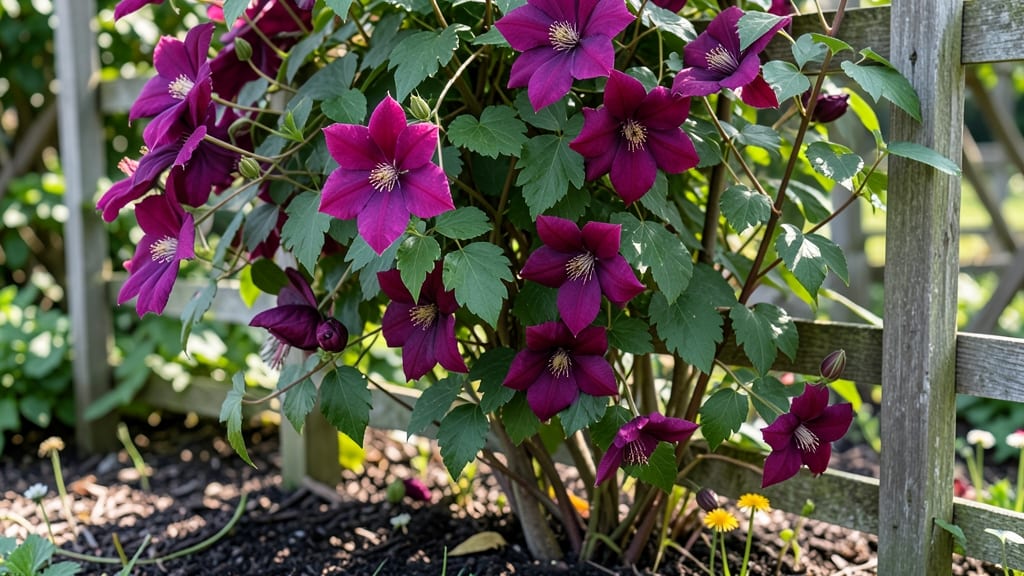
A large-bloom clematis can transform a fence or trellis into a jewel-toned waterfall—but only if you meet their three key needs: the right support, perfect pruning timing, and soil that feels like a spa to their roots. 🌸 I’ve watched mine go from sad, leggy vines to 6-foot-tall spikes of blooms in just two seasons, and the secret starts with choosing the perfect spot.
These plants aren’t fussy, but they do demand full sun (6+ hours daily) and soil that drains like a well-rinsed sponge—never soggy. A 3-inch layer of mulch keeps roots cool in summer and prevents those dreaded fungal issues that turn leaves to lace.
The pruning schedule alone makes all the difference: group 3 varieties bloom on old wood, so prune after flowers fade, while groups 1 and 2 need a late-winter haircut before new growth starts.
By summer’s end, you’ll have vibrant blooms from June through frost—and the stems will be strong enough to support those heavy flowers without sagging.
The key is patience: it takes 2-3 years for established vines to hit their full potential, but once they do, neighbors will ask how you grew them so big.
Works in zones 4-9, from city balconies (with sturdy trellises) to country gardens. Here’s how to avoid the three mistakes that kill most clematis—starting with pruning at the wrong time.
📚 In This Guide
- What you need
- Instructions
- Tips and common mistakes
- Wrapping up and next steps
What you need
- ● Large bloom clematis plants: 1–3 Clematis varieties (e.g., 'Jackmanii,' 'Nelly Moser,' or 'Princess Diana')—choose based on sun exposure and bloom time.
- ○ Optional: Seed pods (for growing from seed; requires patience—up to 3 years for blooms!).
- ● Soil: Well-draining, fertile soil (amend with compost or organic matter if clay-heavy). Aim for a pH of 6.0–7.0.
- ○ Optional: Container mix (50% peat moss, 30% perlite, 20% compost) for potted varieties.
- ● Support structure: Trellis, arbor, or sturdy fence (at least 6–10 feet tall, depending on variety).
- ○ Optional: Obelisk or wire mesh for compact varieties.
- ● Gardening tools: Trowel or spade (for planting)
- ● Pruners (sterilized with rubbing alcohol)
- ● Gloves (to protect hands from thorns!)
- ● Fertilizer: Balanced fertilizer (10-10-10) or phosphorus-rich (5-10-10) for root and bloom development.
- ○ Optional: Slow-release granules or organic options (fish emulsion, bone meal).
- ● Mulch: 2–3 inches of organic mulch (shredded bark or straw) to retain moisture.
- ● Watering supplies: Hose with gentle spray nozzle or drip irrigation system.
- ● Prerequisites: Full sun to partial shade (6+ hours of sunlight for most varieties).
- ● Proximity to a water source (clematis loves consistent moisture!).
Step-by-step instructions for growing large bloom clematis
Here's the foolproof method I use to coax those showstopping blooms year after year.
🌱 Step 1: Choose the Right Location and Soil
Clematis thrives in full sun to partial shade—at least 6 hours of direct sunlight daily—but its roots need protection from afternoon heat. I plant mine near a north-facing wall or under the dappled shade of a deciduous tree, where the roots stay cool while the vines get morning light. The soil must drain exceptionally well—clematis roots rot in soggy conditions.
Before planting, amend the soil with 3-4 inches of organic compost mixed into the top 12 inches of soil. Clematis loves rich, well-draining earth, so if your soil is heavy clay, add sand or perlite to improve aeration. I always work in a handful of bone meal (about 1/2 cup) at planting time to encourage strong root development for those massive blooms.
☀️ Step 2: Plant at the Correct Depth and Support Structure
Dig a hole twice as wide as the root ball but only as deep—never deeper—than the container it came in. Clematis roots are shallow, and burying them too deep suffocates the plant. Position the crown 2-3 inches below soil level—this protects it from freezing in winter while keeping it cool enough to prevent leaf scorch.
Install a strong trellis, arbor, or obelisk at planting time. Clematis vines can grow 10-15 feet in a season, and weak supports snap under the weight of blooms. I use metal or heavy-duty wood for permanent structures, secured with galvanized hardware to resist rust. Plant the clematis 6-12 inches away from the support so vines can weave naturally without crowding.
💧 Step 3: Water Deeply and Mulch for Root Health
Water thoroughly right after planting, soaking the soil to a depth of 12-18 inches. Clematis roots need consistent moisture but hate soggy feet, so aim for 1-1.5 inches of water per week, either from rain or irrigation. I check moisture by sticking my finger 3 inches deep—if it feels dry, it's time to water.
Spread 3 inches of mulch (like shredded bark or straw) around the base, keeping it 6 inches away from the stem to prevent rot. Mulch retains moisture, regulates soil temperature, and suppresses weeds—critical for clematis, which puts all its energy into those large, heavy blooms. Replenish mulch annually in early spring to maintain protection.
✂️ Step 4: Prune for Maximum Blooms
Pruning clematis is where the magic happens for those large, repeat-flowering blooms. There are three pruning groups, and I focus on Group 3 (large-flowered hybrids) for dramatic spikes. Cut back last year’s growth to 2-3 healthy buds in early spring, just as new shoots begin to swell. This encourages strong, vigorous new growth that will produce the biggest blooms.
Deadhead spent blooms regularly throughout the season to redirect energy into new flowers. I also trim any weak or crossing stems to improve airflow and reduce disease risk. Avoid heavy pruning in late summer—this cuts off potential fall blooms. If your clematis flowers poorly, check your pruning group and adjust timing accordingly.
🌿 Step 5: Feed and Protect for Long-Term Success
Feed clematis twice a year with a balanced, slow-release fertilizer (like 10-10-10) in early spring and mid-summer. I also add a high-phosphorus fertilizer (like 5-10-5) in early spring to boost blooming. Avoid high-nitrogen fertilizers—they produce lush foliage but fewer flowers. Water deeply after feeding to prevent root burn.
In winter, protect the base with 6-12 inches of mulch and, if your climate drops below 10°F, wrap the crown with burlap or straw. Clematis is hardy but benefits from a little insulation. I also remove all dead foliage in late winter to prevent disease and improve airflow for new growth.
Tips & tricks for large bloom clematis
Here’s what nobody tells you about growing clematis that actually produces those jaw-dropping blooms.
Location is Everything: That 6 hours of sunlight isn’t just a suggestion—it’s non-negotiable for large blooms. I’ve seen clematis in partial shade grow, but the flowers? Tiny. Instead of guessing, place your plant where it gets morning sun and afternoon shade. A north-facing wall works perfectly—it keeps roots cool while vines bask in the light they crave. Think of it like a spa day for your clematis: cool roots, warm vines.
Support Structure Matters More Than You Think: Weak supports mean sad, drooping blooms. I’ve seen metal trellises bend under the weight of just a few large clematis blooms—10-15 feet of vine is no joke! Invest in heavy-duty wood or metal and secure it with galvanized hardware. Pro tip: Plant your clematis 6-12 inches away from the support. This gives vines room to weave naturally without crowding, which actually makes the blooms look fuller and more dramatic.
Pruning Secrets for Big Blooms: When cutting back last year’s growth to 2-3 healthy buds, don’t just hack randomly. Look for buds that are plump and facing outward—they’ll produce the strongest new growth. And here’s the part people skip: deadhead regularly throughout the season. I know it’s tedious, but it redirects energy from seed production to more blooms. Think of it like pruning roses—every spent bloom you remove is a bloom you’ll get later.
Winter Protection Isn’t Just About Cold: The 10°F threshold isn’t arbitrary—it’s when clematis roots start struggling. But here’s the real trick: mulch depth matters. I’ve seen gardeners use 3 inches of mulch and still get frost damage. Double that to 6-12 inches for true protection. And if you’re in a harsh climate, wrap the crown with burlap or straw. It’s like giving your plant a cozy blanket—roots stay insulated, and you’ll get bigger blooms next spring.
Pro Tips for Large Bloom Clematis
- Here’s what nobody tells you about growing clematis that actually produces those jaw-dropping blooms.
- Location is Everything: That 6 hours of sunlight isn’t just a suggestion—it’s non-negotiable for large blooms.
- Support Structure Matters More Than You Think: Weak supports mean sad, drooping blooms.
Frequently asked questions
Got questions about growing large bloom clematis? You’re not alone! Here are answers to the most common queries to help you cultivate stunning, long-lasting blooms with confidence.
When is the best time to plant large bloom clematis?
Plant in early spring or early fall when soil is cool but workable. Avoid extreme heat or frost—roots need time to establish before dormancy. Container-grown plants can go in year-round (except winter), but bare-root varieties thrive with a head start in mild seasons. Pro tip: Water deeply after planting to reduce transplant shock!
How long does it take for large bloom clematis to flower?
Most varieties bloom in their second year if planted correctly, but some (like ‘Nelly Moser’) may surprise you with flowers the first season! Patience pays off—healthy roots = bigger blooms. Prune strategically (see this section) to encourage robust growth. Fun fact: Some clematis reward you with two blooming seasons (spring + late summer)!
Why aren’t my large bloom clematis flowers opening?
Common culprits include over-pruning (cutting back too late), poor sunlight (they need 6+ hours/day), or nutrient deficiencies. Check for bud blast (fungus causing buds to die) or aphids (sap-sucking pests). Adjust pruning to Group 1 or 3 (depending on variety) and fertilize with phosphorus-rich soil amendments. Quick fix: Thin dense foliage for better airflow!
Can I grow large bloom clematis in containers?
Choose a large pot (15+ gallons) with drainage holes and a moisture-retentive mix (add perlite/compost). Dwarf varieties like ‘Jackmanii’ thrive in containers, but heavy bloomers (e.g., ‘The President’) need sturdy support (trellis or obelisk). Move pots to partial shade in peak summer to prevent wilting. Bonus: Container clematis are easier to winter-protect!
If clematis seem high-maintenance, try these equally stunning options:
What are some low-maintenance alternatives to large bloom clematis?
Pro tip: Pair any climber with mulch to retain moisture and suppress weeds!
Wrapping up and next steps
Growing large bloom clematis is a rewarding journey that transforms your garden into a vibrant, year-round spectacle—whether through bold summer blooms or delicate winter interest. With the right support, soil, and care, these climbers thrive and bring joy with minimal effort.
Now that you’re armed with the essentials, why not plant one today? Start small with a single variety, experiment with pruning techniques, or even share your progress with fellow gardening enthusiasts for inspiration!
- 🌱 Next Step: Pick your favorite large bloom clematis variety and begin your planting adventure!
- 📸 Share Your Journey: Snap photos of your progress and tag us—we’d love to see your garden come to life!