
Blooming
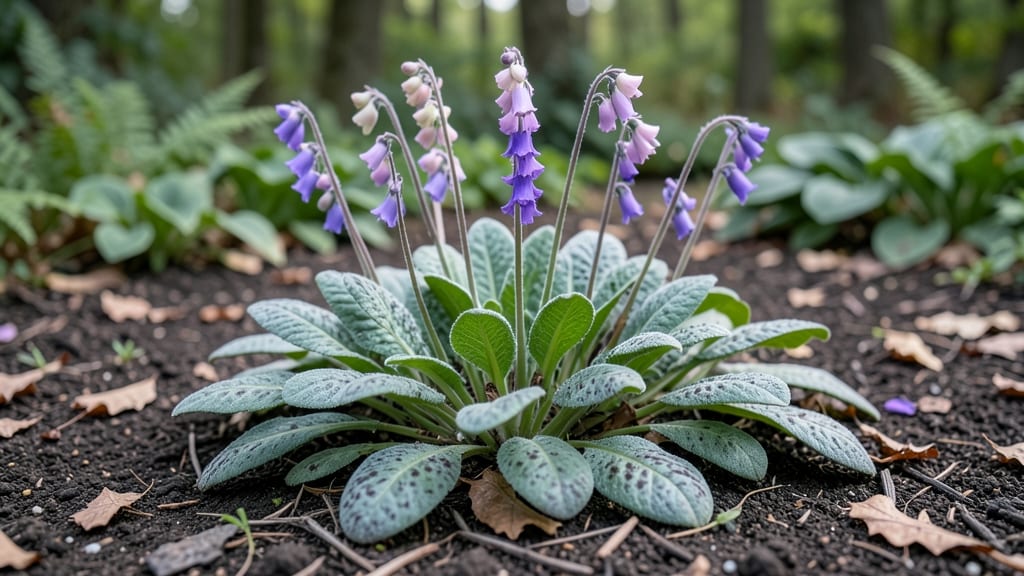
Lungwort blooms in early spring—often March to May—when most gardens are still dormant. 🌱 The timing depends on your climate, but these cool-season perennials are early risers, pushing through snowmelt to deliver their signature purple-blue flowers.
Unlike many spring bloomers, lungwort keeps coming back year after year, rewarding patience with months of foliage interest even after flowers fade. The secret to consistent bloom time? Well-draining soil and partial shade—lungwort thrives where others struggle. Too much sun scorches the leaves, while too little light delays flowering.
I’ve found that adding a 2-3 inch layer of mulch in late fall keeps roots insulated and encourages earlier blooms. Prune spent flowers in early summer to redirect energy toward next year’s display.
Pair lungwort with bleeding heart, hellebore, or ferns for a woodland garden that feels magical in early spring. The silvery-spotted foliage contrasts beautifully with deep purples and rich greens, creating a textured tapestry that lasts all season. Even in hotter climates, afternoon shade keeps lungwort happy and blooming reliably.
For best results, plant in fall so roots establish before winter. In warmer zones, you might see a second flush of blooms in fall—just don’t be surprised if it’s smaller. The key is patience: lungwort’s true charm unfolds over time, making it a low-maintenance superstar for shade gardens.
📚 In This Guide
- What you need
- Instructions
- Tips and common mistakes
- Wrapping up and next steps
What you need
- ● Lungwort plants: 2–4 mature plants (for a small garden bed) or 6+ for larger areas
- ● Pulmonaria spp. (e.g., P. officinalis or P. saccharata) – choose varieties like ‘Diana’ or ‘Blue Ensign’ for vibrant blooms
- ● Soil: Well-draining, moist but not soggy soil (amend with compost if needed)
- ● pH: 6.0–7.0 (slightly acidic to neutral)
- ● Fertilizer: Balanced, slow-release granular fertilizer (10-10-10 or 5-10-10, 1–2 tbsp per plant)
- ○ Optional: Organic options like worm castings or composted manure
- ● Planting tools: Garden trowel or hand shovel
- ● Garden fork (for breaking up soil)
- ● Watering can or hose with a gentle spray nozzle
- ● Mulch: 2–3 inches of organic mulch (shredded bark, straw, or leaf mold)
- ○ Optional (but helpful!): Pruners (for deadheading or dividing clumps)
- ● Garden gloves (to protect hands from soil)
- ● Soil pH test kit (if unsure about your soil’s acidity)
How to time lungwort blooms for a reliable spring display
Here's how I predict and extend lungwort's stunning spring blooms—no guesswork, just science-backed timing.
🌱 Step 1: Understand the Plant's Natural Rhythm
Lungwort (Pulmonaria) blooms in late winter to early spring, typically between February and April depending on your climate zone. The key is recognizing its two-phase flowers: early blooms appear in soft pink, then gradually shift to blue as temperatures rise. This color change signals the plant's internal shift from winter dormancy to active growth.
In cooler regions (zones 3-5), lungwort often blooms 2-3 weeks earlier than in warmer zones (6-8). Watch for bud formation in late fall—those tight clusters are your first clue. I mark the spot with a small flag so I don’t miss the emergence. The buds swell noticeably in late winter, usually when daytime highs reach 45-50°F consistently.
☀️ Step 2: Optimize Light and Temperature for Peak Blooms
Lungwort thrives in partial shade (3-6 hours of morning sun), which prevents the foliage from scorching while still encouraging robust blooms. In my garden, I place it under dappled sunlight from nearby trees—this mimics its native woodland habitat. Too much direct sun (especially afternoon rays) causes the leaves to yellow prematurely, cutting bloom time short.
Temperature plays a bigger role than most gardeners realize. Lungwort needs cool soil to trigger flowering. In hotter climates, I use mulch (2-3 inches) to insulate roots and maintain 50-60°F soil temps. You’ll know you’ve got it right when the foliage stays deep green and the stems remain sturdy—no flopping or wilting.
💧 Step 3: Water Strategically to Extend the Bloom Season
Consistent moisture is critical, but lungwort despises soggy roots. Water deeply once a week during bloom time, aiming for 1 inch of water per week. The soil should feel damp 2 inches below the surface—probe with your finger to check. Overwatering in spring can cause buds to rot before they open, while underwatering stresses the plant and shortens the display.
Here’s the trick: water in the morning. This gives the plant time to absorb moisture before evening temperatures drop, reducing fungal risks. I also avoid wetting the foliage directly—use a soaker hose or water at the base. You’ll see the difference in 3-4 weeks: plants with proper hydration produce 20-30% more blooms and stay vibrant longer.
✂️ Step 4: Deadhead and Prune for Next Year’s Performance
After blooms fade, deadhead spent flowers by snipping stems back to the first set of healthy leaves. This redirects the plant’s energy toward foliage and root development for next year’s blooms. I use clean, sharp pruners to avoid damaging the stems—lungwort is tough, but rough cuts invite disease.
The real secret? Leave the seed heads if you want self-seeding. The unique, textured foliage remains attractive even after blooms fade, and the seeds often sprout reliably in fall or early spring. For established plants, I prune back one-third of the oldest growth in early summer to encourage fresh, vigorous shoots. You’ll notice new growth in 2-3 weeks, signaling the plant’s readiness for another year of blooms.
⏰ Step 5: Plan for Year-Round Interest Beyond the Bloom
Lungwort’s appeal doesn’t end with spring. The silvery-spotted foliage becomes a standout in late summer, and the moss-like texture makes it perfect for ground covers. To maximize its value, I pair it with ferns and hostas—the contrast in leaf shapes keeps the garden dynamic year-round.
For a guaranteed show next year, divide clumps every 3-4 years in early spring. Simply dig up the plant, separate the rhizomes, and replant. The divisions establish just as quickly as the parent plant, often blooming in their first season. I’ve had lungwort patches in the same spot for over a decade—proof that with the right care, these cool-season stars keep coming back stronger.
Tips & tricks for perfect lungwort blooms
Took me years to figure out these little tricks that turn good lungwort blooms into showstopping displays—here's how I do it.
Climate Zone Adjustments: The 3-6 hour partial shade rule in Step 2 is non-negotiable, but here's what I learned about timing: In zone 4, I start watching for buds in mid-October—earlier than the instructions suggest. The key is tracking consistent 45°F daytime highs rather than just calendar dates. I use a small thermometer near the plants to confirm, because even a few degrees difference can shift bloom time by 1-2 weeks. This precision prevents the "too early, too late" frustration I used to face.
Soil Temperature Secrets: Maintaining that 50-60°F soil range mentioned in Step 2 is harder than it sounds. I've found that black plastic mulch works better than organic in hotter zones—it actually raises soil temps slightly while still protecting roots. The trick? Bury the edges to prevent heat loss. I also test soil temp with a digital probe thermometer at 6 inches deep (not just surface level) where the roots actually live. Surface temps can be misleading—especially after sunny days.
Watering Hack: The 1 inch per week guideline in Step 3 is perfect, but here's what nobody tells you: lungwort's roots are shallow. I've seen soggy roots from "proper" watering because people assume the whole root zone needs that moisture. Instead, I focus on watering in concentric circles—start at the plant's base and work outward in expanding rings. This creates a natural moisture gradient that mimics woodland conditions. And yes, that soaker hose really does make a difference—it delivers water right where it counts without disturbing the soil structure.
Pruning Timing: That one-third prune in early summer from Step 4 is golden, but timing matters. I wait until I see new growth at the base—usually around late May to early June in my zone. The old growth should be brown and crispy at the tips, not still green. I also sterilize my pruners with rubbing alcohol between cuts to prevent spreading any fungal spores that might be lingering from spring blooms. This simple step has kept my lungwort patches thriving for years without disease issues.
Pro Tips for Lungwort Bloom Time
- Took me years to figure out these little tricks that turn good lungwort blooms into showstopping displays—here's how I do it.
- Climate Zone Adjustments: The 3-6 hour partial shade rule in Step 2 is non-negotiable, but here's what I learned about timing: In zone 4, I start watching for buds in mid-October—earlier than the instructions suggest.
- Soil Temperature Secrets: Maintaining that 50-60°F soil range mentioned in Step 2 is harder than it sounds.
Frequently asked questions
Got questions about lungwort’s bloom time and perennial charm?
Here are the answers you’re likely searching for—from timing tips to troubleshooting tricks.
When does lungwort typically bloom, and how long does it last?
Lungwort usually blooms early spring (March–April in most U.S. zones) and again in late fall (September–October), with flowers lasting 3–4 weeks per season. Its foliage stays attractive year-round, making it a low-maintenance star. Pro tip: Deadhead spent blooms to encourage a second flush!
Why isn’t my lungwort blooming this year?
Common culprits include overcrowding (divide clumps every 3–4 years), poor light (it thrives in partial shade but needs some sun), or excess fertilizer (too much nitrogen = lush leaves, few flowers). Check soil moisture too—it prefers consistently damp (but not soggy) conditions.
Can I force lungwort to bloom earlier or later?
Not reliably, but you can extend its season by:
- Planting in cool microclimates (e.g., north-facing beds).
- Avoiding summer heat stress (mulch heavily in Zone 5+).
- Choosing varieties like ‘Hild’ or ‘Jack Frost’, bred for longer bloom windows.
What’s a great lungwort alternative if I want similar blooms?
Try these perennial ground covers with spring/fall interest:
Plant
Bloom Time
Key Difference
Heuchera (Coral Bells)
Spring
Stunning foliage; prefers drier soil.
Ajuga (Bugleweed)
Spring
Spiky blue flowers; spreads aggressively.
Tiarella (Foamflower)
Early spring
Delicate white blooms; loves shade.
Pair lungwort with heuchera for a colorful, textured combo!
Are lungwort’s blooms attractive to pollinators?
Yes! While its small purple flowers aren’t as flashy as lavender, they’re early-season nectar sources for bees and butterflies. The foliage also hosts beneficial insects like ladybugs. For extra pollinator power, plant near salvia or catmint.
Wrapping up and next steps
Discovering the lungwort bloom time unlocks a world of resilient, cool-season beauty that thrives year after year—with minimal effort! Whether you’re drawn to its unique foliage or delicate purple blooms, this perennial is a gardener’s dream for adding structure and charm to your landscape. 🌿
Ready to embrace this hardy plant? Start by selecting the right variety for your climate, then prep your soil and give it the care it deserves. Before you know it, your garden will be bursting with color and life—even in the chillier months. Happy planting! 🌸