
Blooming
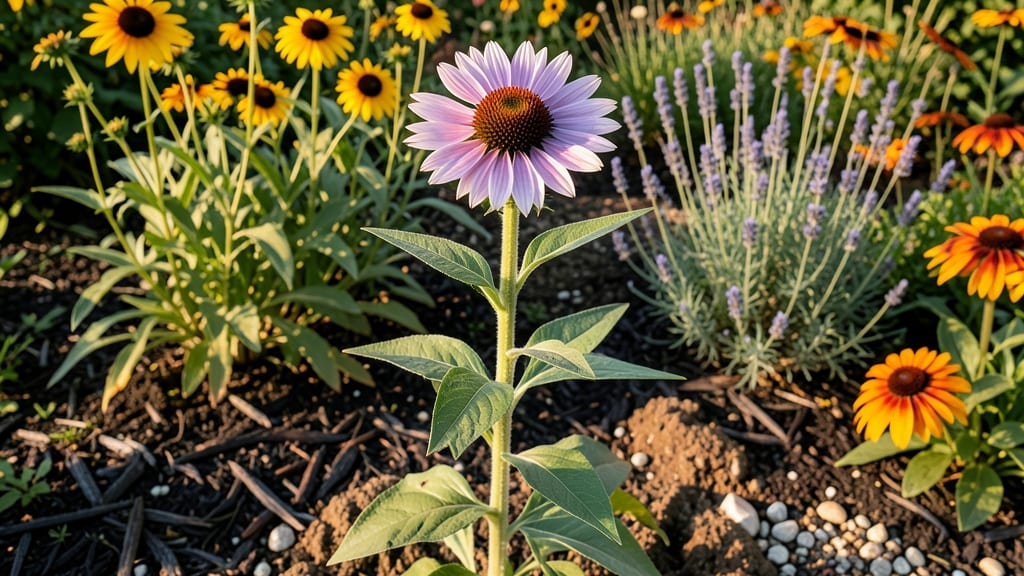
Summer-blooming perennials like coneflowers (June–August), black-eyed Susans (July–September), and daylilies (June–July) deliver vibrant color with minimal upkeep. Opt for 'Magnus' coneflowers or 'Goldsturm' rudbeckias to attract pollinators while keeping your garden looking effortless.
These hardy plants aren't just pretty—they're designed to handle summer's heat and dry spells. 🔥 Many develop deep root systems that store moisture, while their waxy leaves reduce water loss.
I've found that pairing drought-tolerant varieties like lavender with moisture-loving bee balm creates a balanced garden that thrives through the hottest months. The key is matching each plant's needs to its location, whether that's full sun for coneflowers or partial shade for hydrangeas.
For best results, focus on three seasonal tasks: dividing clumps in spring or fall, fertilizing lightly in early summer, and deadheading spent blooms to encourage more flowers. 💫 I recommend keeping a simple checklist—like dividing peonies in September or pinching back catmint in June—to keep these perennials looking their best with minimal effort.
💡 In This Article
- Why Summer-Blooming Perennials Thrive in Heat
- Planting and Maintenance Calendar for Summer Bloomers
Why summer-blooming perennials thrive in heat
Summer-blooming perennials have evolved remarkable survival strategies to handle intense sunlight and high temperatures. Their deep root systems, often extending 3-5 feet underground, access moisture from deep soil layers while shallow roots spread wide to capture surface water during brief summer rains.
This dual system allows plants like coneflowers to survive with 30-50% less water than annuals, making them perfect for low-maintenance gardens.
The waxy, gray-green foliage of many summer perennials, such as lavender and Russian sage, acts like a natural sunscreen.
These leaves reflect up to 30% more sunlight than smooth leaves, reducing heat absorption and preventing wilting. 🔥 The leaves' fuzzy texture also creates a microclimate that traps moisture near the plant, while their silver hues help dissipate excess heat.
In contrast, plants like bee balm with broader leaves need more frequent watering to prevent scorching in full sun.
Water efficiency is another key adaptation. Many summer perennials, including black-eyed Susans and daylilies, have developed a process called crassulacean acid metabolism (CAM), where they open their stomata (pores) at night to absorb CO2 and minimize daytime water loss.
This allows them to thrive in 90°F+ temperatures with minimal irrigation. For example, 'Goldsturm' rudbeckias can go 3-4 weeks without rain once established, while hydrangeas in the same conditions may require weekly watering.
Sunlight preferences vary dramatically among summer bloomers. Full-sun lovers like coneflowers and coreopsis need 6+ hours of direct sunlight daily to produce their signature vibrant blooms, while partial-shade varieties such as peonies and asters perform best with 3-5 hours of morning sun to avoid leaf burn.
The key is matching the plant's native habitat—mediterranean perennials like lavender thrive in dry, sunny conditions, while woodland natives like hostas prefer dappled shade.
Soil temperature also plays a critical role. Most summer perennials prefer soil temps between 65-75°F, which is why mulching with 2-3 inches of organic matter helps regulate temperature and retain moisture.
A thick layer of mulch can reduce soil temperature fluctuations by 10-15°F, creating a more stable growing environment. 💫 This is particularly important in early summer when soil can heat up rapidly after winter, potentially shocking newly planted perennials.
What most gardeners don't realize is how these adaptations translate into care requirements. For instance, while drought-tolerant perennials like sedum need infrequent watering, their companion plants like catmint may require regular deadheading to prevent seed production and encourage continuous blooming.
Understanding these botanical traits helps create gardens that not only survive summer but flourish with minimal intervention.
Consider this comparison: a well-established lavender plant might need watering only once every 2-3 weeks in summer, while a newly planted daylily requires weekly watering for the first season to establish its root system.
This difference highlights why proper planting timing—typically in spring or early fall—is crucial for long-term success.