
Blooming
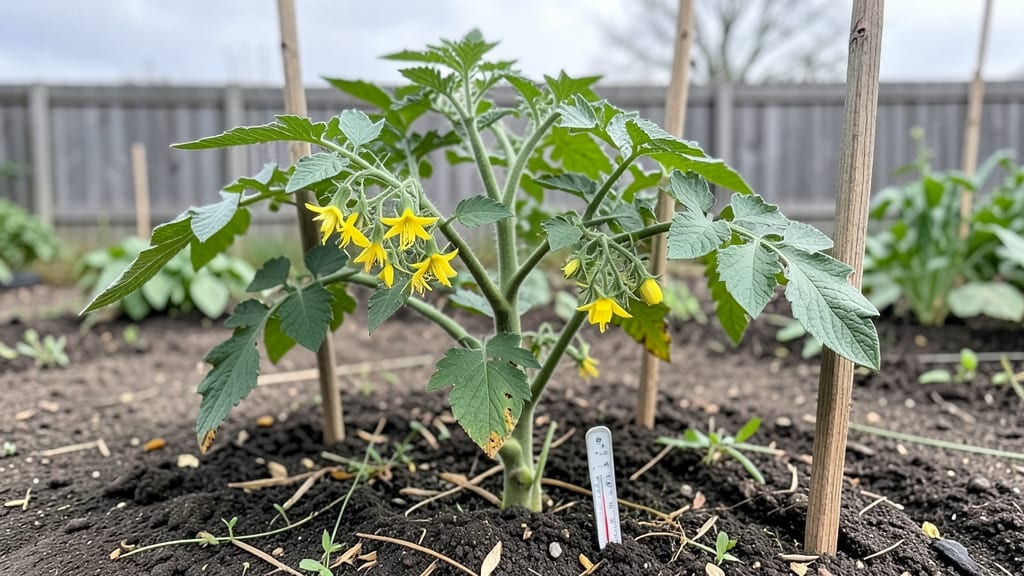
Tomato plants blooming too early often result from excessive heat, long daylight hours, or insufficient chilling during dormancy. To delay fruit set naturally, reduce watering, prune suckers, provide shade cloth, or move plants to a cooler environment until nighttime temperatures drop below 70°F.
Premature blooming throws off your tomato plant's natural rhythm, often leading to weak fruit or even blossom drop. 🌡️ The key culprit is often daytime temperatures above 80°F, which tricks plants into thinking it's time to fruit—even when they're not fully hardened off.
I've seen this happen most dramatically in greenhouses or early spring starts, where warm soil and bright light accelerate growth hormones without proper chilling first.
This rush to flower also depletes the plant's energy reserves, leaving it vulnerable to stress. 🌱 For example, a Beefsteak tomato variety might produce large, beautiful blooms that never mature into fruit if the plant is still recovering from transplant shock.
The solution isn't just about delaying blooms—it's about giving your plant the right conditions to develop strong roots and foliage first.
💡 In This Article
- Environmental Triggers for Premature Tomato Flowering
- Natural Techniques to Delay Tomato Fruit Production
Environmental triggers for premature tomato flowering
Here's what's actually happening when your tomato plants rush to flower: the plant's natural growth hormones—particularly gibberellins—get overstimulated by environmental cues. These hormones trigger flowering when they detect prolonged warm temperatures, typically above 75°F during the day, combined with long daylight hours (more than 14 hours of light).
This is why greenhouse-grown tomatoes or early spring starts often bloom prematurely—they experience unnaturally consistent warmth and light without the natural cooling periods plants rely on.
The science gets even more interesting when you consider photoperiodism, the plant's internal clock that responds to light duration. Most tomato varieties are day-neutral, meaning they flower regardless of daylight length, but extreme light exposure (like 16+ hours of artificial grow lights) can still accelerate the process.
What most people don't realize is that this light sensitivity works in tandem with temperature—warm nights (70°F+) combined with bright days create a double trigger for early flowering.
For example, a Cherry tomato plant might produce its first blooms in just 4-5 weeks under these conditions, compared to the usual 6-8 weeks in cooler climates.
Stress responses also play a surprising role. When tomato plants experience sudden temperature swings (like hot days followed by cool nights) or water stress, they release ethylene gas—a natural plant hormone that signals it's time to reproduce. This is why you might see early blooms after a drought or heatwave.
The plant essentially thinks, "If conditions are unstable, I'd better reproduce now before things get worse!" This survival mechanism is hardwired into tomatoes' DNA, making it difficult to completely prevent without intervention.
Let's talk about the specific temperature thresholds that matter most. Daytime highs consistently above 85°F will trigger flowering in most varieties, while nighttime temperatures above 65°F maintain that signal. The combination creates what botanists call a "thermal time" effect—each degree above the optimal range (70-75°F) accelerates development.
For instance, a Brandywine tomato might take 90 days to mature in 65°F average temps, but only 60 days in 80°F conditions. This explains why southern gardeners often struggle with early blooming—their plants are essentially growing at warp speed.
Another critical factor is soil temperature. Roots need to stay below 60°F for optimal growth; warmer soil speeds up nutrient uptake but also triggers flowering hormones. This is why raised beds or black plastic mulch can cause early blooming—they heat up faster than surrounding soil.
I've seen heirloom tomato varieties like Black Krim produce their first flowers in just 3 weeks when grown in 80°F+ soil, compared to 5-6 weeks in cooler conditions. The moral? Monitor both air and soil temperatures to understand why your plants might be rushing toward flowering.
Finally, consider the role of vernalization—the chilling period many plants need to flower properly. While tomatoes don't require cold stratification like some vegetables, they do benefit from a period of cooler temperatures (50-60°F) to stabilize their growth.
Without this, plants become "over-caffeinated," so to speak, producing weak stems and early blooms that struggle to support fruit. This is particularly true for indeterminate varieties, which rely on steady growth to develop strong frameworks before flowering.