
Blooming
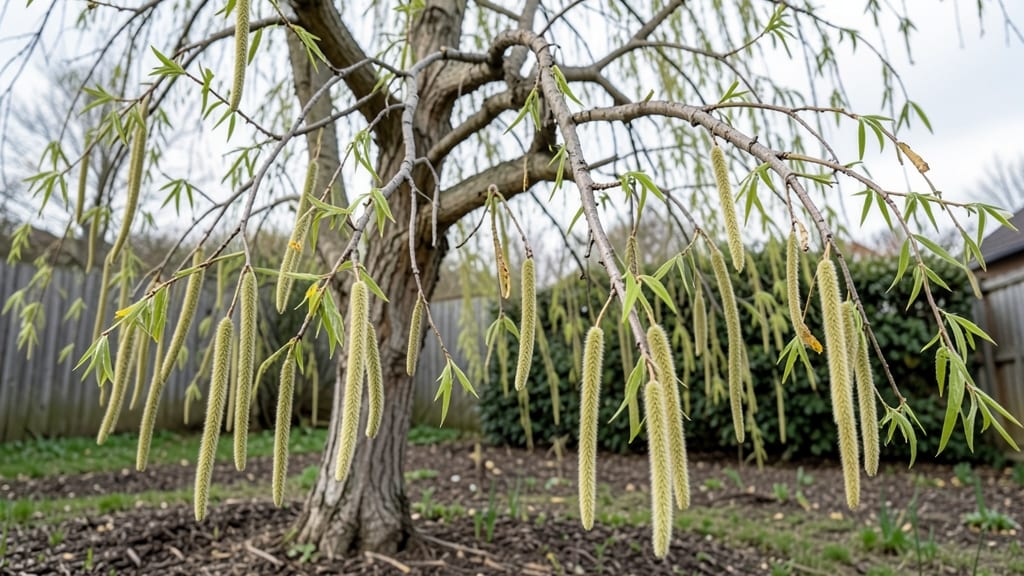
Weeping willow blooming occurs in early spring before leaves emerge, producing small, greenish-yellow catkins that release pollen. This timing aligns with the tree’s natural cycle to maximize pollination efficiency in mild weather conditions.
This early bloom is nature’s way of giving willows a head start—those fuzzy catkins appear weeks before leaves to catch warm spring breezes that carry pollen efficiently. 🌿 The tree’s flexible branches actually help disperse the flowers wider, while the mild weather prevents frost damage to delicate blossoms.
It’s a clever survival strategy that explains why you’ll often spot them flowering even in cooler regions before other trees wake up.
What’s fascinating is how these catkins work: they’re actually flower clusters packed with pollen-producing stamens, not true petals.
The tree’s rapid growth in spring fuels this energy-intensive process, making blooming a high-priority event. 🌸 Gardeners in temperate zones can expect this yearly spectacle, though drought or late frosts might delay or reduce the display—making proper care crucial for vibrant blooms.
💡 In This Article
- Understanding Weeping Willow Flowering Biology
- Optimal Conditions for Encouraging Weeping Willow Blooms
Understanding weeping willow flowering biology
The weeping willow's flowering process begins with a fascinating biological adaptation called protogyny, where flowers emerge before leaves. This strategy conserves energy by avoiding competition for sunlight and nutrients. The tree's catkins—those fuzzy, dangling clusters—are actually inflorescences containing hundreds of tiny flowers packed with pollen-producing stamens.
Each catkin can reach 3-6 inches long and hangs gracefully from the branches, swaying in the wind to maximize pollen dispersal.
Temperature triggers this process through a mechanism called vernalization, where prolonged exposure to cool temperatures (typically 35-45°F for 4-8 weeks) signals the tree to initiate flowering. Once spring arrives, increasing daylight hours (around 12-14 hours of sunlight) provide the final cue.
The tree's rapid growth in spring creates the energy needed for this energy-intensive process, with up to 70% of its annual growth occurring during this period to support both blooming and leafing.
Blooming before leaves emerges serves a critical ecological purpose. The bare branches allow wind to carry pollen more efficiently, while the absence of leaves prevents shading that could reduce flower visibility to pollinators.
This timing also ensures the tree captures early spring pollinators like bees and flies, which are abundant before other trees bloom. The catkins' bright greenish-yellow color contrasts sharply against the bare branches, making them highly visible to potential pollinators.
What's particularly interesting is how the tree's anatomy supports this process. The weeping willow's flexible, drooping branches create what botanists call a wind-pollination advantage—the catkins hang lower than the tree's height, allowing pollen to be carried further by wind currents.
Studies show that willow pollen can travel up to 100 feet horizontally and 50 feet vertically under optimal wind conditions. This anatomical feature explains why weeping willows are such effective colonizers—they maximize pollination opportunities in open spaces.
The flowering process itself is a remarkable display of biological timing. Catkins begin developing in late summer or early fall but remain dormant until spring. When temperatures rise above 50°F consistently, the catkins swell and release pollen within 7-14 days.
This rapid development contrasts with the tree's slower leaf production, which typically begins 2-4 weeks after flowering. The tree's ability to prioritize reproduction over foliage growth demonstrates nature's efficient allocation of resources during critical periods.
Understanding this biological process helps explain why weeping willows often bloom more vigorously in certain conditions. For example, trees in USDA hardiness zones 5-8 typically produce more abundant blooms because they experience the ideal combination of winter chilling and spring warmth.
In contrast, trees in warmer climates may bloom later or less prolifically due to insufficient winter dormancy periods. This biological flexibility is one reason weeping willows thrive across such diverse environments.