
Blooming
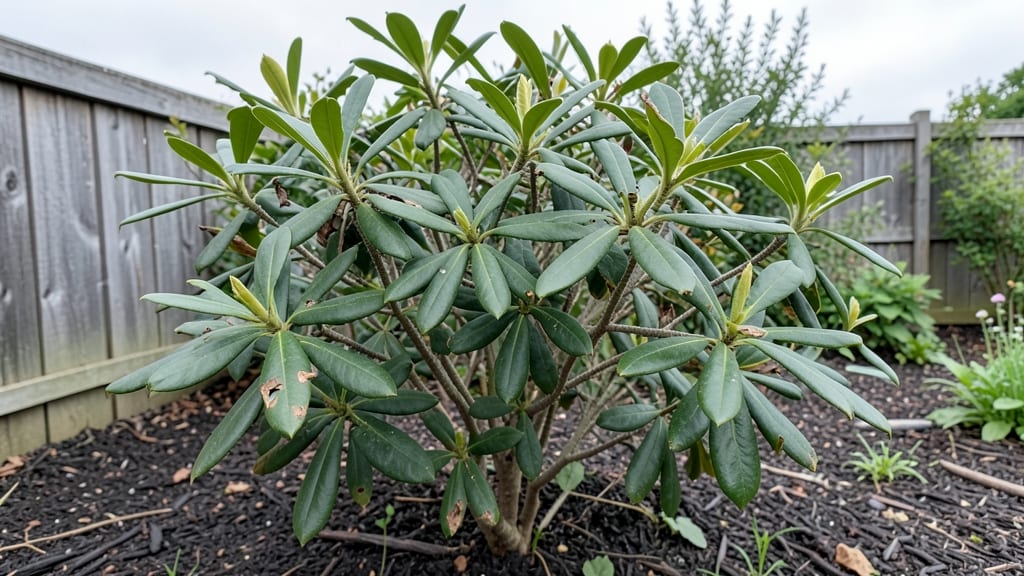
Even without their famous blooms, azaleas hold their own with striking foliage that changes subtly through the seasons. 💫 The deep green, bronze, or purple leaves stay lush year-round, though cooler weather can bring a slight shift toward richer tones.
What really sets them apart is their compact, mounded shape—unlike their rhododendron cousins, which tend to grow taller and more sprawling.
Those woody stems and occasional seed pods add texture, while the glossy leaves catch light beautifully, making them stand out in any landscape. I’ve found that pruning lightly in late winter helps maintain that neat, rounded form while keeping the foliage dense and healthy.
💡 In This Article
- Azalea Foliage Types and Seasonal Changes
- Identifying Azaleas by Year-Round Growth Habits
Azalea foliage types and seasonal changes
Most azaleas maintain their evergreen leaves year-round, though the exact shade shifts dramatically with seasons. In spring, new growth emerges in vibrant deep green hues, often tinged with bronze or purple undertones that fade as temperatures rise.
This color variation occurs because chlorophyll production accelerates in warmer months, while anthocyanins (the pigments responsible for red/purple tones) become less dominant. What's fascinating is how sunlight exposure affects this - full sun azaleas develop richer greens, while shade-loving varieties maintain more of their winter purple-bronze tones throughout summer.
The leaf shape itself provides key identification clues. Azalea leaves typically measure 1-4 inches long and ½-1½ inches wide, with smooth, slightly rolled edges and a leathery texture that feels firm to the touch.
Some varieties like Rhododendron prinophyllum (early azalea) have slightly larger leaves, while Rhododendron canescens (sandhill azalea) features smaller, more oval-shaped foliage. The glossy finish comes from a waxy cuticle that helps conserve moisture - perfect for their native habitats in humid climates.
Seasonal changes become most noticeable in winter when some azaleas develop a silver-gray frosting on their leaves due to fungal spores or environmental stress.
This isn't true for all varieties - evergreen azaleas like Rhododendron calendulaceum maintain their color year-round, while deciduous types (like Rhododendron arborescens) drop leaves in fall.
The key difference between azaleas and rhododendrons lies in their leaf undersides: azalea leaves often have rust-colored hairs when young, while rhododendrons typically have smooth, hairless undersides.
Light exposure creates dramatic foliage variations. Azaleas grown in partial shade develop more pronounced purple-bronze tones year-round, while those in full sun become uniformly green. This is because shade reduces chlorophyll production, allowing other pigments to show through.
The contrast becomes especially striking in winter when sunlight angles create dramatic backlighting that makes the foliage appear almost luminous. Many gardeners use this trick to create winter interest by planting azaleas against dark evergreen backgrounds.
What most people don't realize is how the leaf arrangement helps with identification. Azaleas typically have alternate leaf patterns (each leaf grows from a different node along the stem), while rhododendrons often show spiral arrangements.
The stems themselves provide clues - azalea stems are usually slender and hairy when young, while rhododendron stems tend to be thicker and smoother.
These subtle differences become more apparent as the plant matures, with azaleas developing that classic mounded, layered look that distinguishes them from their taller rhododendron relatives.
One fascinating adaptation is how azalea leaves change texture with age. New growth feels soft and velvety due to fine hairs, while mature leaves develop a smoother, more leathery surface. This texture difference helps with water runoff and reduces damage from wind.
The leaves also have prominent veins that create a subtle network pattern visible when held up to light - a detail often overlooked but crucial for accurate identification when flowers aren't present.