
Blooming
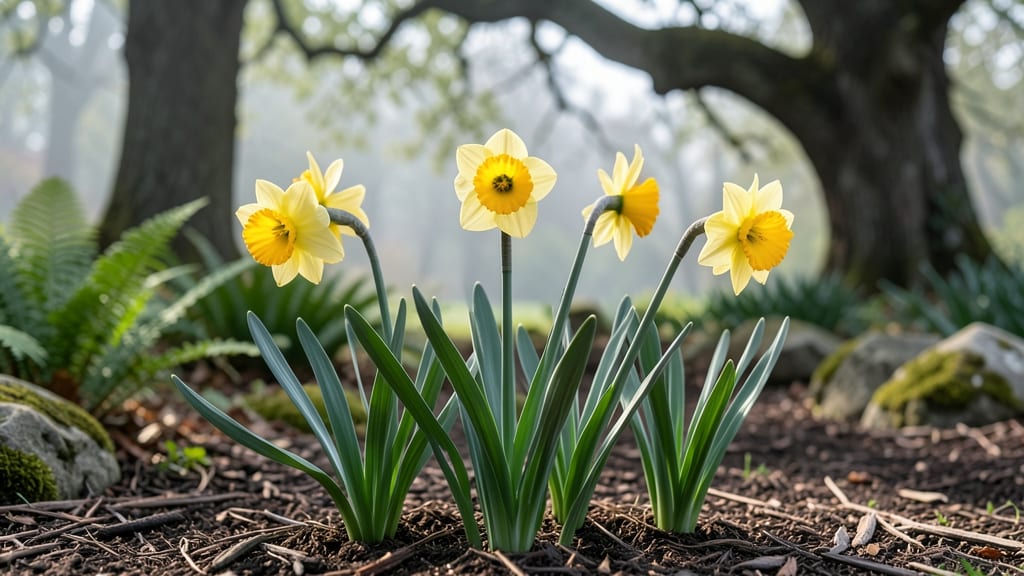
Daffodils bloom in Georgia between late February and early April, with mountain regions seeing early blooms while coastal areas flower slightly later. The timing shifts based on elevation and local weather patterns.
Georgia's diverse climate zones create a natural progression for daffodil blooms, starting in the cooler northern mountains where February temperatures still hover near freezing. 🌸 The warmer coastal plains often see their peak bloom dates stretching into early April, sometimes delayed by late frosts.
I've noticed that years with wetter springs tend to push blooms earlier, while drought conditions can shorten the display. For gardeners, this means planning your varieties carefully—early bloomers like 'Tête-à-Tête' thrive in the mountains, while heat-tolerant types like 'Minnow' perform better near Savannah.
What's fascinating is how these blooms align with Georgia's spring festivals. The Athens area, for example, often sees its daffodil peak during the April Dogwood Festival, while mountain towns like Blairsville celebrate earlier with their own daffodil parades.
This regional timing lets you choose varieties that will bloom during your favorite seasonal events—just check your local USDA hardiness zone for the most accurate predictions.
💡 In This Article
- Georgia Daffodil Bloom Timeline by Region
- Best Daffodil Varieties for Georgia Gardens
Georgia daffodil bloom timeline by region
Georgia's three distinct climate zones create a staggered daffodil bloom progression that's truly fascinating to observe. In the northern mountains (USDA zones 6-7), where winter temperatures can dip below 20°F, early varieties like 'Tête-à-Tête' often push through snow cover as early as late February.
These high-elevation areas experience a phenomenon called "vernalization"—a biological process where cold exposure triggers flowering in spring. The cooler nights and sunny days create ideal conditions for daffodils to bloom 2-3 weeks earlier than their coastal counterparts.
The Piedmont region (zones 7-8) serves as the transition zone where you'll see blooms spanning from mid-March to late March. Here, elevation differences of just 500 feet can shift bloom dates by 5-7 days.
For example, Athens (elevation 250 feet) typically sees peak blooms around March 20th, while higher areas like Dahlonega (elevation 1,200 feet) may bloom closer to March 10th. This regional variation creates beautiful "waves" of color that move from north to south across the state.
In the coastal plains (zones 8-9), where winters are milder and springs arrive earlier, daffodils often bloom 3-4 weeks later than mountain varieties. Savannah gardeners typically see their first blooms in early March, with peak season extending into early April.
The warmer climate allows for later varieties like 'Minnow' to thrive, but also means gardeners must be vigilant about heat stress—temperatures above 85°F can cause buds to wither before opening.
The coastal blooms often coincide with Georgia's spring rainfall peak, which provides the moisture these bulbs need to flourish.
What's particularly interesting is how microclimates within each region create even more variation. For instance, a north-facing slope in the mountains might bloom 10 days earlier than a south-facing one due to different sun exposure patterns.
Similarly, urban areas like Atlanta can experience heat island effects, causing daffodils in city parks to bloom 5-7 days later than those in surrounding rural areas. This local variation means gardeners should observe their specific microclimate rather than relying solely on regional averages.
Historical weather data shows that precipitation patterns play a crucial role in bloom timing. Years with above-average rainfall in the 60-90 days before blooming often see earlier and more abundant flowers, while drought conditions can delay blooms by 1-2 weeks.
The National Oceanic and Atmospheric Administration (NOAA) reports that Georgia's spring rainfall typically peaks in March**, which aligns perfectly with the state's main daffodil bloom window.
For gardeners tracking bloom times, the Georgia Weather Network provides excellent local forecasts that can help predict your specific area's timing. I've found that setting up a simple bloom journal—recording first flower dates over several years—can reveal patterns specific to your garden.
This local data becomes more valuable than general regional averages over time, especially as climate patterns continue to shift.