
Blooming
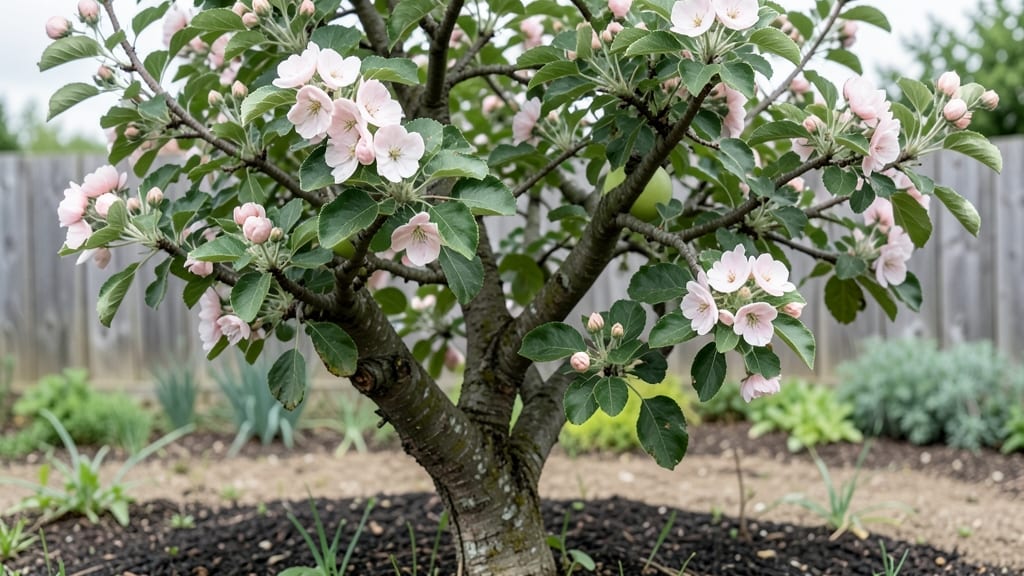
Honeycrisp apples bloom in early to mid-spring, typically between late April and early May in most U.S. growing zones (4-7), with flowers lasting 7-10 days. Timing depends on climate and frost risk, so monitor local forecasts for optimal pollination.
The exact bloom window for Honeycrisp apples hinges on chill hours—these trees need 500-1,000 hours below 45°F to break dormancy. 🌸 Once temperatures stabilize above 50°F for several days, the buds burst into delicate white-pink blossoms.
Warmer regions (like zone 7) may see blooms as early as March, while colder zones (zone 4) often wait until late May—making frost dates your biggest ally or enemy.
What’s fascinating is how daylight length triggers this process: longer daylight hours in spring signal the tree’s internal clock to initiate flowering. This is why early bloomers in southern climates risk frost damage, while northern orchards benefit from later, safer bloom windows.
I always recommend tracking your local last frost date and planting frost-sensitive varieties farther from cold sinks.
💡 In This Article
- Factors Affecting Honeycrisp Apple Bloom Timing
- Preparing Your Orchard for Honeycrisp Apple Blooms
Factors affecting Honeycrisp apple bloom timing
Honeycrisp apple trees rely on a precise balance of environmental cues to trigger blooming. The process begins with chill hours, where trees accumulate 500-1,000 hours below 45°F during winter dormancy.
This cold exposure breaks dormancy by altering hormone levels—specifically increasing gibberellins and reducing abscisic acid, which signals the tree to prepare for spring growth. Without sufficient chill hours, buds may fail to open properly, leading to poor fruit set. 🌱
Temperature shifts play a critical role once dormancy is broken. Honeycrisp trees need consistent daytime temperatures above 50°F for at least 5-7 days to stimulate bud swell and flowering. Nighttime temperatures between 40-50°F further enhance bloom quality by preventing heat stress.
In warmer climates like USDA zone 7, blooms may appear as early as late March, while colder zone 4 regions often see blooms in late May—a 6-week difference that directly impacts frost risk.
Daylight length acts as a secondary trigger through a process called photoperiodism. As days lengthen in spring, the tree's internal circadian clock responds by producing florigen, a flowering hormone. This is why Honeycrisp blooms align closely with vernal equinox timing, typically March 20-April 20 in most regions.
However, artificial lighting or early spring warmth can sometimes advance blooming by 1-2 weeks, disrupting natural synchronization with pollinators.
Frost risk becomes the most critical factor during bloom, as Honeycrisp flowers are highly sensitive to temperatures below 28°F. Even a single night of frost can kill blossoms before pollination occurs, reducing potential fruit yield by up to 90%.
This is why orchardists in zones 5-6 often use frost protection methods like wind machines or sprinkler systems. The science here involves supercooling: water droplets on leaves release heat as they freeze, creating a 32°F protective microclimate around blossoms.
Regional variations extend beyond USDA zones. Coastal areas experience moderating ocean breezes that delay blooming by 1-2 weeks compared to inland locations, while high-elevation orchards may bloom 2-3 weeks later due to cooler microclimates.
For example, Honeycrisp trees in Michigan's Upper Peninsula (zone 4b) often bloom 3 weeks after those in Ohio's Lake Erie region (zone 6a), despite similar latitude. 🌿
What most gardeners overlook is how soil temperature affects root activity before blooming. Roots need to reach 50°F to support the tree's metabolic demands during flowering. Cold, wet soils can delay nutrient uptake, weakening blossoms.
This is why well-drained, mulched soil improves bloom vigor by maintaining consistent root-zone temperatures—critical for trees in zone 4 where spring soils often remain chilly well into May.