
Blooming
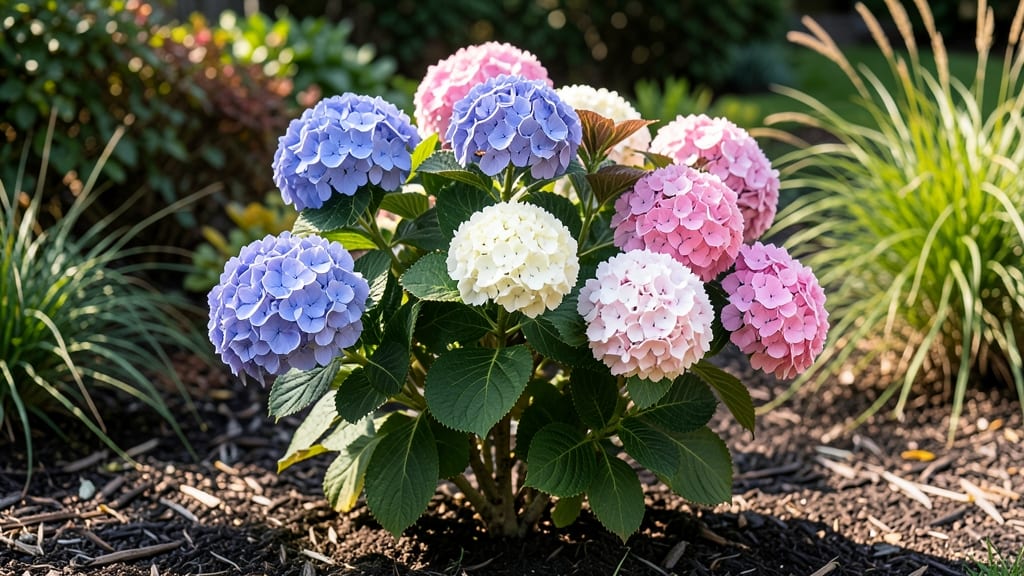
Hydrangeas bloom in Virginia between June and September, but the exact timing depends on your zone and the variety you grow.
If you've ever wondered why your hydrangeas aren't blooming when they should—or how to time your garden visits for the most spectacular floral displays—Virginia's unique climate zones hold the key to unlocking peak hydrangea season.
Most bigleaf and oakleaf varieties start showing buds in late spring, with full blooms arriving by June in Zone 7a and sometimes as late as July in cooler Zone 6a areas. Meanwhile, panicle hydrangeas often wait until summer, rewarding patience with long-lasting flowers that last well into fall.
In this guide, I’ll break down the blooming windows by zone, share how to spot early signs of buds, and reveal simple tricks to extend your hydrangea’s show—because nobody wants their 🌸 moment to end too soon.
Virginia hydrangea blooming seasons by USDA hardiness zones
Virginia's diverse climate creates a stunning hydrangea bloom parade from late spring to fall, but timing depends heavily on your USDA hardiness zone and local microclimates. In Zone 5 (northwest mountains), bigleaf varieties like 'Nikko Blue' typically bloom 4-6 weeks later than their Zone 8 counterparts in coastal areas.
Understanding these patterns lets you plan your garden visits for maximum impact.
The Piedmont region (Zones 6-7) offers the most dramatic hydrangea displays, with panicle types like 'Limelight' often blooming through July and August, while mophead varieties in Zone 8 can extend their show into early October.
Coastal areas benefit from milder winters, allowing some varieties to bloom 2-3 weeks earlier than inland locations.
Here's how Virginia's hydrangea bloom seasons break down by zone and variety:
| USDA Zone | Variety Type | Primary Bloom Season | Secondary Bloom Season | Local Adjustments |
|---|---|---|---|---|
| Zone 5 (Mountains) | Bigleaf (e.g., 'Endless Summer') | Late June - Early August | None (unless reblooming) | Plant in south-facing slopes for 2 weeks earlier blooms |
| Zone 5 (Mountains) | Oakleaf (e.g., 'Snow Queen') | Mid-July - September | Fall foliage (Oct-Nov) | Use mulch blankets to protect roots |
| Zone 6 (Piedmont) | Panicle (e.g., 'Little Lime') | Early June - Late August | Late August - September | Urban areas bloom 1 week earlier due to heat islands |
| Zone 7 (Central) | Mophead (e.g., 'Annabelle') | Late May - July | September (rebloom) | Coastal areas extend blooms 3 weeks longer |
| Zone 8 (Coastal) | Smooth (e.g., 'Grandiflora') | Early June - October | None (continuous) | Plant near east-facing walls for extended blooms |
In Zone 5, late frosts can delay bigleaf hydrangeas until mid-June, while Zone 8 gardeners often see their first blooms as early as late May. The Shenandoah Valley typically runs 1-2 weeks behind Richmond's coastal areas due to higher elevations and cooler nights.
For reblooming varieties like 'Endless Summer', Zone 6 gardeners should expect a second flush of blooms in late August if they prune correctly in late winter. In Zone 7 and 8, this second bloom can extend into October, especially in protected microclimates.
The Coastal Plain (Zones 7b-8a) benefits from milder winters, allowing some hydrangeas to set buds earlier in spring and maintain blooms through early November. In contrast, Zone 5 gardeners should prepare for shorter bloom seasons unless they choose cold-hardy varieties like 'Little Lime' panicles.
To maximize your hydrangea's bloom time, consider these microclimate strategies: plant heat-loving varieties like 'Limelight' in shaded northern exposures of Zone 7 homes, while cool-climate types like 'Nikko Blue' thrive in protected southern corners of Zone 5 gardens.
Mulching with 4-6 inches of wood chips can extend the bloom season by 2-3 weeks in both zones.
Remember that soil pH also affects bloom timing—acidic soils (pH 5.5-6.0) produce blue flowers and may delay blooming by 10-14 days compared to neutral soils (pH 6.5-7.0) that yield pink flowers. Test your soil in early spring to adjust lime or sulfur applications accordingly.
For the most reliable bloom schedule, track your local last frost date (typically April 15 in Zone 5 to March 15 in Zone 8) and plant after this date.
This timing ensures your hydrangeas establish roots before summer heat arrives, setting the stage for vibrant, timely blooms all season long.
How to predict your Virginia hydrangea's exact bloom window
Predicting your Virginia hydrangea bloom window starts with understanding your local last frost date. In most of Virginia, this typically falls between mid-April and early May, but mountain regions like the Blue Ridge can see frost as late as May 15th.
Knowing this date helps you anticipate when your hydrangea buds will begin their journey from dormancy to bloom.
Once frost danger passes, watch for leaf emergence—this is your first major milestone. Bigleaf hydrangeas often show new growth by late April to early May, while oakleaf varieties may lag slightly until mid-May.
Panicle hydrangeas tend to leaf out earlier, sometimes as soon as April 15th in warmer Piedmont areas.
📌 Key Bloom Prediction Timeline
- 🌱 Step 1: Track last frost (use NOAA frost maps for your county). Mark April 15-May 1 as your critical window for bud development.
- 🌿 Step 2: Monitor leaf emergence—bigleaf varieties show leaves 2-3 weeks after last frost, while oakleaf types may take 3-4 weeks.
- 🌸 Step 3: Look for bud set (small green clusters) by late May. Panicle types form buds 1-2 weeks earlier than mopheads.
- 💧 Step 4: Calyx formation (hardened buds) appears by June 1 in most VA zones. Coastal areas may see this 10-14 days earlier.
- ✨ Step 5: Full bloom occurs 6-8 weeks after bud set, typically late June to early August. Oakleaf varieties often bloom 2-3 weeks later.
To extend your hydrangea's flowering period, time your pruning carefully. For bigleaf varieties, prune immediately after blooming (late summer) to remove old wood and encourage next year's buds. Panicle hydrangeas bloom on new wood, so prune in late winter (February) for earlier flowers.
Adjust your fertilizer schedule to match bloom timing. Apply a balanced 10-10-10 fertilizer in early March to jumpstart growth, then again in mid-May as buds form. Avoid fertilizing after July 1st—this can delay bud set and shorten your bloom window.
Finally, water deeply during bud formation (May-June) to prevent bud blast. Aim for 1-2 gallons per plant weekly, focusing on the root zone. Mulch with 2-3 inches of organic matter to maintain soil moisture and protect buds from temperature swings.
With these predictive techniques, you'll know exactly when to expect those showstopping hydrangea blooms—and how to make them last longer! 🌷