
Blooming
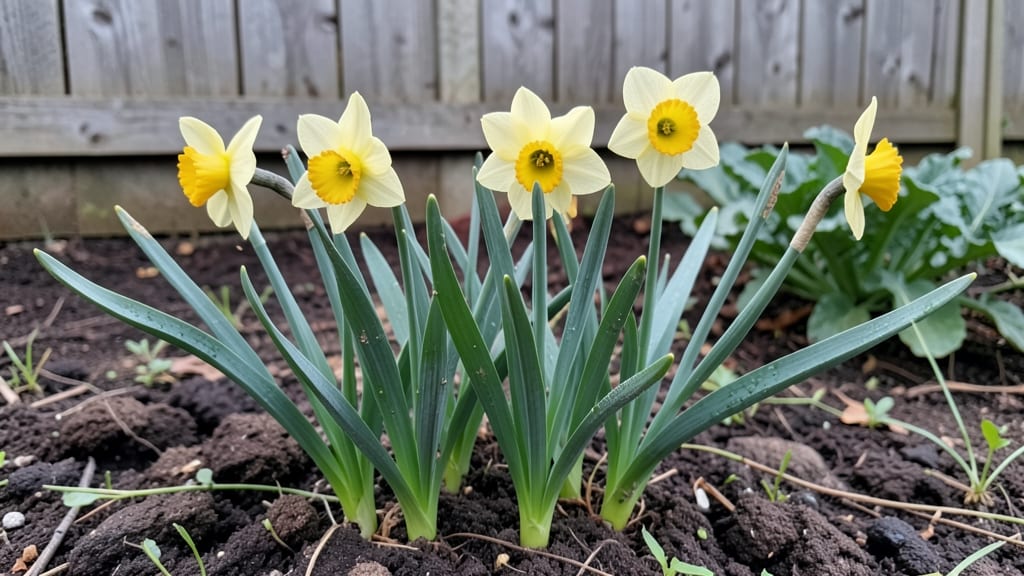
Narcissus bulbs bloom between late winter and early spring, typically from February through April, though exact timing depends on variety, climate zone, and planting conditions. Early bloomers like Narcissus papyraceus appear in February, while late types such as Narcissus poeticus may flower in April.
Timing isn't just about the calendar—it's also about where you live and which type of daffodil you've planted. In colder climates like USDA Zone 5, bulbs often need a solid 6-8 weeks of chilling before they’ll burst into color, which can shift blooms slightly later in the season.
Meanwhile, varieties like Narcissus cyclamineus might pop up as early as late January in warmer zones, while others wait until mid-April to shine. 🌸
Pro tip: If you're eager for earlier blooms, try planting bulbs in containers—they warm up faster in spring and can give you a head start on the season.
Just make sure to choose varieties suited to your local frost dates, or you might end up with sad, half-bloomed flowers caught in a late freeze.
💡 In This Article
- Narcissus Bloom Timing by Variety
- Climate Zones and Narcissus Planting Tips
Narcissus bloom timing by variety
Here's what's actually happening beneath the surface: narcissus bloom timing is dictated by their vernalization—a biological process where bulbs require a specific period of cold exposure (typically 6-12 weeks below 40°F) to trigger flowering.
This explains why early varieties like Narcissus papyraceus (paperwhite daffodils) bloom first—they need less chilling time (just 4-6 weeks), while late bloomers like Narcissus poeticus (poet's narcissus) demand 8-10 weeks of cold.
The key factor is their evolutionary adaptation to native Mediterranean climates, where mild winters signal spring's arrival earlier than in northern regions. 🌱
Flower color and size also play subtle but measurable roles in timing. Smaller, single-flowered varieties (like Narcissus jonquilla) tend to bloom 2-3 weeks earlier than larger, multi-flowered clusters (such as Narcissus tazetta), because they prioritize energy toward fewer, faster-developing blooms.
Color matters too: Bright yellow varieties (e.g., Narcissus pseudonarcissus) often emerge slightly earlier than white or pale varieties, as their pigments require less energy to produce at cooler temperatures.
For example, Narcissus 'Tête-à-Tête' (a compact yellow type) typically blooms in early March, while Narcissus 'Ice Follies' (a white variety) may wait until mid-March.
Cold-hardiness directly impacts your planting choices. Zone 3-5 hardy varieties (like Narcissus 'Dutch Master') can survive winters down to -30°F and bloom reliably in late March to early April, while Zone 7-10 tender types (such as Narcissus 'Paperwhite') need protection from frost and may bloom 2-4 weeks earlier if planted in containers.
What most people don't realize is that bulb size matters too: larger bulbs (over 2 inches in diameter) often flower 1-2 weeks earlier than smaller ones, as they've stored more energy during the growing season.
This is why garden centers sell "display-sized" bulbs—they're engineered for show-stopping early blooms. ✨
Consider these key factors when selecting varieties for your region:
- Early bloomers (Feb-Mar): Narcissus papyraceus (paperwhites), N. jonquilla (polyanthus types)
- Mid-season (Mar-Apr): N. pseudonarcissus (yellow trumpet), N. cyclamineus (hoop petticoat)
- Late bloomers (Apr-May): N. poeticus (poet's narcissus), N. tazetta (large-cupped types)
For gardeners in Zone 6 and below, timing becomes even more critical. Varieties like Narcissus 'Hawera' (a cold-hardy yellow type) often bloom 3-4 weeks later in northern climates compared to southern zones, due to slower soil warming.
To compensate, plant bulbs 6 inches deep (rather than the standard 4-6 inches) to protect them from freeze-thaw cycles, which can delay blooming by 10-14 days. The trade-off? Deeper planting may reduce flower size slightly, but the trade-in for reliability is worth it for early-season color. ❄️
Pro tip: If you're chasing that February bloom, focus on paperwhite narcissus (N. papyraceus), which can be forced indoors with no chilling required—just plant bulbs in well-draining soil and keep them in a cool, dark place (60-65°F) for 8-10 weeks before moving to light.
The result? Fragrant, 4-inch-tall blooms that appear like magic in your living room. For outdoor gardeners, this variety's sweet, honey-like scent makes it a standout early performer, especially in Zone 8-10 where winters are mild. 🌼