
Pruning
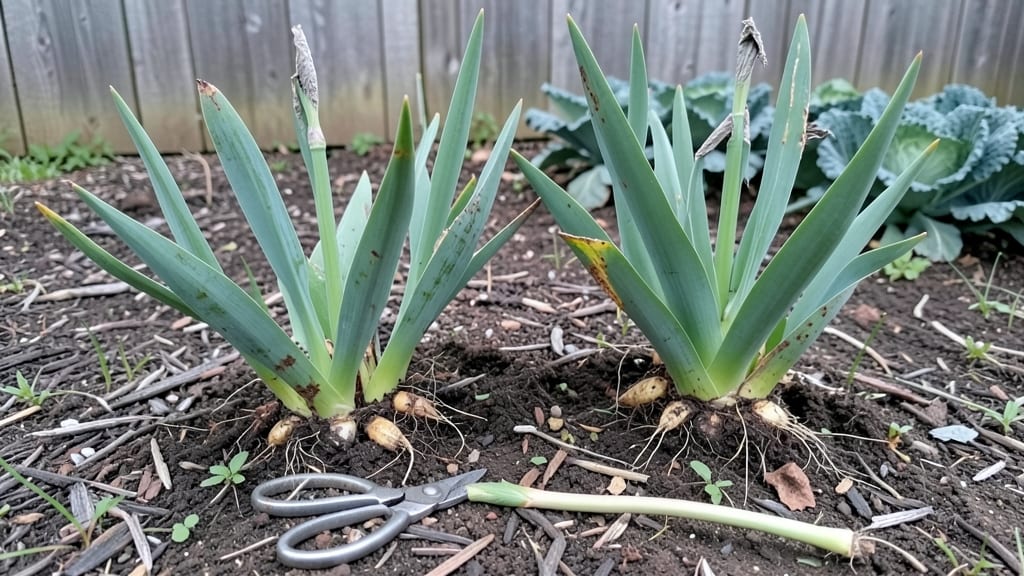
Trimming iris leaves after blooming should happen 6-8 weeks post-flowering, once the foliage turns yellow or brown. Cut back leaves to 2-3 inches above ground while leaving the fan-shaped clump intact to preserve energy storage for next year’s blooms. Avoid trimming too early or too late to prevent weakening the rhizome.
The timing of this task isn't arbitrary—it aligns with your iris's natural growth cycle. 🌱 Once those vibrant blooms fade, the plant shifts focus from flowering to storing energy in its rhizomes for next season.
Trimming too soon robs it of vital nutrients, while waiting too long risks inviting pests or disease into weakened foliage. Think of it as giving your iris a strategic haircut at the perfect moment to set it up for a stronger rebirth.
What's fascinating is how regional climates can tweak this window. In warmer Southern zones, you might see foliage yellowing earlier, signaling it's time to act sooner. Meanwhile, Northern gardeners often have a slightly extended window due to cooler temperatures slowing the process.
Always check for that telltale yellowing before reaching for your shears—it's nature's clearest sign the plant is ready for this rejuvenating step.
💡 In This Article
- Why Iris Leaf Trimming Timing Matters for Plant Health
- Step-by-Step Iris Leaf Pruning Guide for Beginners
Why iris leaf trimming timing matters for plant health
Here's what's actually happening inside your iris plant when you delay or rush this trimming: The leaves serve a dual purpose—photosynthesis for current energy and nutrient storage for next year's growth.
During the 6-8 week window after blooming, the plant shifts from producing flowers to redirecting sugars and starches into its rhizomes (the thick, underground stems). This process is called assimilate translocation, where leaves convert sunlight into stored energy that fuels spring regrowth.
The key factor is the leaf's chlorophyll breakdown during senescence (yellowing). As pigments degrade, the plant signals it's ready for dormancy. Cutting too early—before 50% of leaves yellow—removes the very foliage storing those critical nutrients.
Studies show premature trimming can reduce rhizome weight by up to 30%, directly impacting next year's bloom count. Conversely, waiting until leaves turn brown risks fungal infections like iris leaf spot, which thrives in decaying organic matter.
What most people don't realize is how the rhizome's periderm layer (protective outer skin) thickens during this period. This natural armor makes it more resilient against rot, but only if the plant has properly transitioned from growth to storage mode.
The 2-3 inch stump you leave isn't arbitrary—it maintains enough leaf surface area for minimal photosynthesis while protecting the rhizome's vulnerable growing point just below.
Consider these regional variations that affect timing:
- Southern climates (Zones 7-10): Hotter summers accelerate senescence—yellowing may appear as early as 5 weeks post-bloom. The high humidity also increases fungal risks, making timely trimming critical.
- Northern climates (Zones 3-6): Cooler temperatures slow metabolism, extending the window to 8-10 weeks. The cooler nights help preserve leaf integrity longer.
- Arid regions: Water stress can trigger premature yellowing—always confirm 50% leaf discoloration before cutting.
The science behind this involves a hormonal shift: As days shorten, the plant's abscisic acid levels rise, promoting dormancy while auxin (growth hormone) production declines. This balance is what makes the yellowing your visual cue.
The rhizome's starch reserves—built during this period—can support up to 3 months of dormancy, which is why proper timing ensures robust spring emergence.
One common mistake is assuming all iris varieties follow the same schedule. Bearded irises typically follow the 6-8 week rule, but Japanese irises (like 'Koi' series) may need 10-12 weeks due to their thicker foliage.
The key is always watching for that 50% yellowing threshold—it's more reliable than calendar dates.
Think of your iris like a marathon runner tapering before a race. The leaves are the final energy boost before the plant "rests" for winter. Cut too soon, and it's like stopping mid-stride; wait too long, and you risk crossing the finish line exhausted.
That perfect 6-8 week window is when the plant has maximized its energy stores while minimizing disease risk. 🌿